What happened
Stacy Eichel, an empty nester in Florida, lost her marketing job at a healthcare company in September 2025 after a merger. The small business she ran on the side suddenly had to carry the household: custom-branded coffee mugs and T-shirts for corporate clients.
Right when she needed it most, those clients pulled back. Faced with tariff uncertainty and tighter budgets, companies cut the kind of spending that branded swag represents. "The economy is such that fewer people are buying custom-branded swag because it's more of a luxury item," Eichel told Al Jazeera. She's trimmed dining out, dropped her cable service, and cooks everything now. "I never used to think before ordering in, and now we cook everything."
Her story matches the national data. The Labor Department's broad U-6 measure of unemployment and underemployment stands at an elevated 7.6 percent, down from 8.1 percent a year ago. About 4.5 million Americans work part-time only because they cannot find full-time jobs, and nine million hold multiple jobs — 5.5 percent of all employed workers — according to the latest jobs report.
Wages are losing the race against prices. Average hourly pay rose 3 percent over the past year while consumer prices climbed 3.7 percent, per the Labor Department's CPI report. In the latest month alone, prices rose 0.6 percent while wages inched up just 0.1 percent.
Joshua Teicher, a New York City video producer, has felt the squeeze from another angle. Work dried up after the COVID pandemic and kept shrinking as companies tightened budgets. He is now on Medicaid and cannot afford the knee surgery he needs — cartilage in both knees has worn down, and after surgery on his right knee, one leg is now slightly longer than the other. Gasoline adds to the pressure: AAA put the average gallon at $4.29 on Monday, compared with $2.98 back when the US and Israel first struck Iran in late February, according to Al Jazeera's reporting.
Why it matters
With the midterms approaching, the cost of living has become the dominant voter concern. A Reuters/Ipsos poll found it the most important issue at 47 percent, leading the next-closest issue — "democratic norms and values" — by a double-digit margin at 22 percent. And voters now trust Democrats over Republicans to handle the economy, 40 percent to 33 percent, in a Washington Post–ABC News–Ipsos poll — the first Democratic advantage on the issue in 12 years.
A Pew Research Center poll released earlier this month found 44 percent of Americans struggled to pay for at least one basic necessity over the past year — transportation, rent or mortgage, medical care, or food. Twenty percent said they received food from a food bank or pantry.
"Underemployment is one of the most misunderstood economic problems in America because it doesn't always look like unemployment," Tara Furiani, a workforce strategist based in Richmond, Virginia, told Al Jazeera. "It looks like a college graduate working retail despite having a degree, a former executive accepting a position paying half their previous salary, or a parent working two jobs because neither provides enough hours, benefits or income to support their family."
The job market itself offers little escape. Economists describe it as "low-hire, low-fire": employers are pulling back on hiring even as layoffs stay low, and the latest federal JOLTS data showed openings and quits largely unchanged. Babak Hafezi, a professor of international business at American University, said he has seen highly qualified people unable to find work for 12 to 18 months.
The pain is also lopsided. Economists call it a K-shaped economy: wealthier households, buoyed by investment gains, keep prospering while lower- and middle-income households fall behind. The Conference Board's latest consumer confidence report found higher-income Americans notably more optimistic than everyone else.
What it means for the US
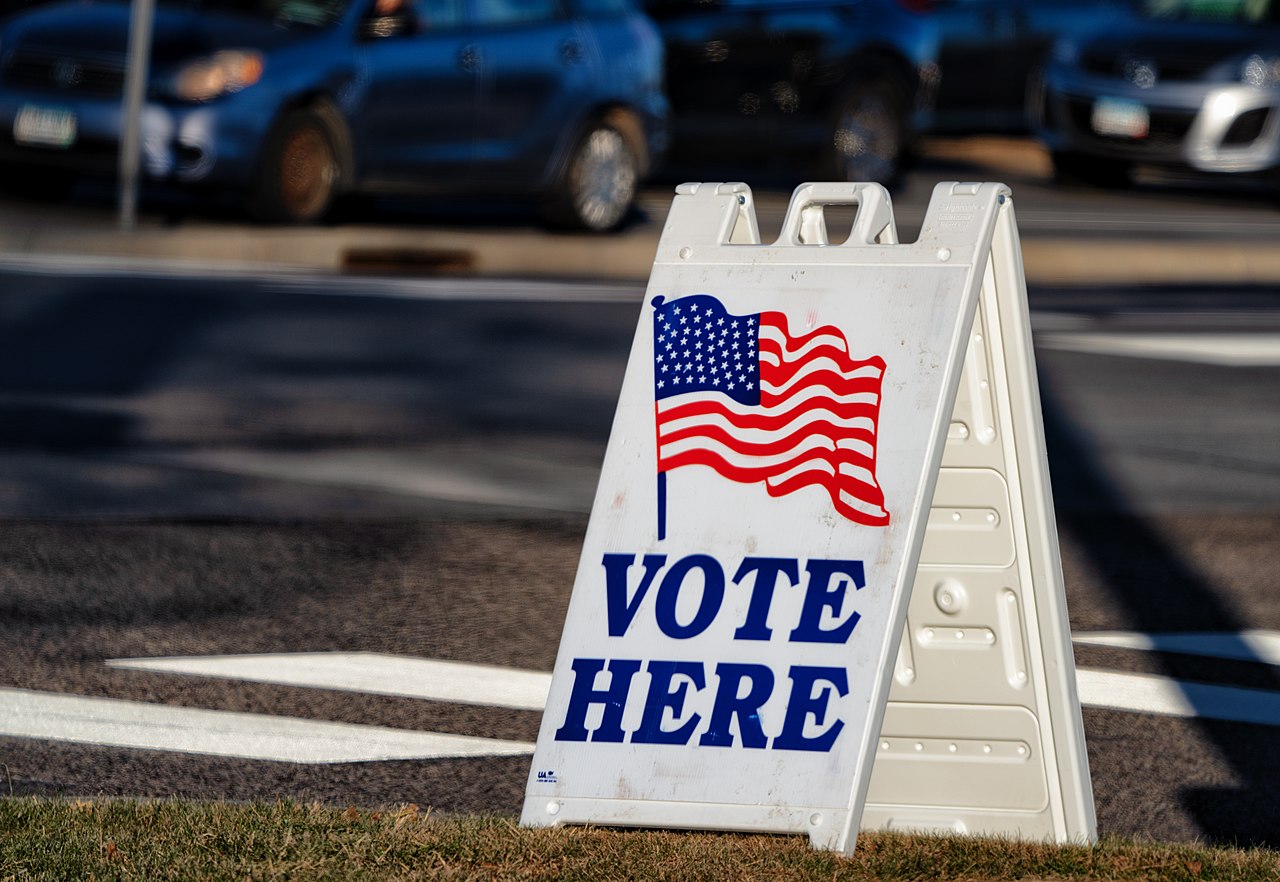
This is the ground the November 3 midterms will be fought on. The economy has replaced every other issue at the top of voters' minds, and for the first time in over a decade, Democrats hold the credibility edge on it.
Trump's policies sit at the center of the argument. Tariffs are part of what is lifting consumer prices, Hafezi told Al Jazeera: "As prices increase, unit consumption decreases [they buy less as] their paycheques don't go as far." He also pointed to the Big Beautiful tax legislation, which could reduce funding for programs supporting rural hospitals, and to immigration policies that have discouraged international travel to the US.
What Congress looks like after November 3 will decide how those fights play out — on taxes, healthcare funding, and trade. For households like Eichel's and Teicher's, the stakes are not abstract: they are groceries, prescriptions, and whether a paycheck covers a family.
What happens next
Voters settle the question on November 3. For the full picture of what is on the ballot, read [our explainer on the 2026 midterms](/article/us-midterm-elections-2026-explained) — and note that [some of the closest races may not be called on election night](/article/why-some-2026-midterm-races-wont-be-called-on-election-night) at all.
Before then, watch the next jobs report and CPI release for any shift in the wage-versus-price gap. Turnout will decide how much this pocketbook anger translates into votes; [grassroots drives are already pushing hard on registration](/article/no-kings-voter-turnout-drive).


