The background
COP31 was the United Nations' annual climate summit, held in Antalya, Turkey. It was supposed to end on Friday, November 20. Instead it ran two days over, became the longest climate talks in UN history, and then collapsed on Sunday with no agreement on its central text, the Antalya Pact.
Australia and Turkey co-led the negotiations. Australian minister Chris Bowen, who led the talks, described the backdrop as "the most complicated and fraught geopolitical environment in living memory". Turkey's environment minister Murat Kurum, the summit's president, was blunter, saying governments should not disappoint people desperate for climate action by getting "hung up on one word or phrase".
The summit was billed as the "implementation COP", the one that would turn past promises into action. The evidence for urgency was hard to miss. 2026 brought glacier collapses, record heat across Europe, and wildfires across Asia. It was also the first COP since the UN warned that global temperatures are expected to pass 1.5C above pre-industrial levels, the limit countries agreed not to breach in the Paris Agreement of 2015.
Where things stand
The fight came down to fossil fuels. The draft pact did not mention them at all. That mattered because three years earlier, at COP28 in Dubai, countries had agreed to transition away from fossil fuels. About 130 governments, roughly two-thirds of those in Antalya, demanded the new text repeat that commitment.
The opposition was public, which is unusual at these summits. Saudi negotiator Mohammad Ayoub, speaking for the 22 Arab League countries, said Arab nations had contributed less than 2 percent of historical greenhouse gas emissions, and that wealthy industrialised nations bore the overwhelming responsibility. Russia's delegate Sergei Kononuchenko warned that cutting oil and gas supplies before demand fell would cause shortages, higher prices and energy poverty. "For that reason, we cannot agree to any formulation on fossil fuel," he said.
Money was the second fault line. Developing countries say they are being asked to pay for damage they did little to cause while receiving too little help to adapt to climate change or build cleaner economies. Kononuchenko attacked climate finance that arrives as loans rather than grants, saying developing countries ended up repaying more than they received. The EU had ruled out significant new funding before the talks began, and rich nations failed to put a figure on extra adaptation money, even though a commitment made last year called for tripling adaptation finance by 2035 from $40 billion.
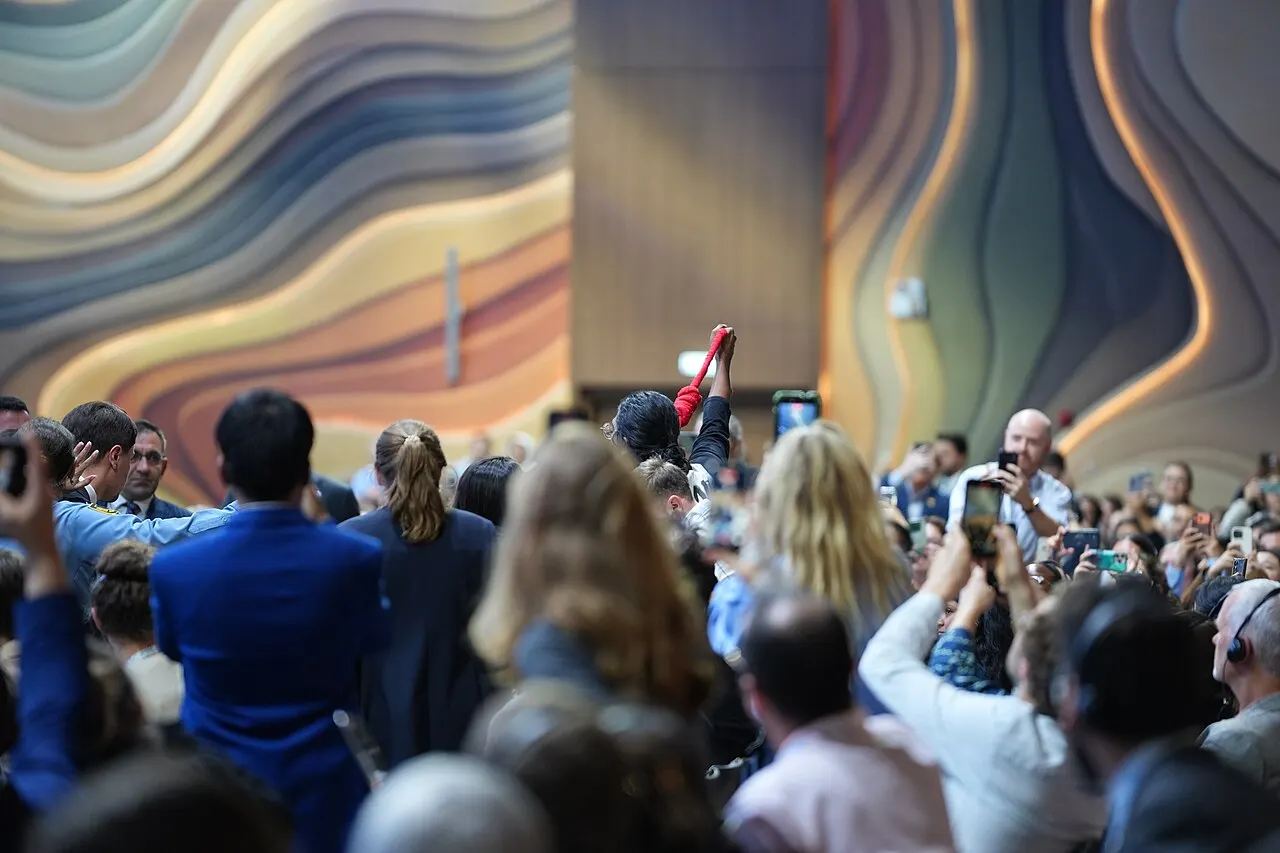
The final day was dramatic. Countries walked out over the missing fossil-fuel language and the money disputes. The EU's representative, Irish minister Darragh O'Brien, called a deal without fossil-fuel language "unconscionable" and said the talks had been "hijacked by some oil states". Christiana Figueres, who led the UN negotiations that produced the Paris Agreement, argued countries were right to walk away rather than sign a weaker deal that might undermine progress already made.
Not everything failed. The summit had 164 other items on its agenda, and some were agreed. Money raised from a global system of carbon credits will go toward helping developing countries adapt to climate change, and countries advanced a just-transition framework designed to protect workers and communities as economies shift to clean energy. But the work programme for cutting emissions was pushed to COP32. For the full timeline of how the talks fell apart, see our earlier coverage of [how COP31 ended without a deal](/article/cop31-ends-without-deal-eu-rejects-fossil-fuel-text) and the [deadlock over fossil fuels](/article/cop31-climate-talks-deadlock-fossil-fuels) that dragged the summit past its deadline.
What it means for the US
The United States had no official delegation in Antalya. President Donald Trump has rejected the entire international climate process, and in previous rounds the US had helped broker compromises, sometimes working alongside China. That broker is now gone.
While delegates argued in Turkey, Trump, China's President Xi Jinping and Russia's Vladimir Putin issued a joint declaration in Shenzhen that included a pledge to increase production and supply of refined petroleum products. The priorities of the world's three most powerful governments looked very different from the ones being debated in the negotiating rooms.
For American readers, the collapse changes little in the short term. No deal means no new global pressure on fossil fuels, and US oil and gas producers face no new constraints from this process. At home, Washington is moving on its own track: the [Senate recently passed a bipartisan energy bill to speed up power projects](/article/senate-passes-bipartisan-energy-bill-speed-up-power-projects). The energy shift itself keeps moving on economics alone. Solar panels, batteries and electric vehicles keep getting cheaper, whatever happens in UN meeting rooms. The risk is pace. The UN has warned temperatures are set to pass 1.5C, and every year without faster cuts means more of the extreme weather that already hits American communities.
What to watch next
UN climate chief Simon Stiell said he would seek advice on reforming the COP process. Some governments want voting when consensus proves impossible. Others want countries prepared to move faster to make their own agreements outside the formal talks. Consensus has a purpose: it protects smaller and poorer nations that might otherwise be outvoted by the most powerful countries. Reforming it will be a fight of its own.
COP32 now inherits the unfinished work, including the emissions-cutting programme. The more immediate question is whether the 130 governments that demanded fossil-fuel language act together outside the UN process. If they do, the collapse in Antalya may be remembered as the moment climate diplomacy split in two.