What happened
Russia says Ukraine launched the largest drone attack of the war, and the landmark bridge linking Russia to occupied Crimea took a hit. Russian officials said their military intercepted and destroyed 2,049 drones and four Flamingo long-distance missiles over 24 hours. Moscow Mayor Sergey Sobyanin said around 600 of the drones flew toward the capital alone.
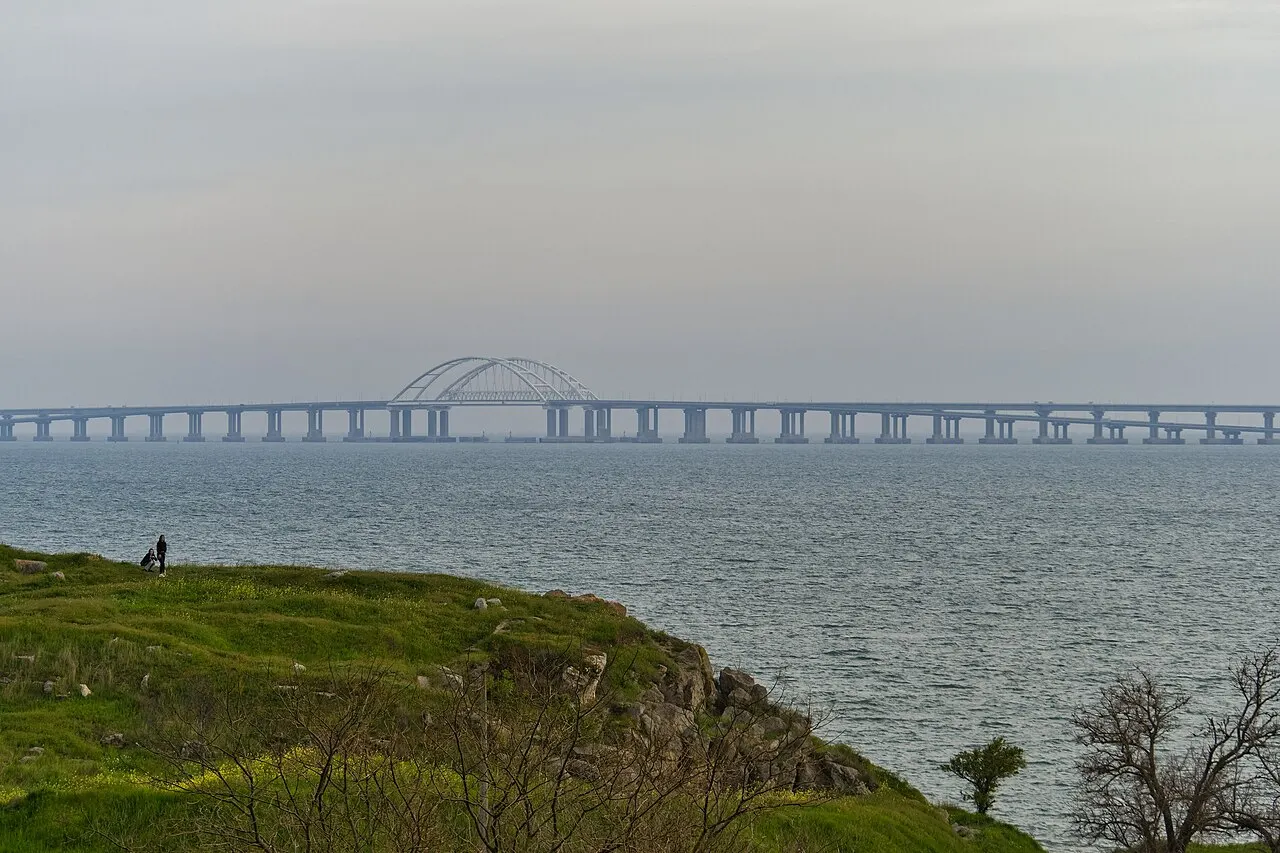
The Moscow-installed head of Crimea, Sergei Aksyonov, confirmed that drones struck the Crimean Bridge, also known as the Kerch Bridge, causing traffic restrictions. Russian officials described the damage to the bridge as minor. The structure was built after Russia invaded and annexed the peninsula in 2014, and President Vladimir Putin opened it to great fanfare in 2018. It is one of his signature infrastructure projects and is protected by multiple layers of aerial and maritime defences.
Russian pro-war military commentators said on Telegram that the bridge suffered from the impact of drone warhead debris rather than a direct strike. Neither Ukraine's domestic security service nor its main military intelligence directorate has responded to a BBC request for comment. Atesh, a partisan Ukrainian group operating inside Russian-held territory, said on social media that authorities in Crimea were "bracing for further strikes" on the bridge.
Ukrainian drones also hit several energy facilities, including an oil refinery in Ilsky in the southern Krasnodar region, where falling drone debris sparked a fire and injured six people, including children. Kyiv, meanwhile, came under a record 17 air raid alerts in a single day. At least seven people were killed by Russian strikes, and attacks on energy infrastructure caused blackouts for 50,000 people.
Why it matters
The bridge is more than a road and rail link. It is the physical symbol of Russia's claim on Crimea and a key supply route for Russian forces on the peninsula. Hitting it, even with minor damage, shows Ukraine can still reach one of Russia's most heavily defended targets more than four years into the war.
The scale of the attack matters too. Russia said it was the biggest Ukrainian drone assault since the full-scale invasion began in February 2022, and it came alongside strikes on oil refineries that feed Russia's war economy. Ukraine's long-range drone campaign has become its main tool for striking deep inside Russia, and the Flamingo missiles add a newer, longer-range weapon to that arsenal.
The timing is pointed. The strikes landed days after US, Ukrainian and Russian envoys held talks aimed at ending the war, with US envoys Jared Kushner and Steve Witkoff visiting both Putin and Ukrainian President Volodymyr Zelensky ahead of the planned [Trump, Putin and Xi summit](/article/trump-putin-xi-summit-explained). Last week Zelensky accused Russia of a concerted operation against Ukraine's bridges to "divide Ukraine... and make life as difficult as possible for people" on both sides of the Dnipro River.
What it means for the US
For American readers, the attack lands in the middle of a US-led push for a settlement. Washington's envoys have been shuttling between Moscow and Kyiv, and the US has floated the idea of [Ukraine ceding Donbas in exchange for NATO membership](/article/us-floats-ukraine-ceding-donbas-for-nato-membership), an idea Kyiv has not accepted. A major Ukrainian strike on a Russian symbol like the Kerch Bridge complicates that diplomacy: it shows Kyiv still has leverage on the battlefield, but it also gives Moscow a fresh grievance to bring to the table.
There is a second US concern in the background. The Kremlin has started talking again about rethinking Europe's "security architecture", language Moscow often uses to mean a scaled-down NATO presence in countries close to Russia. The apparent US willingness to engage in that conversation has set off alarm bells among Ukraine's European partners, who worry their continent's security could be redrawn by Washington and Moscow without their involvement. A team of six, Britain, France, Germany, Italy, Poland and a representative of the EU institutions, will represent Europe in future talks with Russia, Ukraine and the US.
For US households, the direct impact is limited for now. Oil markets watch attacks on Russian refineries, and a sustained campaign against Russian energy infrastructure can push fuel prices up. The bigger question for Americans is whether the peace effort survives this escalation or whether the war grinds on into another winter of strikes on power grids and blackouts for civilians.
What happens next
Moscow is uncompromising on its demands: [Ukraine must cede territory and give up efforts to join NATO](/article/putin-raises-demands-for-ukraine-peace-after-us-talks). The Kremlin has also been dismissive of European input. Spokesman Dmitri Peskov said EU representatives kept pushing for "unconditional support" for Ukraine and "enhanced pressure" on Russia, adding that "this sort of wording rather suggests their reluctance to facilitate the peace process".
Watch whether Ukraine claims the bridge strike, as it has done after past attacks on the crossing, and whether Russia answers with another wave of strikes on Ukraine's energy grid. The next round of talks, with Europe now represented at the table, will test whether the diplomacy that brought Kushner and Witkoff to Moscow and Kyiv can survive a battlefield that is still escalating.