What happened
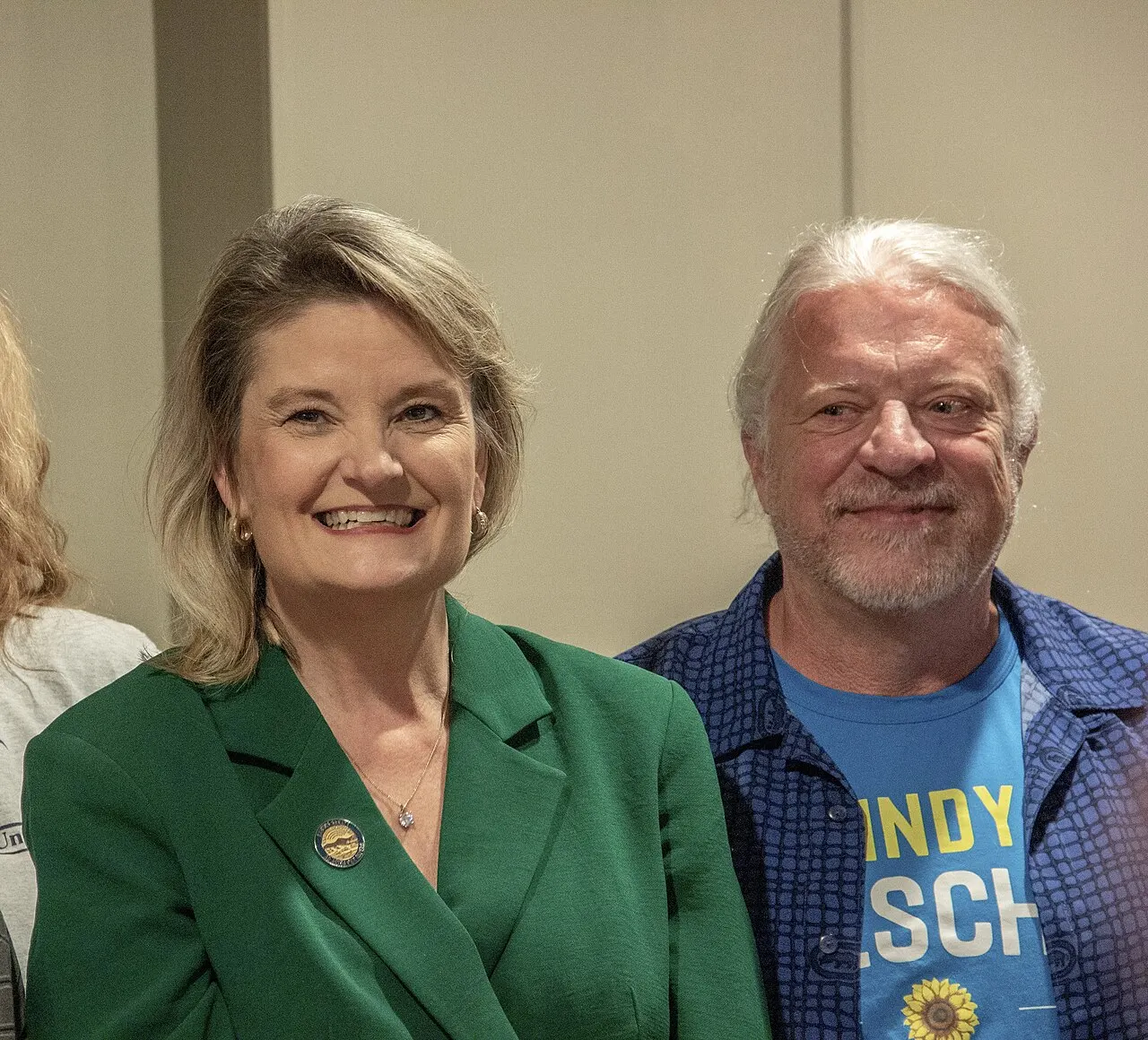
Democrat Cindy Holscher has won the Kansas governor's race, the Associated Press said on Thursday, keeping the governor's office in Democratic hands.
Holscher, 57, a Democratic state senator, defeated Republican Ty Masterson, 57, the president of the Kansas state Senate. The race was closely contested, and the call came after days of counting provisional ballots, with local officials carrying out recounts.
Masterson had the endorsement of President Donald Trump. Of the 36 governor's races held across the country this year, NPR said Kansas was seen as the one most likely to flip from Democratic to Republican control.
Holscher will succeed Democratic Gov. Laura Kelly, who is term-limited after eight years in office.
Why it matters
Kansas leans Republican. The state has a heavily Republican legislature and usually votes Republican for president and for other statewide offices. Holding the governor's office there is a real prize for Democrats, and it was one of the most closely watched contests of the midterm cycle, coming as [Democrats also took control of Congress](/article/democrats-won-congress-what-happens-next-explained) and [won a Senate seat in Mississippi](/article/scott-colom-wins-mississippi-senate-race).
The two candidates offered sharply different plans for the state. Holscher ran with populist notes, promising to fight favorable deals for billionaires. She tied Masterson to a tax cut passed by the state Senate under former Republican Gov. Sam Brownback, a cut that led to a string of budget crises before it was repealed.
She opposed school vouchers and called for more support for public schools, while Masterson backed vouchers. She also called for a pause on new data centers and for legalizing cannabis as a way to bring in state revenue.
Masterson, for his part, promised lower property taxes and said faith shaped all his decisions, including in politics. He pledged to be the most pro-agriculture, pro-business and pro-oil-and-gas governor the state has seen. On the campaign trail, he attacked Holscher as the most radical, liberal, socialist Democrat ever on a ticket in Kansas.
Holscher brushed the attacks off. "He likes to throw around a whole lot of labels... You know why? Because that's all he's got," she said.
What it means for the US
Governors set the terms on schools, taxes, energy and public health in their states, so the Kansas result shapes daily life for millions of Americans, and it signals how voters in a deeply Republican state responded to a nationalized campaign. [Trump has questioned midterm results even while saying he would accept them](/article/trump-questions-midterm-results-after-saying-accept-them), and the Kansas outcome adds to a midterm picture in which Democrats held ground in places where they were expected to lose it.
Holscher's platform also touches issues playing out nationally: school vouchers, cannabis legalization and the rush to build data centers. Her win gives those positions a victory in a state where Republicans dominate the legislature, and where she will now have to work with that legislature to get anything done.
What happens next
Holscher takes over from Kelly, keeping the governor's office Democratic. The race-call report gave no details of the transition, so the timing of the handover and her first moves as governor-elect were not spelled out in the initial call.