What happened
Democrats won historic victories in state legislatures across the country in the 2026 midterms, reversing a Republican dominance that began in 2010 and had only grown stronger since.
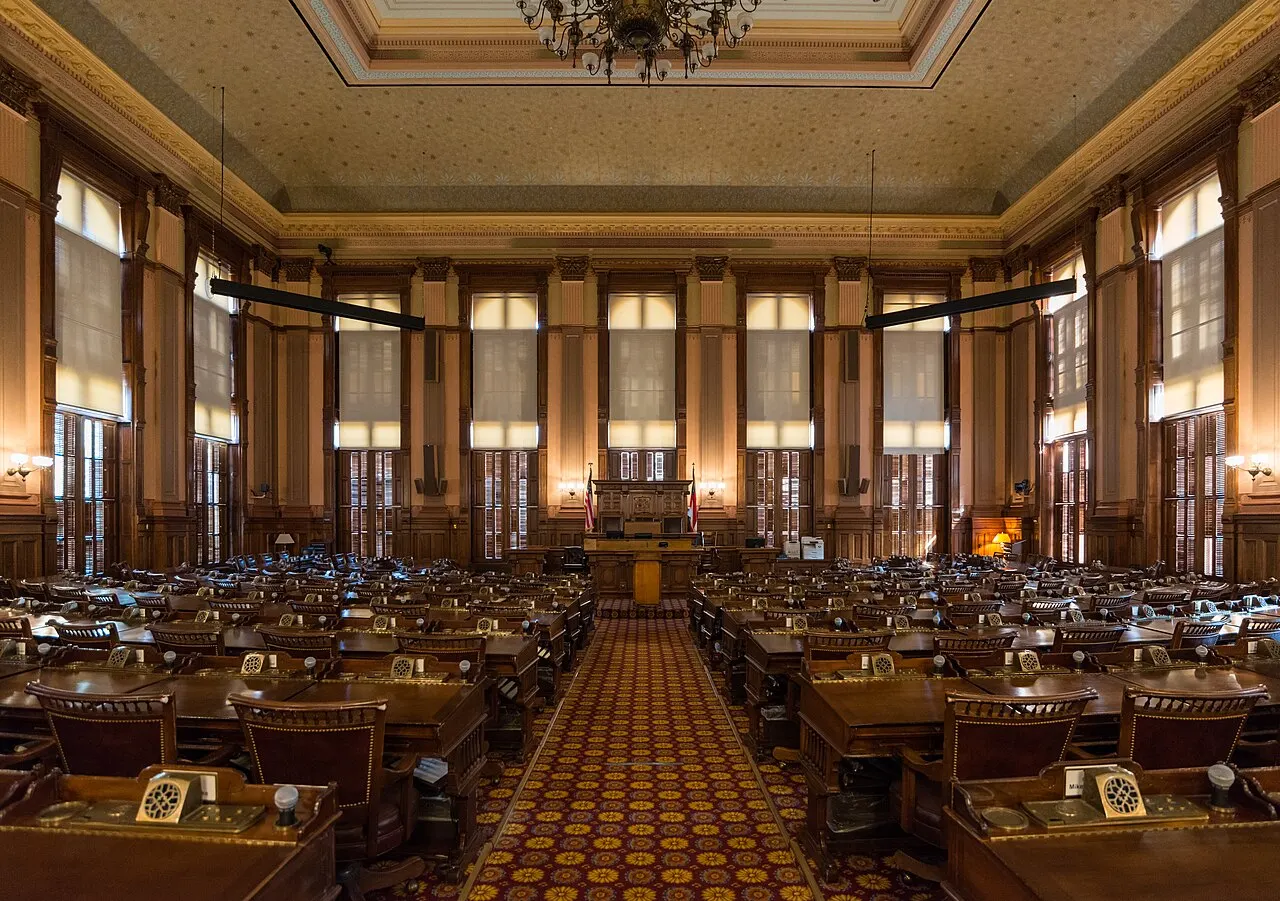
In Pennsylvania, voters elected a Democratic majority in the state Senate for the first time since Jimmy Carter was president. In Texas, Democrats will run the state House for the first time in 24 years. And the Georgia House will have a Democratic majority for the first time in more than 20 years.
Going into the midterms, Republicans controlled the legislatures in 28 states and Democrats held 18, with the rest divided. Now, with some votes still being counted, it looks likely Democrats will hold a 24-to-22 lead, according to data compiled by NPR. Democrats picked up seats in nearly every state that held legislative elections, gaining ground even in reliably Republican states like Texas, Utah and Florida.
Democrats also gained six new trifectas, where they now control both chambers of the legislature and the governor's office. Arizona will have a Democratic trifecta for the first time since 1966. Pennsylvania, Michigan, Minnesota, Wisconsin and Nevada round out the list. At the same time, Democrats broke Republican trifectas in Georgia, Iowa, New Hampshire, Ohio and Texas.
The National Conference of State Legislatures projects Democrats will likely hold 22 trifectas to Republicans' 17, with 10 other states divided. Nebraska is not counted in that tally: it has a Republican governor and a one-chamber legislature controlled by Republicans.
Why it matters
State legislatures write the laws that shape daily life: taxes, reproductive rights, access to health care, school funding. Control of a chamber decides which bills get a vote and which never see the light of day. That is why both parties poured money into these races, and why the results will be felt long after the midterm headlines fade.
The shift also changes the balance of power with Washington. Legislatures have been important in promoting or blocking President Trump's agenda, and a Democratic majority in a statehouse can slow down policies the White House favors, just as a Republican one can speed them up.
The Republican State Legislative Committee, which coordinates support for GOP candidates, blamed the losses on the national anti-incumbent mood and heavy spending for Democrats. Its president, Edith Jorge-Tuñón, said: "Ultimately, the results of this cycle underscore both the challenges Republicans face and the importance of maintaining a strong, sustained presence in the states."
Heather Williams of the Democratic Legislative Campaign Committee said the wins proved what is possible when statehouses sit at the center of a national strategy. Democrats also made gains beyond the flips. In several states they fell short of taking a chamber but won enough seats to end Republican supermajorities. The government relations firm Multistate says that happened in six states that had veto-proof GOP majorities.
That will matter most where there are Democratic governors, who now have the leverage to veto Republican initiatives, like in North Carolina, Ohio and Kansas. The governor's races mattered here too: Democrats won the [Alaska governor's race](/article/kreiss-tomkins-wins-alaska-governor-race) and the [Kansas governor's race](/article/democrat-cindy-holscher-wins-kansas-governors-race), adding to the party's gains at the state level.
What it means for the US
For most Americans, state government is where policy hits home. The new Democratic majorities are already lining up concrete changes. In Pennsylvania, Democratic Gov. Josh Shapiro has promised to work with the newly Democratic legislature to raise the minimum wage to $15 an hour, strengthen abortion rights and increase affordable housing.
In Arizona, Gov. Katie Hobbs has repeatedly tried to reform and limit the state's billion-dollar school voucher program, which provides public money for private school tuition regardless of family income. The Republican-run legislature blocked her every time. With a Democratic trifecta, that fight now moves in her direction. Arizona Democrats have also said they hope to provide financial relief on rent, utilities and childcare.
In Georgia, Democrats won the House and came close in the Senate. On their agenda, they could try to win over a few GOP lawmakers and pass Medicaid expansion to provide health care to more low-income residents. House Democrats may also push to repeal the state's six-week abortion ban, though that could be a tough sell in the Senate.
In North Carolina, Democrats won control of the state House and are expected to try to roll back some abortion restrictions. Democratic Gov. Josh Stein has called on both parties to work on addressing affordability concerns once the legislature convenes.
What happens next
One race is not settled yet. In North Carolina's state Senate, a Republican is leading the race for one seat by just over a couple hundred votes, and it is likely headed to a recount. That seat decides whether Republicans keep a one-seat majority or the chamber ends in a tie, in which case the Democratic lieutenant governor would be the tie-breaker.
Once the new legislatures convene, the test comes fast. Watch Arizona on school vouchers, Pennsylvania on the minimum wage, and Georgia on Medicaid expansion. [Swing voters doubt divided government will cut their costs](/article/swing-voters-doubt-divided-government-will-cut-costs), so the new majorities will be judged on whether they deliver on affordability, not just on winning the chambers.