What happened
Mexican forces captured cartel boss Fausto Isidro Meza Flores, known as "El Chapo Isidro," in the city of Guasave in the state of Sinaloa overnight. He was one of the FBI's 10 most wanted fugitives and a top leader of the Beltrán Leyva criminal organization, wanted for trafficking drugs into the United States and illegally carrying firearms.
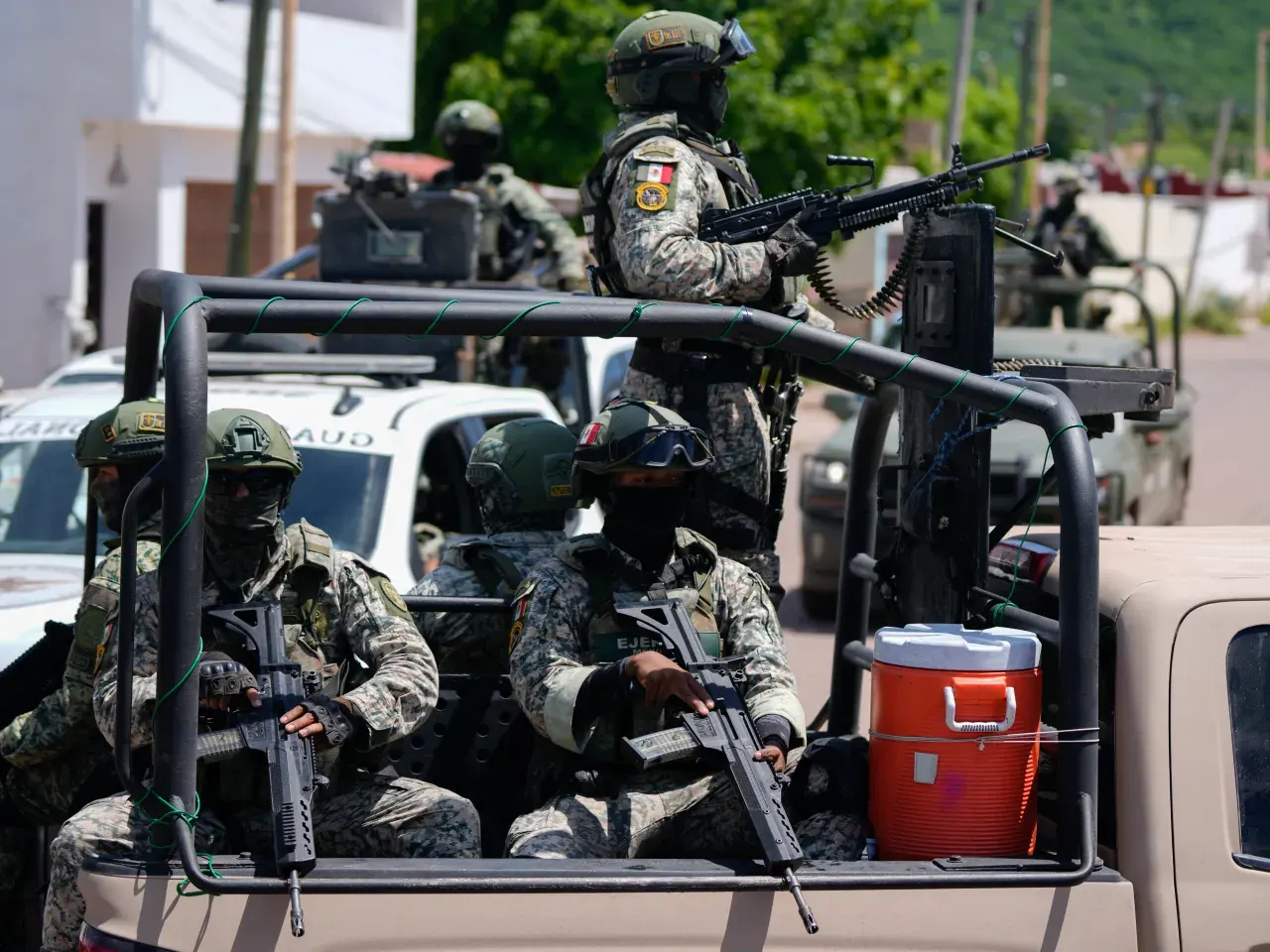
Mexican authorities said they used "stealth and surprise" to take him, setting a security perimeter around the building where he was hiding. Gunmen attacked with guns and explosives, and troops then entered the home and detained him. He was flown by aircraft to Mexico City to appear before prosecutors. No casualties have been reported so far from the operation.
His capture, along with that of his No. 2, set off a night of cartel violence across Guasave. Videos showed civilians fleeing gunfire at a baseball game, burning cars and businesses, and helicopters firing from above. The criminal group set up at least 10 roadblocks with burning vehicles on the city's streets, and army and National Guard special forces could not get Meza Flores out of Guasave until 4 a.m. on Saturday. Calm had returned by Saturday morning.
Mexico's government said in a report early Saturday that intelligence from the Trump administration helped authorities capture him, though it gave few details about how the two countries coordinated the arrest.
Why it matters
Meza Flores was a key ally of "Los Mayos," a faction of the Sinaloa Cartel that the Trump administration designated as a foreign terrorist organization last year. His capture is a blow to the cartel as it fights a rival faction for control of Sinaloa, a northern Mexican state that has been gripped by a cartel power struggle.
But experts warn the win may come with a cost. The kingpin strategy, taking out cartel leaders one by one, has a record of setting off violent power disputes, and Sinaloa is already in the middle of one.
Mexican security analyst David Saucedo said the arrest was "a product of pressure from the United States" and cautioned that the wider organization survives its leaders. "They arrested the No. 1 and No. 2, but the entire network of hit men, street-level drug dealers, businesses and political and police connections remains intact," he said.
The capture fits a pattern under Mexican President Claudia Sheinbaum, who has gone after cartel kingpins more aggressively than her predecessors. Homicides have dipped significantly in her two years in office. In February, the military killed Jalisco New Generation Cartel leader Nemesio Oseguera Cervantes, known as "El Mencho."
What it means for the US
The Drug Enforcement Administration called the capture "a significant blow to a ruthless criminal organization that has used extreme violence to traffic deadly drugs, including fentanyl, a designated weapon of mass destruction, into American communities." Fentanyl sits at the center of the US overdose crisis, and Meza Flores' organization moved drugs across the border.
The operation also shows how far US-Mexico security cooperation has come under pressure from President Donald Trump, who has pushed Mexico's government to crack down on cartels. The DEA said the arrest "underscores the critical importance of intelligence sharing in targeting dangerous cartel leaders."
For Americans, the practical effect is uncertain in the short term. Taking out a cartel boss rarely stops the flow of drugs on its own, and the violence that followed the arrest is a reminder that the cartels hit back. The administration has paired this pressure with a wider military push in the region, including [the US-Venezuela military deal signed after Maduro's seizure](/article/us-venezuela-sign-military-deal-after-maduro-seizure). The longer question is whether both governments keep the pressure on the networks underneath the leaders.
What happens next
Meza Flores will face prosecutors in Mexico City. He is wanted in the United States on drug trafficking charges.
Mexican Security Secretary Omar García Harfuch wrote on X on Saturday morning that armed forces would remain deployed in Sinaloa state to protect civilians. "An important step in pacifying Sinaloa," he called the detention.
The test now is whether the calm in Guasave holds, and whether the rival Sinaloa factions use the power vacuum to escalate the fight for the state.