What happened
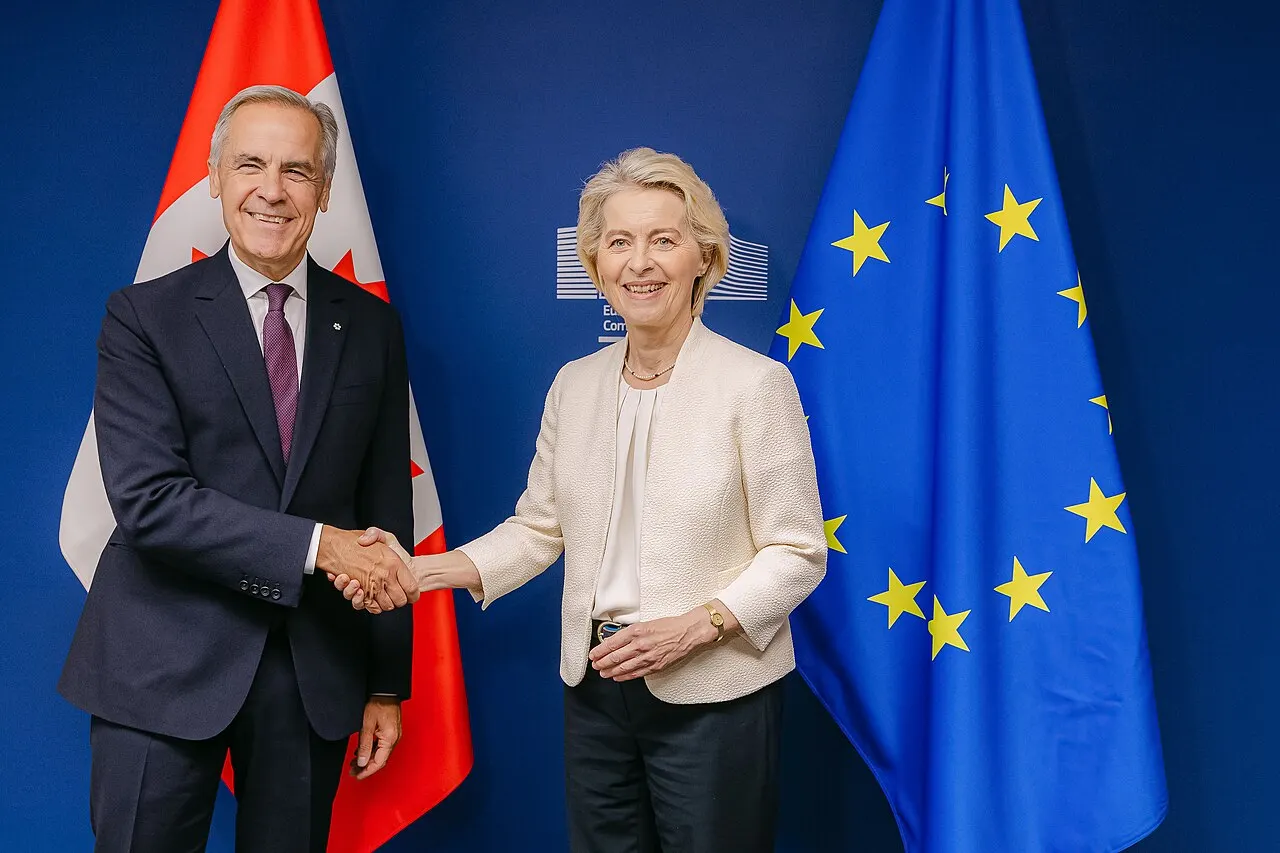
European Commission President Ursula von der Leyen laid out her vision Thursday for what "associate membership" for Canada in the European Union would look like, as leaders gathered in Montreal for a two-day Canada-EU summit.
"It is a partnership that comes close to membership than anything we have done before," she said, describing a relationship open "only to our closest partners outside of Europe who are ready to open a new frontier together." The arrangement would mean close alignment on governance and policies, plus joint work in research and innovation.
Von der Leyen first floated the idea last month, after Prime Minister Mark Carney told the European Parliament in Strasbourg that Canada and Europe were "stronger together" in the face of "geopolitical rupture." Associate membership does not currently exist as an EU status.
Why it matters
For decades, Canada-EU summits passed without much fanfare. This one is different. Canadian officials said they expect agreements on defence, critical minerals, research and trade across the two days, and Carney and von der Leyen were set to meet business leaders from both sides at a forum later Thursday.
The idea is not without friction inside Europe. Germany and other member states questioned the "associate member" label and successfully lobbied to strip it from a draft summit statement, replacing it with softer language about an "ever closer association." Germany's ambassador to Canada, Matthias Lüttenberg, told CTV News on Tuesday that some member states were "a little surprised" by von der Leyen's announcement, noting Germany uses the term for something else entirely: the EU's relationship with Ukraine and potentially Moldova, both long seeking membership.
The EU has been hardening its external posture in parallel. It said this week that [Nord Stream will stay shut even after the Ukraine war ends](/article/eu-says-nord-stream-will-stay-shut-after-ukraine-war-ends), and European leaders have been reshaping the continent's security ties, as shown by a [rare call between Finland's and Norway's leaders and Vladimir Putin on Ukraine](/article/finland-norway-leaders-rare-call-putin-ukraine).
Despite the wording fight, both sides signalled they are fully on board with deeper ties. "The wording is emblematic of the ambition," one senior Canadian official, granted anonymity to speak to reporters ahead of the summit, said. Polls show a majority of Canadians back closer ties to Europe.
Not everyone in Canada is sold. Conservative leader Pierre Poilievre has criticised the effort as a distraction from the cost of living, saying "No one's mortgage or grocery bill will come down," and noting Canada already has a free trade pact with the EU.
What it means for the US
Washington cannot ignore this one. Canada is America's neighbour and largest trading customer, and Carney has pushed Ottawa closer to Europe since taking office last year as his country deals with an ongoing trade war with the United States.
President Donald Trump has already weighed in, calling the idea of Canada becoming an associate member of the EU "laughable" and threatening "very serious tariffs" on Europe if he considered it a "hostile act." Canadian officials stressed Wednesday that the pivot to Europe is not meant to offend anybody, but to build on work already underway.
For US readers, the stakes are practical. A Canada more deeply tied to EU defence procurement, research programmes and energy markets could shift contracts and shipments that once flowed south. Canada recently signed an agreement giving its defence companies procurement access to the EU's Security and Defence Partnership programme, and struck a landmark energy deal with Germany in May that would send the first-ever long-term shipments of Canadian liquefied natural gas to Europe. On Thursday, Ottawa also released its first National Security Strategy in two decades, naming support for security and stability in Europe as a priority.
What happens next
The summit runs through Friday, with agreements on defence, critical minerals, research and trade expected across the two days. European officials have downplayed the chance of a major announcement on Canada's new status, saying much will be sorted in the coming months.
What is already clear: Canada does not plan to pay a membership fee like EU nations. Instead, it aims to join individual EU programmes that benefit both sides, and to open more student exchanges across the Atlantic. Carney has said the "nomenclature" does not matter. "What matters is the difference it will make to the lives of Canadians," he said.