What happened
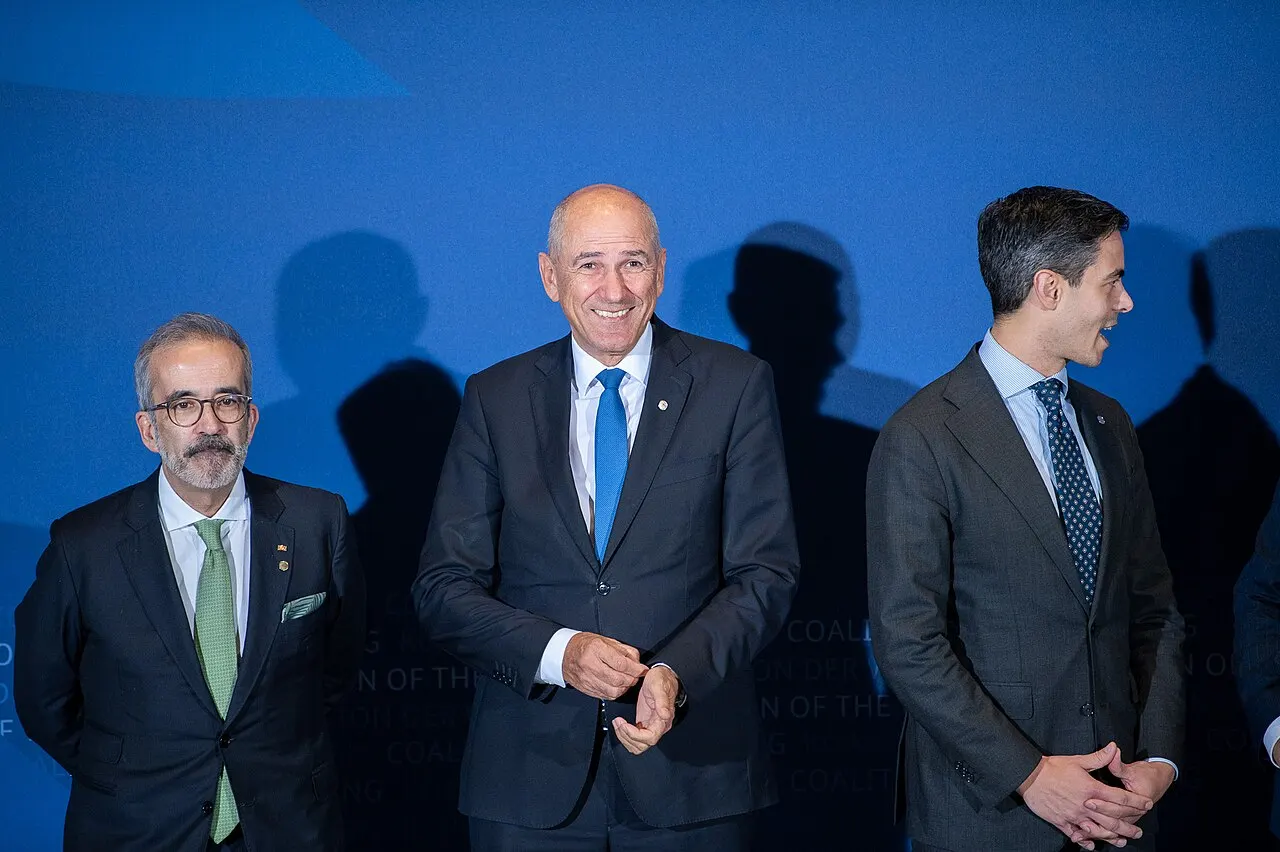
European leaders said on Thursday they are ready to negotiate with Russia on ending the war in Ukraine. The message came from a summit of Kyiv's allies in Berlin, known as the Coalition of the Willing.
UK Prime Minister Andy Burnham said Europe had a "clear and consistent and united negotiating position." German Chancellor Friedrich Merz said Moscow's "maximalist demands are not realistic." French President Emmanuel Macron and Ukrainian President Volodymyr Zelensky were also at the summit.
US President Donald Trump's envoys were in the room as well. His son-in-law Jared Kushner said Trump wanted to make a deal with Russia "with Europe by his side." Trump dialled into the Berlin meeting from Air Force One, hours after holding trilateral talks in Shenzhen with Putin and Chinese President Xi Jinping.
Putin addressed the question at a lengthy press conference after the Shenzhen talks. He said the Americans were "insistently" asking Russia to allow the Europeans to take part. Moscow, he said, had invited the Europeans to come to Moscow through diplomatic channels to set out their positions, and would then decide in what format talks with Ukraine continue.
Kushner struck an upbeat note. He said Trump left Shenzhen believing "peace is achievable," and that Moscow was now "comfortable" with Ukraine having security guarantees modelled on NATO's Article Five, the clause that requires allies to defend a member that comes under attack. Zelensky has long sought a guarantee of that kind. Russia has never accepted Ukrainian membership of NATO, though Article Five-style guarantees could in theory be offered to Kyiv without membership.
Why it matters
The question of who sits at the table has been the sticking point in the US-led peace effort. Putin has so far rejected any European role in the talks. Europe's leaders are now saying publicly that they are ready, and that any deal needs them in the room. Our [explainer on the Trump, Putin and Xi summit](/article/trump-putin-xi-summit-explained) sets out what the three leaders took from their meeting in Shenzhen.
The signals from Moscow are mixed. Last week, after a visit to Moscow, US envoys Witkoff and Kushner appeared certain that Europe would soon have a seat at the negotiating table. This week, Kremlin aide Yury Ushakov said a "great deal" would have to be done before the format could be expanded, suggesting several more rounds of talks before any four-sided meeting.
Zelensky and the European leaders were far less upbeat than Kushner. The Ukrainian president said Putin had spurned every proposal so far: "Putin has always said no." Merz said the chance of peace was increasing with US involvement, and that Europe was willing to enter "serious discussions on European security" with Russia, as long as it came with a serious discussion and "only first a peace agreement with Ukraine."
Meanwhile the war goes on. Russia keeps pounding Kyiv's energy infrastructure as winter takes hold, and civilian casualties are rising. On Thursday, drones hit buildings in Kyiv's historic centre. One person was killed in a strike on a residential building in the Podilskyi neighbourhood, and the Dutch and Austrian embassies and Saint Volodymyr's Cathedral reported damage.
Putin also vowed that Moscow's response to a Ukrainian strike on the [Crimean Bridge](/article/ukraine-attack-partly-collapses-crimean-bridge) would be "considerably more painful" than what Kyiv achieved. He said he had discussed a "possible ceasefire in a number of areas" but decided against it after the bridge attack.
What it means for the US
This is a US-led peace effort, and the next steps run through Washington. Trump's envoys are the ones pressing Moscow to widen the talks, and Trump himself dialled into the Berlin summit from Air Force One after meeting Putin and Xi in Shenzhen, where the three leaders [agreed that nuclear war "must never be fought"](/article/trump-xi-putin-agree-nuclear-war-must-never-be-fought).
Any Article Five-style guarantee for Ukraine would define what the United States is prepared to commit to Kyiv's security after a deal. That is the central question for Congress and for American taxpayers, who have funded much of Ukraine's defence. A settlement would also ease pressure on US energy prices and on the American military stockpiles drawn down to supply Kyiv. But a deal struck without Europe, or one that leaves Ukraine exposed, would land back on Washington's desk fast.
What happens next
Putin's invitation stands: the Europeans should come to Moscow to set out their positions, after which Russia will decide the format for talks with Ukraine. Ushakov's warning suggests that will take several more rounds, not days.
Merz set Europe's condition plainly: "These talks have to begin, and we will accept if conditions are acceptable for Europe and Ukraine." For now, the two sides are still talking about how to talk, while the fighting continues.