What happened
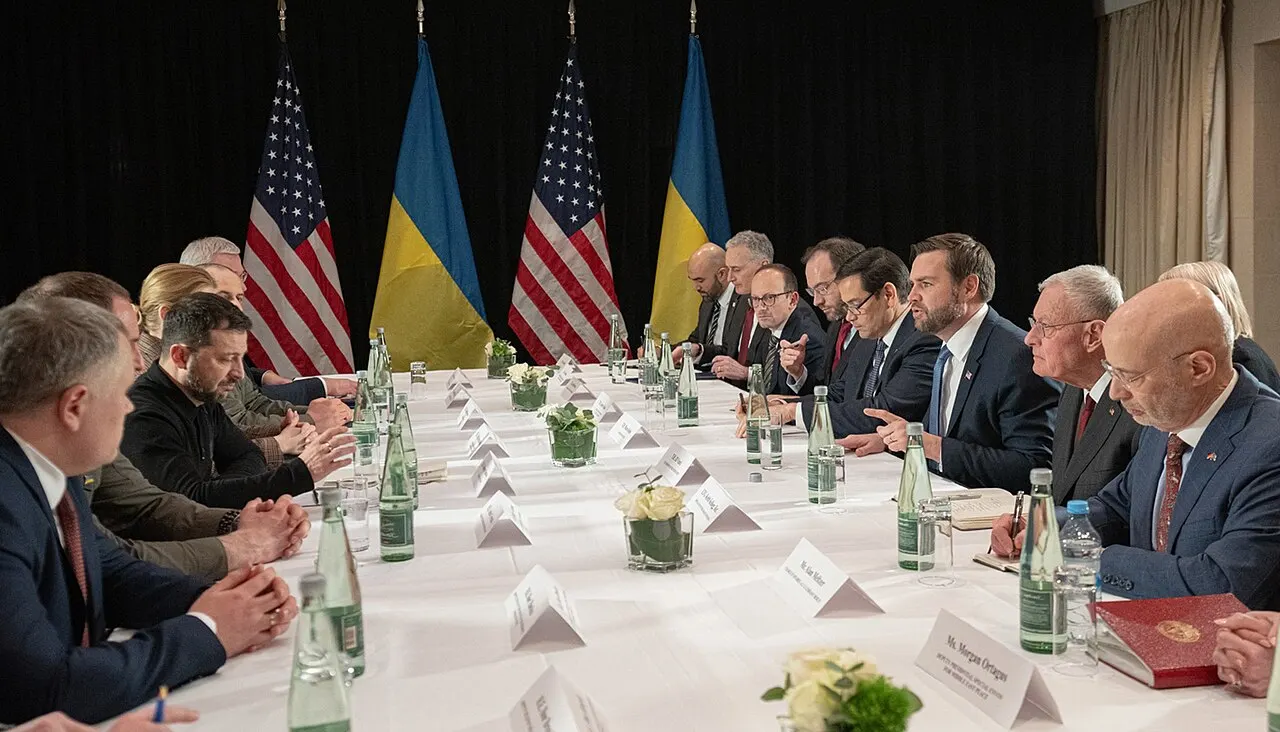
European countries will have a seat at the Russia-Ukraine talks opening Tuesday in Abu Dhabi, French Foreign Minister Jean-Noël Barrot said Sunday. The talks, set for November 10 and 11, are being mediated by the United States.
"The Europeans will be well represented and France will be in Abu Dhabi to take part in these talks," Barrot said on French broadcasters RTL and Public Sénat. He said he would not sit at the negotiating table himself, and France's representative has not yet been named.
Until now, the Abu Dhabi round had been presented as a three-way negotiation between Ukrainian, Russian and American officials. Ukrainian President Volodymyr Zelenskyy had pushed for Kyiv's European allies to be included, and Barrot said the Europeans had made their case to the American mediators in recent weeks. "No discussion concerning the future of this continent can ignore our expectations and our demands," he said.
The announcement came days after President Donald Trump met Russian envoy Kirill Dmitriev on Thursday and predicted a "major agreement" with Russia on Ukraine was close, one that he said "could cover all of Europe" and leave "everyone delighted." Trump gave no details. Barrot said Sunday he did not know what the president had in mind, and stressed that no deal with consequences for Europe's security setup could be "designed, or even discussed" without the Europeans.
The talks follow a week of [Russian strikes on Ukraine's power grid ahead of the Abu Dhabi meeting](/article/russia-hits-ukraine-power-grid-before-abu-dhabi-talks), which left hundreds of thousands without power.
Why it matters
Europe was facing the prospect of a deal about its own security being struck without it. A settlement between Washington, Moscow and Kyiv alone would still have needed European money, weapons and reconstruction support to hold. Getting a seat changes the dynamic: any agreement now has to survive European scrutiny, not just American and Russian approval.
Barrot used the same appearance to attack hard-left French presidential candidate Jean-Luc Mélenchon, calling him a "mouthpiece of the Kremlin." Mélenchon, speaking at a rally at Le Bourget on Saturday, backed a referendum on the status of the Donbass, the largely Russian-occupied region of eastern Ukraine, saying "it is for the people to decide." His party, La France Insoumise, unveiled its programme, "L'Avenir en commun," this week, which devotes little space to the war in Ukraine.
Moscow has already staged votes in annexed Crimea and in the four south-eastern Ukrainian regions it partly controls. Kyiv and the international community reject those votes as shams. Barrot said the Kremlin is trying to convince governments around the world that "the Donbass is Russian and that the war of aggression is a war to liberate the Donbass."
The war is already a fault line in France's 2027 presidential race. Marine Le Pen leads the polls and said in mid-October she would end French financial aid to Ukraine, which she puts at 6 billion euros a year, if she wins. Zelenskyy answered that she "does not have a very good grasp of certain details" of French-Ukrainian military cooperation, calling it a "win-win" partnership that also helps France's security.
What it means for the US
The United States is running the mediation, and Trump's push for a fast, sweeping deal now runs into a bigger table. With the Europeans in the room, Washington cannot close an agreement over their heads, which could slow the timeline Trump promised but also gives any deal more staying power in Europe.
For American readers, the outcome shapes how much the US keeps carrying on Ukraine aid and security guarantees, and whether a deal struck in Abu Dhabi holds up or unravels once Europe weighs in. A settlement that Europe rejects would leave the US holding the cost of a peace that does not stick.
What happens next
The talks open Tuesday, November 10, in Abu Dhabi and run through November 11. France still has to name its representative. The two things to watch: whether Russia accepts the expanded table, and whether the "major agreement" Trump described takes any concrete shape in two days of talks.