What happened
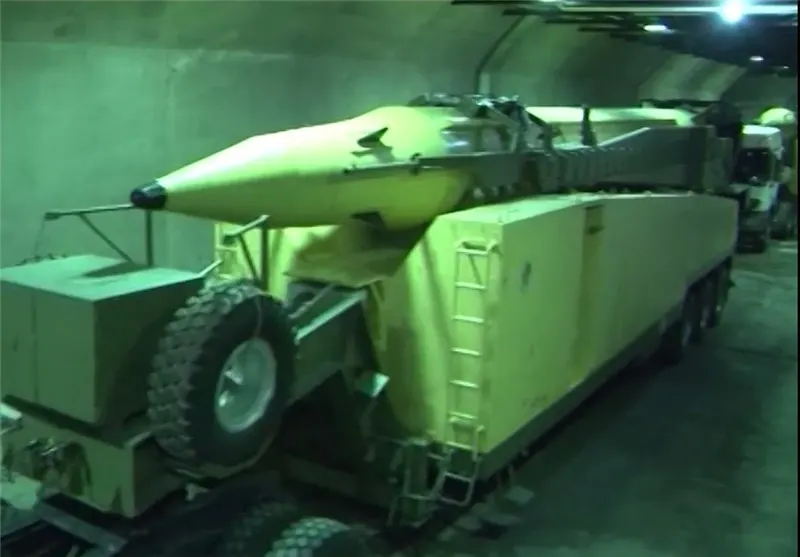
Iran's Revolutionary Guard says it has moved its missile and drone production underground. IRGC spokesperson Hossein Mohebbi announced the shift at a news conference in Tehran on Saturday, saying new underground complexes can keep weapons production and storage running even under heavy bombardment.
The Guard's missile and drone lines were moved from surface sites to underground facilities, Mohebbi said, so production continues while its adversaries assume its stockpiles are running low. The semi-official Tasnim news agency reported that an "underground missile city" is set to be unveiled.
Mohebbi also claimed advances in stealth technology let Iranian missiles and drones get through air defences and hit targets accurately during earlier rounds of fighting with the United States and Israel. He said "every weapon used by the IRGC Aerospace Force is manufactured using homegrown knowledge and expertise," according to Iran's IRNA news agency.
The announcement came with a warning. Mohebbi said limits on the range of Iranian missiles have been lifted, days after Supreme Leader Mojtaba Khamenei said there would be "no geographical limits" to Iran's response if it were attacked again by the US and Israel.
Why it matters
The claim, if true, changes the math of any future strike campaign against Iran. Underground production is far harder to destroy from the air, and it suggests Tehran learned from the rounds of fighting earlier this year — [satellite images already suggested Iran was rebuilding missile bases](/article/iran-rebuilding-missile-bases-satellite-images) after those strikes.
The numbers behind the warning are large. A recent Wall Street Journal report found Iran caused billions of dollars in damage to US bases across the Middle East during previous fighting. A Reuters report counted at least 135 Iranian strikes on Gulf infrastructure in the same period, causing billions of dollars in damage and lost revenue.
The timing matters too. The announcement landed as mediation efforts to end the war have stepped up, and a day after President Donald Trump said the US military carried out limited strikes on Iran's Qeshm Island while claiming "a lot of progress" in [talks with Tehran](/article/us-iran-talks-explained).
What it means for the US
For the United States, the message is aimed squarely at Washington: another round of strikes may not degrade Iran's arsenal the way planners hope. The US has already responded on two fronts — new sanctions to pressure Tehran, and a naval blockade to stop Iranian oil exports. On Saturday, US Central Command announced a new task force to stop Iran moving advanced weapons over land routes.
The stakes for American households run through energy. Tehran has warned it will hit Gulf energy infrastructure if fighting resumes, and it closed the Strait of Hormuz when the war began in February, triggering a global energy crisis. Another closure would push fuel prices higher in the US. The war has already become a domestic political fault line — [Vice President JD Vance has blamed it for Republican midterm losses, splitting from Trump](/article/vance-blames-iran-war-midterm-losses-trump-split).
What happens next
The Guard says it will unveil its "underground missile city." Mediators are pushing to bring the war to an end, while Washington keeps tightening sanctions and the blockade.
If the talks stall and fighting resumes, Tehran has said Gulf energy sites are on its target list — a threat that would test both the new task force and global oil markets.