What happened
New satellite images taken in November show Iran carrying out major construction near at least two of its biggest missile sites and repairing bases damaged by months of US and Israeli air strikes, according to an analysis by BBC Verify.
At the Garmdareh military base in Karaj, near Tehran, the images show digging, new buildings and multiple vehicles, along with improvements to the nearby airbase. Analysts at the British intelligence company MAIAR, which reviewed the photos for BBC Verify, also spotted digging and new buildings at the Shahroud base in northern Iran. The images appear to show "a new portal for an underground facility" at Karaj.
At least 12 other military sites, including missile complexes and air bases, show signs of repairs. At the Kermanshah missile base in western Iran, near the border with Iraq, new roofs have been built on destroyed buildings. At the Parchin military complex east of Tehran, damaged buildings have been cleared and debris removed. At its Taleghan 2 facility, major construction appears complete, damaged buildings have been levelled, and damage to an underground bunker has been repaired and reinforced with concrete.
Near Qom, close to the Fordo underground uranium enrichment complex, which has been bombed by the US and Israel multiple times, the images show new construction and excavations outside tunnel entrances.
Why it matters
The scale of the work points to a rebuilding effort, not routine maintenance. Iran appears to be moving key parts of its missile programme underground, where strikes cannot easily reach them.
Jim Lamson, a former CIA analyst who focused on Iran, said the excavations at Shahroud could relate to missile production. The nearby air base has been targeted multiple times, he said, and the Islamic Revolutionary Guard Corps is probably trying to move production facilities underground.
That fits a pattern MAIAR analysts described: Iran repeatedly shifts infrastructure below ground to protect it from further strikes. Mark Mellett, a defence analyst and former head of the Irish military, said building underground also makes it harder for outside observers to judge how much capacity Iran has and whether it is operational.
Janes, the defence intelligence firm, also found a new facility under construction at Karaj, with tunnel entrances and structures that could point to an expansion of damaged or destroyed missile bases, or to storage. Janes analyst Sean O'Connor said the work was unlikely to be a deception effort, because such a project "would be costly and may achieve little".
The findings sit uneasily with repeated White House assurances that US-Israeli attacks have depleted the Iranian armed forces. President Donald Trump has dismissed them as a "complete and total mess". A Pentagon spokesperson previously said the US had "destroyed up to 90% of Iran's drone, ballistic missile, and naval industrial base" and significantly degraded its ability to launch drone and missile attacks.
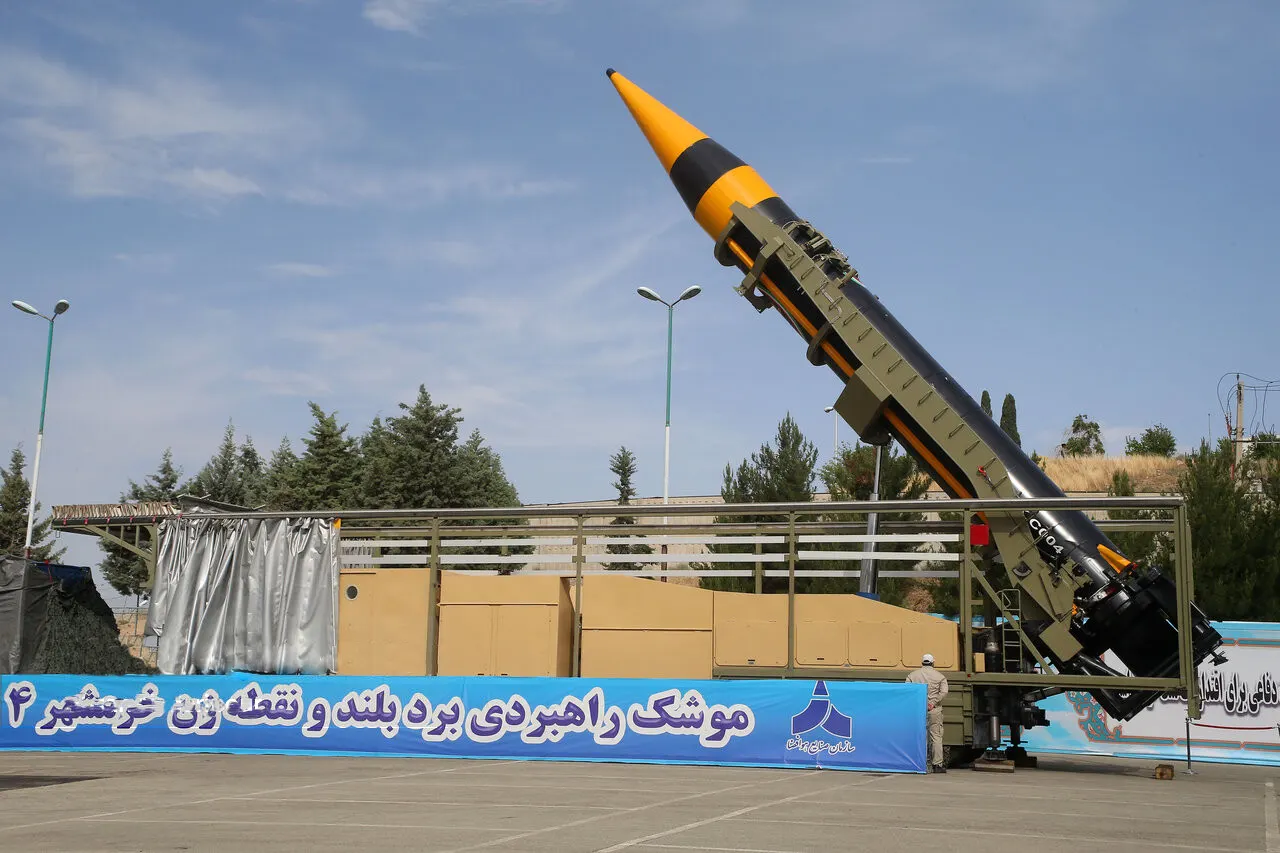
Iran, for its part, claims it still holds large missile stockpiles. State TV footage broadcast this week claimed to show dozens of missiles at the entrance to an underground facility in southern Iran.
What it means for the US
For the US, the images raise a direct question about what months of strikes actually achieved. If Iran is rebuilding its missile capacity underground, the threat to US forces and allies in the region may be returning faster than Washington has suggested.
The timing adds pressure. Speculation has grown in recent weeks that the US could resume attacks on Iran after the midterm elections held earlier this week. On Wednesday, Vice-President JD Vance said the war's unpopularity with voters may have cost Republicans control of the Senate for the next six years, after he blamed it for the party's poor showing in the midterms. [Vance's remarks split him from Trump on the issue](/article/vance-blames-iran-war-midterm-losses-trump-split).
Mark Cancian, a military analyst at the Center for Strategic and International Studies, said the activity showed Tehran was bracing for further attacks by the US and Israel. Its purpose, he said, is to better defend itself, and it shows a priority on rebuilding military capability rather than rehabilitating the economy.
The standoff has been building for months. [Our explainer on the US-Iran talks](/article/us-iran-talks-explained) lays out how the two sides got here and what is at stake.
What happens next
Analysts will keep watching the sites for signs of how fast the rebuilding moves and whether production resumes underground. Any new US decision on strikes would come against the backdrop of a divided Congress and a public that, by Vance's own account, turned against the war at the ballot box.