What happened
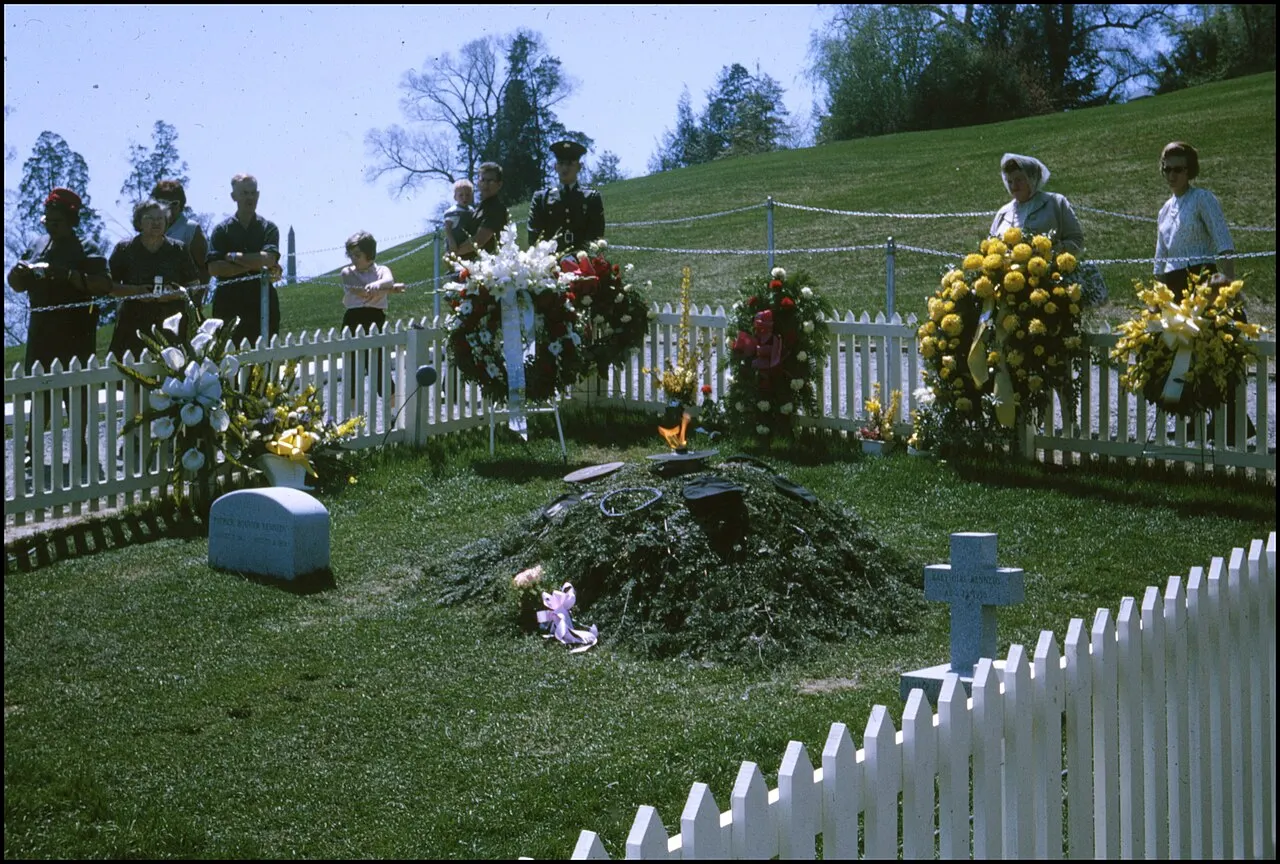
Nine members of the Kennedy family filed a federal lawsuit on Tuesday to block President Donald Trump's proposed 250-foot arch at Arlington National Cemetery. They want to join an existing federal case against the project, arguing the arch would loom over the graves of their relatives, including President John F. Kennedy and his eternal flame.
The plaintiffs include children of Sen. Robert F. Kennedy and Ethel Kennedy, and a son of Sen. Edward M. Kennedy. All three are buried at Arlington. One family member did not sign on: Health and Human Services Secretary Robert F. Kennedy Jr., who serves in the administration he would be suing.
The filing is the latest turn in a fast-moving legal fight. The Trump administration pushed the arch through federal approvals over the past year and won a final green light from the National Capital Planning Commission last Thursday. Officials had said they could break ground in Memorial Circle the same day. Within moments of that late-night approval, District Court Judge Tanya Chutkan blocked construction for two weeks while she weighs the broader challenges.
Why it matters
The arch would stand in Memorial Circle, the traffic circle on the bridge that links Arlington House to the National Mall. The administration wants it 250 feet tall, topped with gold statues and its own eternal flame. The Kennedys say it would block the view between the monuments and cast shadows across the gravesites. Their 27-page filing calls the arch "a permanent denigration of the Kennedy Gravesites."
The complaint cites a recent Washington Post forensic analysis: the arch would cast shadows over tens of thousands of graves, darken the Kennedy memorial on 50 days of the year, and briefly block the eternal flame on almost half of those days. The family often visits in the morning, when the Post found the shadows would be worst.
The case also tests a bigger question: can a president build a major monument in the capital without Congress? The administration has not sought congressional approval. It points to a century-old authorization for two columns that were never built at the same spot. Chutkan was unimpressed, writing last week that "merely to state this argument is to reveal its flaws."
The Kennedys are not alone. Vietnam War veterans and an architectural historian sued earlier this year, and the governments of Washington, D.C., and Virginia filed their own case late last month. The Arlington County Board has sued in Virginia too. Veterans have packed hearings and filed tens of thousands of comments against the project, saying construction, with 20-hour workdays by the administration's own estimate, would disrupt the 24 to 27 funeral services held at Arlington every weekday.
What it means for the US
Arlington is the country's most hallowed military burial ground, the final resting place of more than 400,000 service members, veterans, and their relatives. The fight over the arch is really a fight over who gets to reshape national memorials, and whether a president can do it alone. If the administration's reading of a century-old authorization holds up, future presidents could point to it to build monuments without Congress.
The Kennedys may also change the legal math. The administration has argued the cases should be thrown out because the plaintiffs lack standing, the same reasoning the Supreme Court used in the White House ballroom case. But Chutkan has already said D.C. and Virginia likely have standing, and Georgetown law professor David Super told NPR the Kennedys' involvement only strengthens the plaintiffs' position, since a judge would be unlikely to dismiss the concerns of a family over its own graves.
Congress is watching too. Democrats have vowed to use their [forthcoming House majority](/article/democrats-won-congress-what-happens-next-explained) to block the president's construction projects and investigate them, though experts say oversight hearings and funding restrictions are more realistic tools than a direct block, given Trump's veto power. The House is already testing its leverage over the administration: it [blocked an impeachment bid against Defense Secretary Pete Hegseth](/article/us-house-blocks-hegseth-impeachment-bid) in a 211-204 vote on Tuesday.
What happens next
Chutkan's two-week block buys time while she evaluates the challenges. The veterans are pushing for a more permanent ban, and they filed a fresh round of documents this week, including a declaration from retired U.S. Army Brig. Gen. Steven Anderson arguing the arch would actually endanger national security by placing a high-value target beside a major road network and close to D.C.'s airport.
The White House says it will keep making its case. Spokesman Davis Ingle told NPR the administration is "confident we will be fully vindicated as this litigation proceeds." The administration describes the arch as a tribute to the nation's military heritage that will enhance the visitor experience at the cemetery.
Max Kennedy, one of Robert F. Kennedy's sons, put the family's position bluntly to NPR: "This is one man who wants to build this arch. He's violated every rule." The family says it would have no problem with the arch if it had gone through the standard process for new memorials in Washington, with years of expert and public input. Experts told NPR the dispute will likely end up at the Supreme Court.