What happened
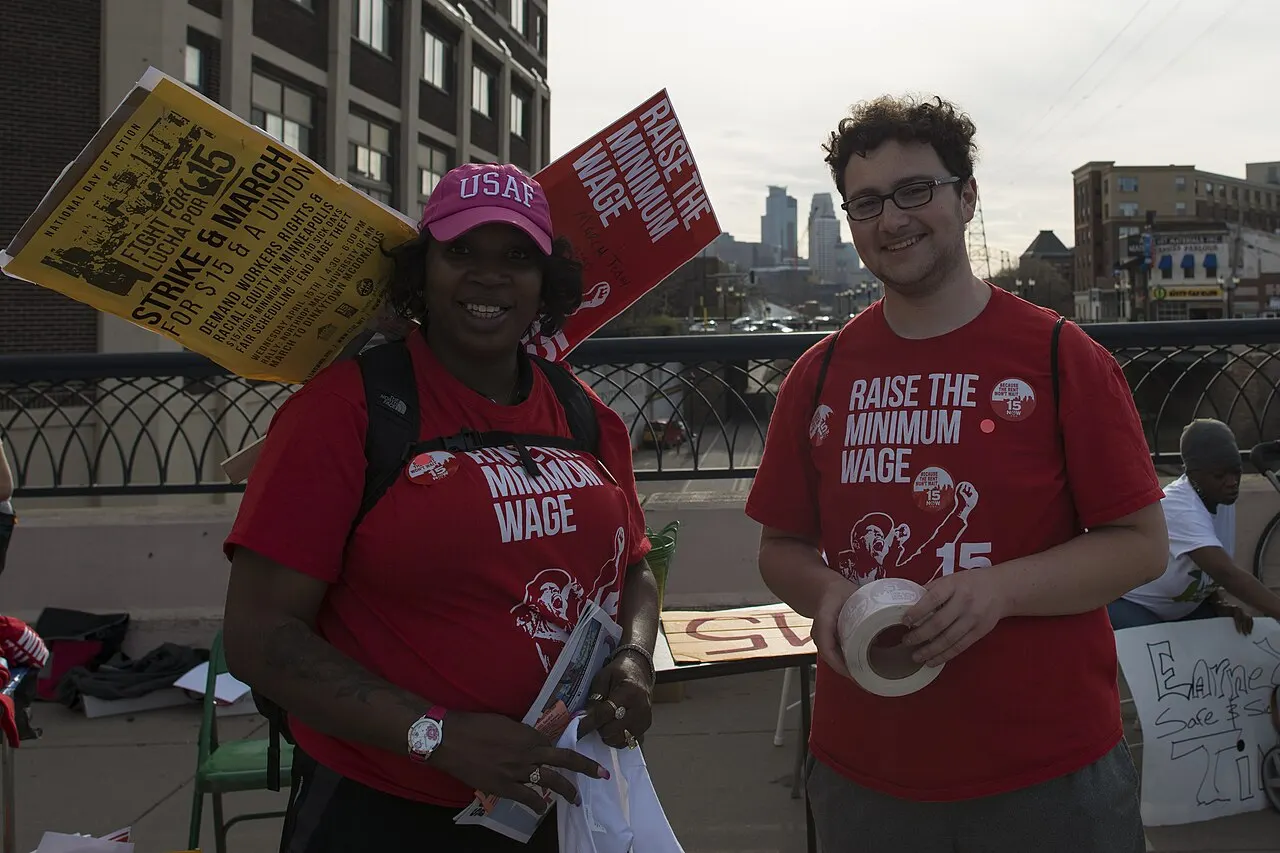
A group of 17 lawmakers in Washington is pushing to raise the federal minimum wage to $25 an hour and scrap the separate, lower wage for tipped workers. The group, which includes current and newly elected House members, is calling for passage of the Living Wage For All Act, a bill introduced in April that has sat untouched since.
The bill's lead sponsors are Representatives Delia Ramirez of Illinois, Jesus "Chuy" Garcia, also of Illinois, and Analilia Mejia of New Jersey. It would raise the federal minimum wage in stages. Large employers — those with more than 500 workers nationwide or at least $1 billion in annual revenue — would reach $25 by 2031. Smaller employers would have until 2038.
After that, the rate would be pegged at two-thirds of the US median hourly wage, with annual adjustments to hold that ratio. The bill would also end the tipped subminimum wage, currently $2.13 an hour, a rate frozen since 1996. Under the current rules, employers can count customers' tips toward a worker's minimum-wage obligation.
Why it matters
The federal minimum wage has been stuck at $7.25 an hour since 2009 — 17 years without an increase. Adjusted for inflation, that 2009 wage would be worth $11.32 today, meaning it has lost 36 percent of its buying power. The wage's purchasing power peaked in 1968, and it has fallen roughly 53 percent since then.
The gap is not just federal. Twenty states still have no minimum wage above the federal $7.25, including Texas, Georgia and Iowa. Washington, DC, has the highest rate of any US jurisdiction at $18.40 an hour, followed by Washington state at $17.13. Only seven states require employers to pay tipped workers the full minimum wage before tips, including Alaska, California and Nevada.
Brad Lander, a congressman-elect from Brooklyn, New York, said he will join the bill as a co-sponsor when the new congressional session begins in January. "All workers deserve a raise," he told Al Jazeera. "The 45 million working people who make less than $20 an hour deserve a raise, and the tipped subminimum wage is inexcusable at this point."
The tipped wage has deep roots. When Congress passed the Fair Labor Standards Act in 1938, it left out domestic and agricultural workers, jobs held disproportionately by Black Americans. Congress extended minimum-wage protections to restaurant and service workers in 1966, but set the tipped rate at half the standard wage instead of the full rate. In 1996, Congress froze the tipped cash wage at $2.13, where it still sits.
What it means for the US
For the roughly 45 million Americans earning under $20 an hour, the bill would be the largest federal pay raise in decades — if it passes. A $25 floor would lift pay for restaurant servers, retail workers, cleaners and millions of others whose wages have not kept up with rent, groceries and child care.
It would also reshape how restaurants and bars pay staff. Ending the tip credit means employers, not customers, would be responsible for the full wage. Supporters say that ends a system where a slow night can leave a server short. Restaurant owners have long argued it would push up menu prices and squeeze small businesses.
The politics are a signal too. A poll released Wednesday by One Fair Wage found 78 percent of voters said raising the minimum wage to $25 was an important factor in their vote in the recent midterm elections, where cost of living was a top issue and Republicans took heavy losses. [Democrats are preparing to take control of both the House and Senate](/article/democrats-won-congress-what-happens-next-explained) in the new Congress, and they are reading the result as a mandate. The cost-of-living backlash also [powered the Democrats' midterm win](/article/gen-z-powered-democrats-midterm-win).
What happens next
The bill's supporters face a familiar wall. The last big attempt, the Raise the Wage Act of 2021, would have lifted the federal rate to $15. It died in the Senate in March 2021 on a 42-58 vote, with all Republicans opposed, joined by seven Democrats and independent Senator Angus King of Maine.
President Joe Biden later raised the wage for federal contract workers to $15 by executive order in 2022. President Donald Trump revoked that order in 2025. Lander and the other co-sponsors say they will push the bill when the new Congress convenes in January, betting that the midterm results and the cost-of-living debate give it a better shot this time.