What happened
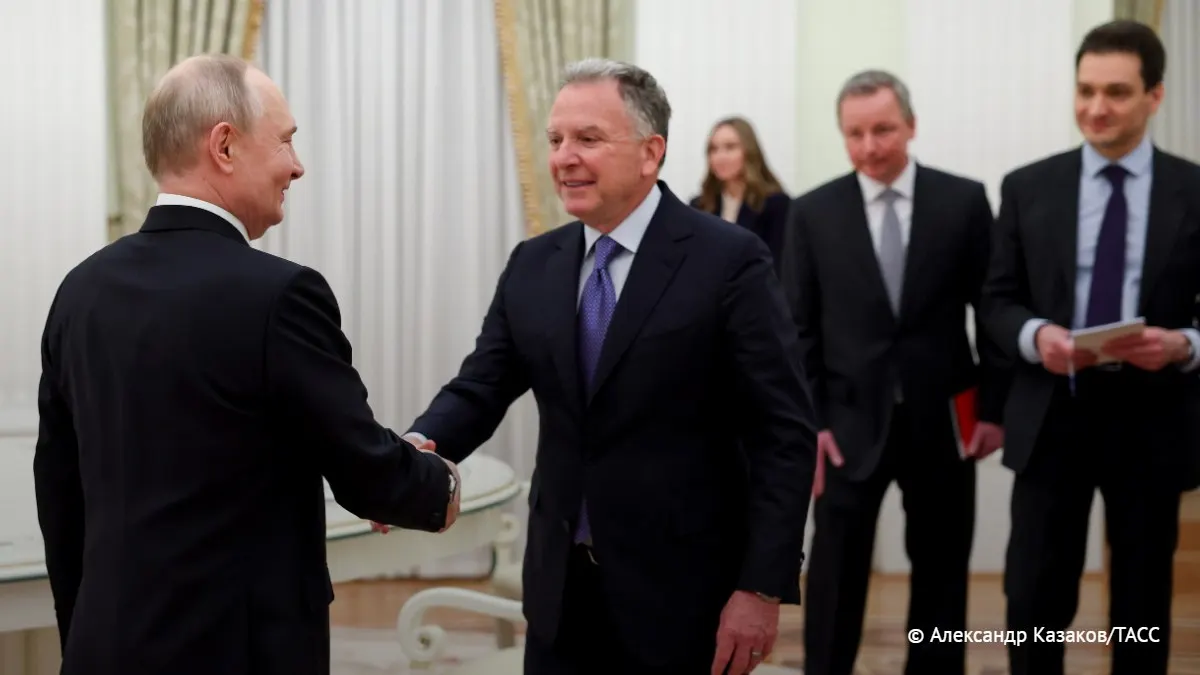
Vladimir Putin met US envoys Steve Witkoff and Jared Kushner in Moscow this week, and the Kremlin came out of the talks with a bigger list of demands, not a smaller one. After the meeting, Moscow said the price of peace is "a new, long-term architecture of indivisible security and peace." In plain terms, that means rewriting Europe's security setup in Russia's favor.
The Kremlin has pulled its December 2021 "draft treaties" with the US and NATO back out of the drawer. Those documents would give Moscow cast-iron guarantees that Ukraine and Georgia never join NATO, and roll back NATO military infrastructure from the central and eastern European countries that joined the alliance after the Soviet Union fell.
Putin's foreign policy aide, Yuri Ushakov, said Moscow is about to "add certain new considerations" to its list, pointing to Western efforts "to inflict a strategic defeat on Russia." Putin himself says he wants "eternal peace" for Ukraine. He is the same leader who ordered the full-scale invasion nearly five years ago and still rejects a comprehensive ceasefire.
Why it matters
These are the same demands Western leaders dismissed as an unacceptable ultimatum in December 2021. Two months later, Russia invaded Ukraine. Bringing them back now raises the price of a deal instead of lowering it, and it turns a negotiation about Ukraine into a negotiation about the whole map of Europe.
The EU's top diplomat, Kaja Kallas, called the demands a "trap" designed to "shift attention away from a ceasefire." Her argument is about sequencing: a ceasefire first, then a peace agreement, and only after that any talk about Europe's wider security architecture.
Europe still has no seat at the table. This week's [peace talks in Abu Dhabi](/article/russia-ukraine-talks-end-without-breakthrough) involved only Ukraine, Russia, and the United States. Witkoff said Putin had agreed to let European representatives join the next round, but on Friday the Kremlin said no final decision had been taken. Spokesman Dmitry Peskov said Moscow would decide "once we understand their true intentions and their readiness to facilitate the peace process." Ukraine's President Volodymyr Zelensky welcomed the US move to bring Europe into the talks.
The stakes are visible on the battlefield too. [Ukraine reported curbs on Starlink service](/article/ukraine-reports-starlink-curbs-as-us-envoys-meet-putin-in-moscow) as the US envoys met Putin, a reminder that the fighting, and the pressure on both sides, has not paused for diplomacy.
What it means for the US
The United States is now the broker in the middle. Its envoys are carrying Moscow's demands back to Washington, and Trump may meet Putin and China's Xi Jinping separately next week in Shenzhen, on the sidelines of the Asia-Pacific Economic Cooperation summit. Russian media are already comparing that prospect to the 1945 "Big Three" meeting of Stalin, Roosevelt, and Churchill that redrew post-war Europe.
For American readers, the question is what Washington will accept in order to end the war. A deal built on rolling back NATO would redraw a security map the US has underwritten since the Cold War, and it would set the terms for European security for years. It would also test how far the administration will go to close a war that has cost American taxpayers billions in aid to Kyiv.
The costs are biting Russia too. After nearly five years of war, Moscow has suffered huge battlefield losses, its economy is under growing pressure, and Ukrainian drone strikes keep hitting Russian oil refineries, raising fears of fuel shortages at home. None of that has moved Putin toward a ceasefire so far, which is why the US push now faces its hardest test.
What happens next
Three things to watch. First, whether the Kremlin lets European representatives into the next round of talks, a decision Peskov left open. Second, what Ushakov's "new considerations" turn out to be, and whether they push Moscow's price even higher. Third, the Shenzhen meeting next week, where Trump, Putin, and Xi could all be in the same place at the same time.
The ceasefire itself remains the first hurdle. Until Moscow agrees to stop the fighting, the wider security demands are a debate about the shape of a peace that does not yet exist.