What happened
Ukrainian officials have accused Russia of deliberately targeting rescue workers after a "double-tap" strike on a village near the front line killed at least 72 people. It is now the second-deadliest single incident of the war in Ukraine, according to the figures cited in a BBC Verify investigation published on Tuesday.
According to Ukraine, Russia hit a humanitarian aid centre in the village of Komyshuvakha twice in succession on 2 November. Residents had gathered after a local Telegram group said aid would be handed out between 10:00 and 12:00 local time. The first strike, at 09:45, hit buildings above ground and killed one woman. About an hour later, a second strike hit the shelter where people had fled. Ukraine says the weapon was a 3,000kg (6,600lb) aerial bomb.
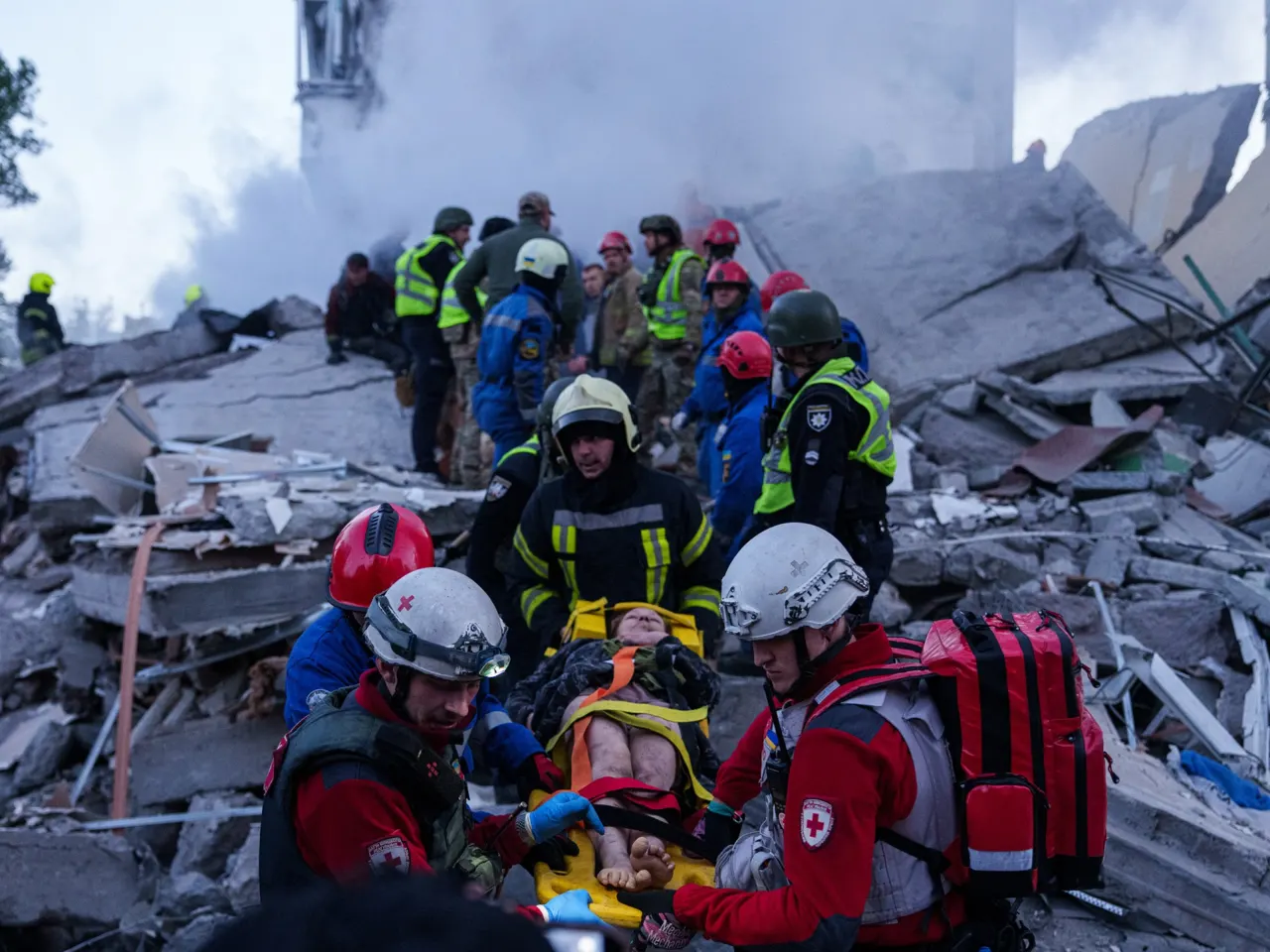
Verified images from the days after the attack show damage to emergency vehicles and excavation equipment at the site. Ukraine's State Emergency Service told BBC Verify there were several Russian strikes during the rescue operation, which has now ended. Three police officers, four workers and two rescue dogs were injured, and five vehicles were damaged.
Why it matters
A "double-tap" strike, a second attack timed to hit the people who rush in after the first, is one of the most feared tactics of this war, because it turns rescue itself into a target. BBC Verify confirmed police bodycam footage from the day after the attack that shows rescue workers shouting "drone, drone" and running for cover, then treating a victim. Radio warnings of a second strike grow more urgent through the footage until people are told to run to the underground shelter. The video later goes dark as a large explosion sounds. Aftermath footage shows bodies being pulled from a large crater directly above the shelter, with twisted iron and rubble below the surface.
Weapons experts who examined the evidence say the crater matches a FAB-3000, a 3,000kg Russian bomb built to destroy underground structures. Trevor Ball, a bomb disposal expert at Armament Research Services, said the crater was consistent with the damage and depth left by the weapon, a view echoed by Chris Proops, a former UK National Crime Agency investigator. Verified photos of munition fragments also show part of a guidance kit compatible with the FAB-3000, which makes the bomb more accurate and lets it be fired from farther away.
International law experts told BBC Verify that knowingly attacking rescue workers would be a war crime. Ben Saul, a professor of international law at the University of Sydney, said the attack "appears to be either a deliberate attack on civilians or civilian objects - a war crime - or an indiscriminate attack - also a war crime". Samuel Moyn, a professor at Yale University, said "directly targeting rescuers or their equipment is a gross violation of international humanitarian law".
What it means for the US
The findings land in the middle of a diplomatic push. President Donald Trump is in Asia this week for [talks with Xi Jinping and Vladimir Putin](/article/trump-putin-xi-summit-explained), with Washington pressing for a negotiated end to the war. Evidence that Russian forces deliberately struck rescuers hardens Kyiv's position and raises the political cost, in Washington as well as Kyiv, of any settlement that leaves front-line villages exposed.
It also complicates the debate over what a deal should look like. The US has [floated Ukraine ceding territory in exchange for NATO membership](/article/us-floats-ukraine-ceding-donbas-for-nato-membership), a proposal Kyiv has resisted. Attacks like the one at Komyshuvakha strengthen the argument, made by Ukraine and its supporters in Congress, that any agreement needs hard security guarantees, not just paper promises.
For American readers, the case is a reminder of why the war still matters to US policy: the US remains the main outside broker in the talks, and each new atrocity allegation shapes what kind of deal the public and lawmakers will accept.
What happens next
Russia's defence ministry has not responded to BBC Verify's specific questions about the Komyshuvakha attacks. Its general statement on 2 November said it had targeted energy and transport infrastructure used by the Ukrainian military across the country. There are no military or industrial facilities in Komyshuvakha, though the village sits close to a key route used for Ukrainian troop movements, supplies and evacuations. It had already been struck on 28 October.
Funerals for the victims have been held almost daily, for locals who ran the aid distribution, those who came to collect it, and soldiers who arrived to help with the rescue. The verified video, fragment photos and expert analysis from the investigation add to the file of alleged war crimes being documented as the diplomacy plays out. Ukraine's escalation of the war in the air, meanwhile, continued this week with Kyiv's [biggest drone attack yet on the Crimea bridge](/article/crimea-bridge-hit-in-biggest-ukrainian-drone-attack-of-war).