What happened
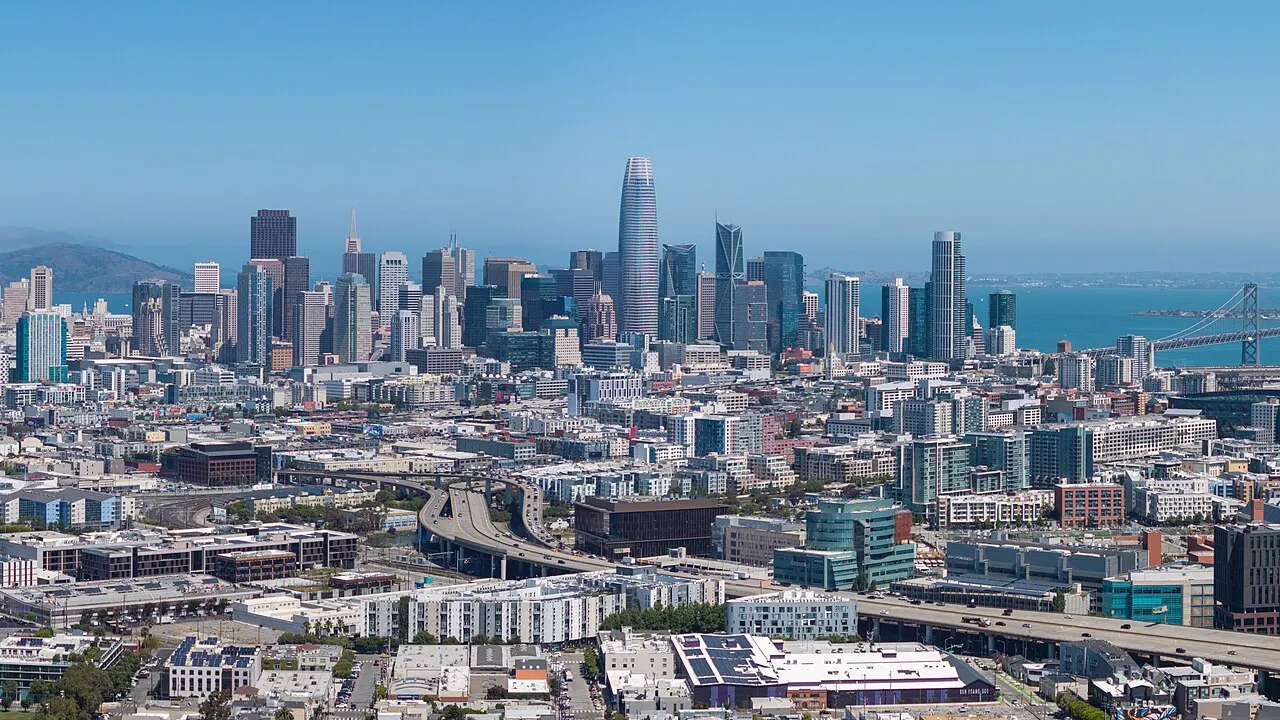
San Francisco is booming again, and AI is doing the lifting. After a pandemic exodus hollowed out its downtown, the city is filling back up. Not with the old tech giants, but with thousands of AI startups and the two companies at the center of the race, OpenAI and Anthropic, both based here.
The signs are everywhere. Rents and house prices are climbing, office vacancies are falling, and buses and billboards across the city carry cryptic ads for AI products. [Anthropic listed on the Nasdaq last week](/article/anthropic-shares-jump-33-record-81bn-nasdaq-debut) in a record debut, and hiring for top engineers comes with salaries the BBC describes as eye-popping.
But the mood is not all celebration. The International Monetary Fund warned last month that a sharp correction in AI share prices, and a big drop in investment, is a real possibility. Since then, worries have only grown, fuelled in part by a scandal surrounding Jensen Huang, the former boss of chipmaker Nvidia, which the BBC reports has dragged down wider AI stocks.
Nvidia itself, based just south of the city, remains highly profitable. This week it reported quarterly profit of $65 billion, double the figure a year earlier.
Why it matters
San Francisco is not just participating in the AI boom. It is the boom. One study found that 60% of all venture capital invested in US AI firms between 2023 and 2025 went to companies based in the city, dwarfing the share that went to Silicon Valley, 40 miles to the south.
That concentration cuts both ways. A correction would hit San Francisco harder than anywhere else in America, and the pain would not stop at tech workers. AI firms are hiring far fewer people than past booms did, so the first casualties would be the service jobs that depend on them: restaurants, retail, dog walkers, drivers.
Enrico Moretti, an economics professor at UC Berkeley, warns a significant correction could still be "very painful" for the city, with office vacancies rising and rents and house prices weakening. "It is the spillover on service jobs that would actually be the main effect," he said.
There are cushions. Healthcare and tourism are growing too, and the city's chief economist, Ted Egan, notes tourism growth has been "healthy" even if it is "not fully back." Egan does not expect an AI crash to change the city's trajectory. "The city's economy has not been screaming during this AI boom, so I wouldn't expect it to grind to a halt if there was a slowdown in AI spending," he said. He calls a downturn "primarily a hiccup... rather than a major course correction."
For US readers the stakes go beyond one city. AI stocks now loom large in retirement accounts and index funds, and the spending behind the boom, much of it on data centres and computing power, is the biggest capital bet in American business. [Trump has even threatened to ban US firms from building AI data centres overseas](/article/trump-threatens-ban-us-firms-building-ai-data-centres-overseas). San Francisco may be the brains of the AI boom, but the money and the risk are national.
What happens next
Nobody in the city is betting the boom lasts forever. One AI worker told the BBC he is "certain that the house of cards will come down" and that it will affect him, questioning whether leading US AI companies can earn enough to justify their enormous spending, especially as cheaper, increasingly capable models emerge from China. Another called a significant market correction "totally possible," though he said his bigger worry is the existential risk AI could pose to humanity.
That unease is now part of the conversation at the top of the industry too. [OpenAI's chief scientist has proposed a speed limit on AI development](/article/openai-chief-scientist-proposes-speed-limit-ai-development), a sign that even insiders are debating how fast the race should run.
On the ground, small businesses are enjoying the good times while they last. Lauren Goldboss, who runs a dog-walking company, has been hiring staff and buying vans on the back of a new service for AI startups. Her plan is simple: "build while it is here." If the next bust comes, "always a reality in San Francisco," she will adapt. "It is just the risk you kind of have to take," she said.