What happened
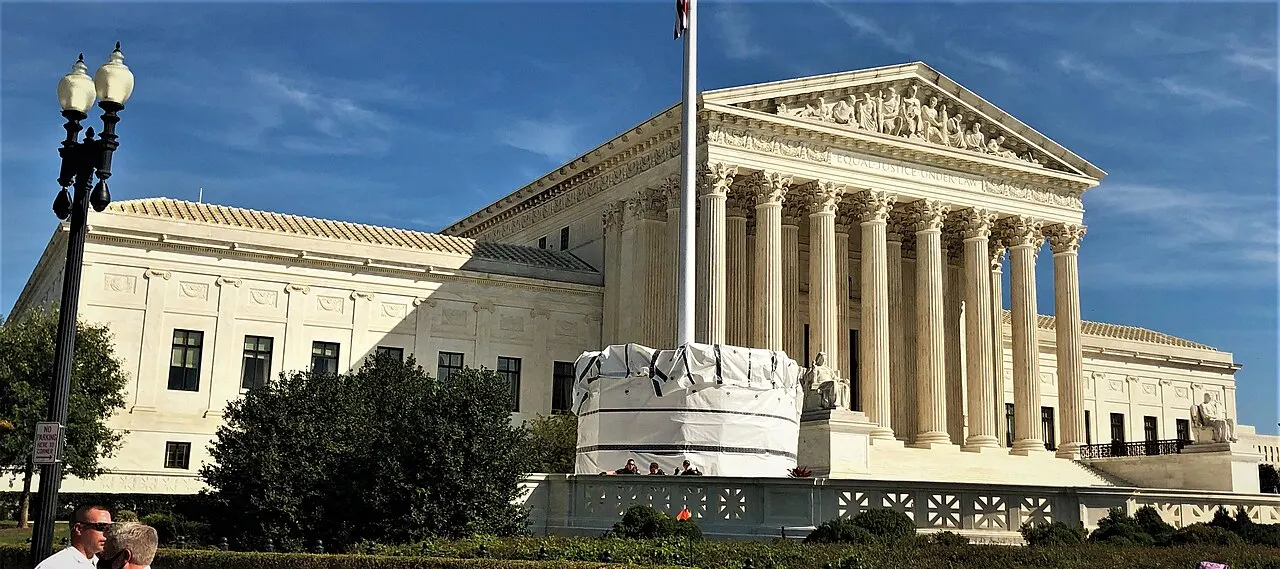
The Supreme Court hears arguments Monday in a case that could wipe out one of the few ways Americans can sue federal officers who violate their constitutional rights.
The case comes from a federal prison in Hawaii. Five years ago, a gang riot broke out inside the prison, and Kekai Watanabe was beaten with a makeshift weapon, a lock inside a sock. When he complained of serious back pain, a nurse told him to "stop being a cry baby." Seven months passed before doctors found the real problem: a fractured tail bone.
Watanabe, now 40, sued the nurse, saying she violated his Eighth Amendment right against cruel and unusual punishment. His back pain has not gone away since the attack, his lawyers say. On Monday, the justices will hear his case and decide whether the legal tool he used to sue should survive at all.
Why it matters
That tool is called Bivens, after a 1971 Supreme Court decision. Webster Bivens was handcuffed, strip searched and beaten by federal drug agents, and the court said he could sue them for damages even though no law specifically gave him that right.
The court has narrowed Bivens ever since. In a 2022 decision, it refused to let the owner of an inn near the Canadian border in Washington state sue a Border Patrol agent accused of using excessive force. Since then, lower courts have thrown out Bivens cases brought by immigrants and prisoners in the vast majority of cases.
Even now, winning is hard. A person has to prove the officer acted with "deliberate indifference" to a serious medical need. Georgetown law professor Stephen I. Vladeck called that "a very, very high bar."
The two sides read the record differently. Mary Hampton Mason, who spent nearly 35 years at the Justice Department evaluating claims against federal workers, filed a brief for the nurse with the Federal Law Enforcement Officers Association. She argued Bivens cases are so rare and hard to win that they do not deter misconduct, and noted that in the last 20 years she knows of only one Bivens case that ended in a judgment for plaintiffs that survived appeal, for less than $50,000. Congress has known about Bivens for more than 50 years, she said, "and they've declined to do so."
Watanabe's supporters see it differently. Gregory Cui, an attorney at the MacArthur Justice Center, said damages matter because they give victims a way to pay for medical care and rebuild their lives. He also pointed to the prison grievance system, which his brief says succeeds about 1% of the time for prisoners seeking changes such as better medical care. "It's the courts who created this remedy, and it's the courts who should decide whether to preserve it," Cui said.
What it means for the US
The case reaches beyond prison walls. It lands as complaints against federal immigration officers are rising, with agents accused of beating and running over migrants during enforcement operations. [Democrats in Congress are already planning wider probes of fatal ICE shootings](/article/democrats-plan-wider-probes-fatal-ice-shootings).
If the court ends Bivens, people who say federal officers violated their rights would have almost no way to sue for damages. The remedy would depend on Congress writing a new law, something it has not done in more than five decades. The timing adds to the pressure: Democrats won big on immigration in the midterms, but [ICE still holds its $240 billion budget](/article/democrats-won-immigration-ice-still-has-240-billion).
Vladeck warned that a world with no Bivens is one in which federal officers "would enjoy absolute immunity" no matter how serious the misconduct. For Americans, the stakes are practical. The same rule that decides Watanabe's case would also decide whether an immigration agent, a Border Patrol officer or any other federal officer can be sued after an encounter goes wrong.
Congress could settle the question itself. Both sides agree lawmakers have the power to create a right to sue federal officers. [The new Congress is back in Washington this week](/article/congress-returns-lame-duck-session-funding-deadline), but in more than 50 years, Congress has never written that right into law.
What happens next
Oral arguments take place Monday. A ruling is expected in the spring. Until then, the right to sue a federal officer for a constitutional violation rests with the court, and with a precedent that has been shrinking for years.