What happened
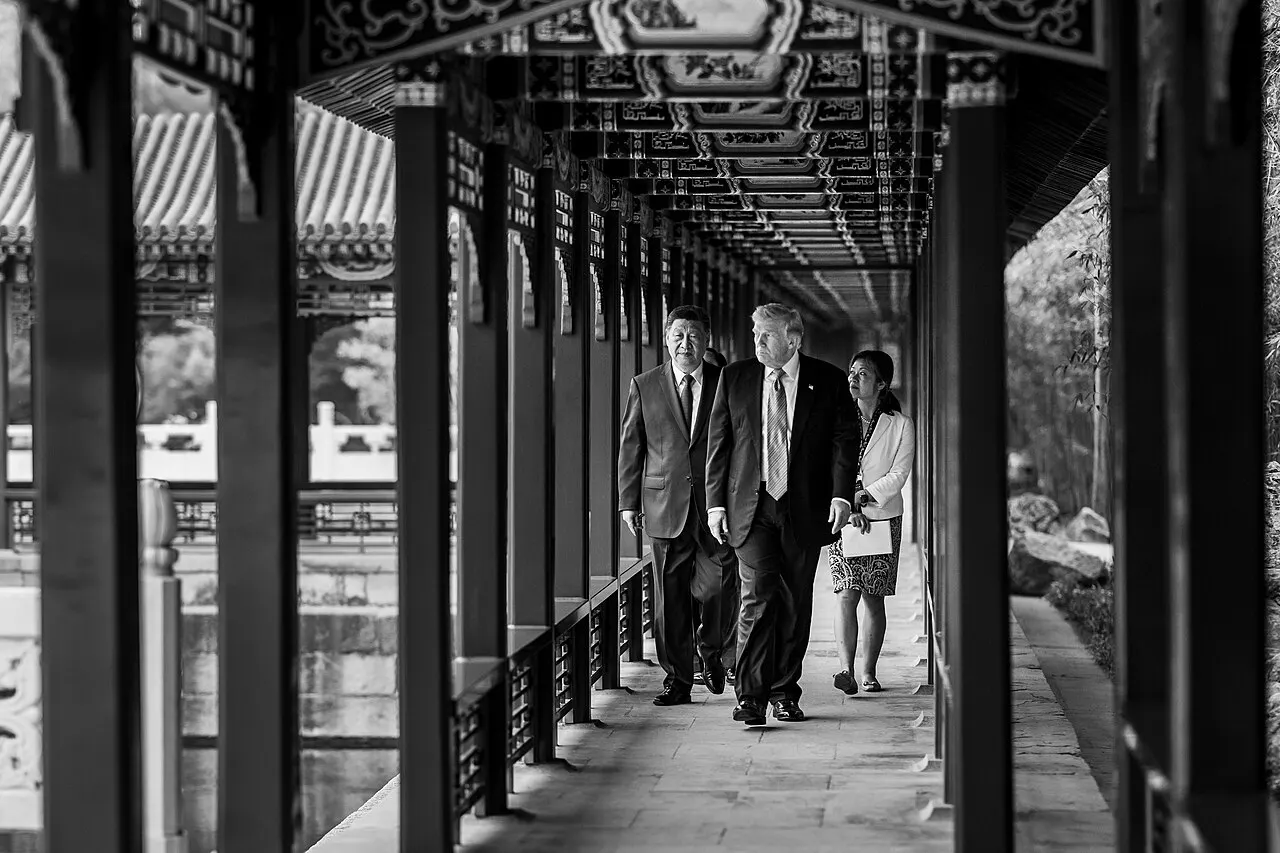
President Donald Trump landed in Shenzhen on Wednesday, where China's President Xi Jinping greeted him on the tarmac at Shenzhen Bao'an International Airport. The welcome was a rare honor. Xi was returning a gesture Trump made during Xi's state visit to Washington in September. The two men shook hands at the foot of the Air Force One stairs, then hugged as dancers waved flowers and flags.
Trump is in Shenzhen for the Asia-Pacific Economic Cooperation summit, and for a meeting no American president has held before. On Thursday, he sits down with Xi and Russia's Vladimir Putin in a first-ever trilateral. Trump said the three leaders will talk about limiting nuclear weapons and ending the war in Ukraine, which began with Russia's invasion in 2022.
Putin arrived in Shenzhen earlier on Wednesday. Xi did not greet him at the airport, despite the two leaders' long friendship.
Trump came to China from the Philippines, [where he arrived earlier in the week](/article/trump-arrives-philippines-asia-trip-asean), where he had lunch with President Ferdinand Marcos Jr. at the Malacanang Presidential Palace in Manila. Trump said after the meeting that the two countries had reached a trade deal on Wednesday, though he had also said last year that an agreement had been reached. The White House said the deal will involve Manila buying more energy and farm products. No details were released. Trump also had a short reunion with Imelda Marcos, the 97-year-old former first lady and mother of the current president, who knew Trump decades ago through the New York City party scene. Her husband, Ferdinand Marcos, was ousted as the Philippines' strongman leader in the 1986 People Power uprising.
Why it matters
The trilateral is unprecedented. Three leaders who rarely share a room will sit together to discuss nuclear weapons and a war that has dragged on since 2022. Trump's aides had told reporters before the trip, which he began [amid fallout from the Nvidia scandal](/article/trump-heads-to-asia-for-xi-putin-summit-amid-nvidia-fallout), that Ukraine would not be on the agenda. Trump changed that on Tuesday, saying the deaths of tens of thousands of Russian troops every month had created an opening to resolve the conflict. "I think it's very close to getting it done," he said. Analysts are not expecting substantive breakthroughs.
Trade and technology hang over the meeting as well. Trump's tariffs were meant to curb China's trade surplus. They have done little to slow the world's dominant manufacturer, which for the second straight year will have exported $1 trillion more in goods than it imported. And questions about artificial intelligence loom large. Trump's close tech industry ally Jensen Huang was recently removed as chief executive of Nvidia after he admitted to an affair with a woman alleged to be an agent of the Chinese government. Beijing has denied she was a spy. The affair raised concerns about how China has been able to access Nvidia computer chips to develop AI models that compete with the United States.
When asked this week why the US had not been more aggressive in cutting off China's access to advanced computer chips, Trump said there were differences of opinion inside his administration. "We have a very good relationship with China, and you don't want to insult them," he said. Trump has said he does not plan to bring up Taiwan, the self-governing island China claims as its own and the leading manufacturer of advanced computer chips, including those designed by US companies. He expects Xi will push him on Taiwan's sovereignty. "I'm sure he'll raise it," Trump said.
The trip also began under a cloud back home. A series of technical outages hit Microsoft, the Federal Aviation Administration, JPMorgan Chase and the National Security Agency's communications network, leaving Americans worried about email, bank accounts and flights. Trump was nonchalant at first, saying in Manila on Tuesday that "it's fine" and calling it a consequence of being a nation that is "big and powerful." Secretary of State Marco Rubio, who is also Trump's national security adviser, stepped in to reassure the public. Rubio said there was "zero" evidence the outages are connected or tied to rival nations, cyber hackers or criminals, and said fixing a vulnerability can cause a short-term disruption.
What it means for the US
The Shenzhen meetings test whether personal diplomacy can move issues that land directly on American security and American wallets. Nuclear arms limits and the Ukraine war shape US defense spending and global stability. The chip question decides whether American companies keep their edge in AI, and whether the most advanced chips, largely made in Taiwan, keep flowing to US firms.
Trade is the other pressure point. If tariffs cannot shrink China's surplus, US buyers keep paying the costs of a lopsided trade relationship, and the administration will face hard questions about what comes next.
And the outages were a reminder at home. A handful of systems underpin email, banking and air travel for millions of Americans. When several falter at once, the disruption is immediate, even if, as Rubio said, there is no evidence of an attack.
What happens next
Thursday's trilateral is the centerpiece. Trump also teased a private meeting with Putin and a separate sit-down with North Korean leader Kim Jong Un. Rubio clarified on Wednesday that Trump was "serious" about meeting Kim as a way of resolving tensions with North Korea, but no meeting was currently scheduled for Thursday.
Watch for whether anything concrete emerges on nuclear limits or Ukraine. Trump arrived talking about a deal that is close. The analysts watching say the meeting's value may be the meeting itself: three rivals in one room, talking, for the first time.