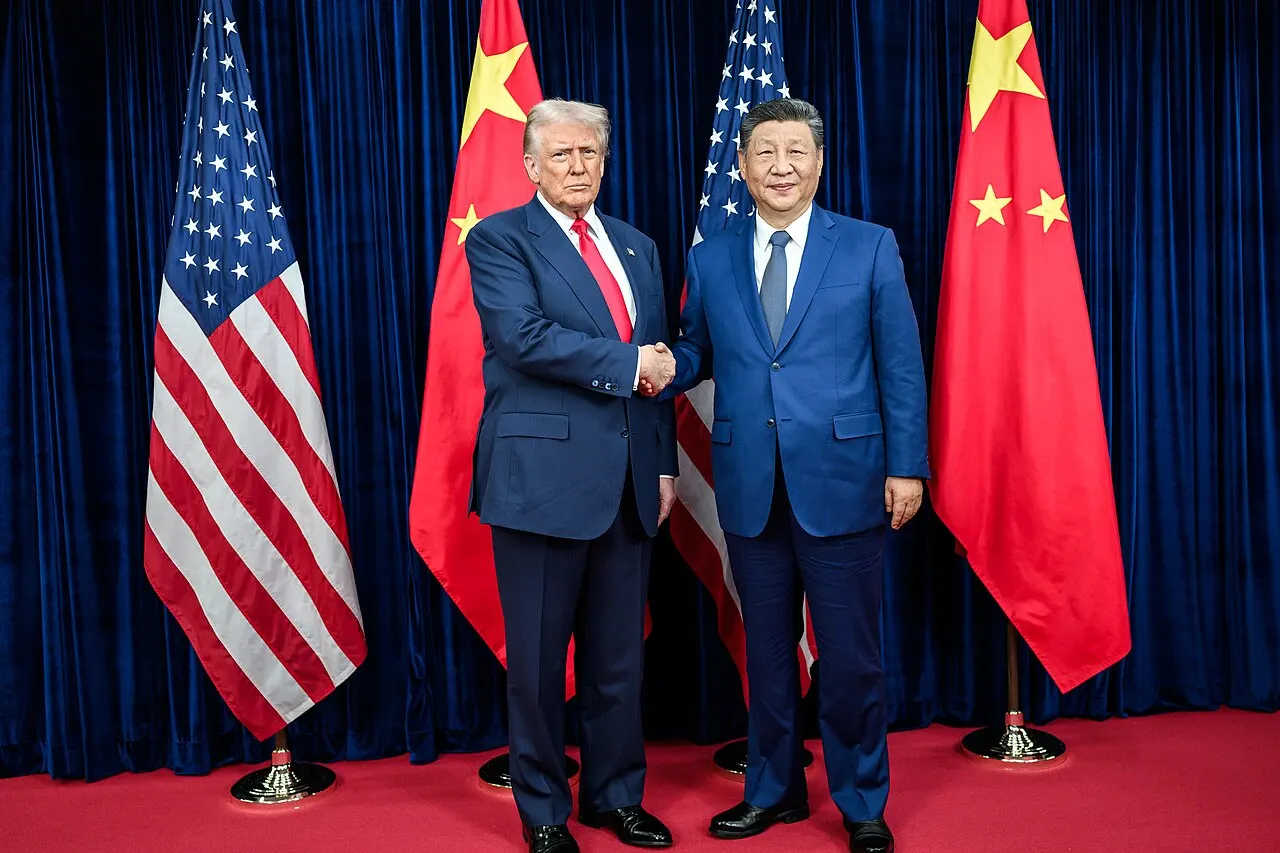
What happened
Donald Trump, Vladimir Putin and Xi Jinping are planning to sit down together in China next week, the White House said on Saturday. The meeting of the leaders of the United States, Russia and China will take place on the sidelines of the Asia-Pacific Economic Cooperation (APEC) summit in the southern Chinese city of Shenzhen.
White House spokeswoman Olivia Wales told reporters the president will use the meeting to press for a reduction in nuclear weapons around the world. Iran may also come up, but Ukraine will not be on the agenda, the BBC reported. Moscow and Beijing have yet to comment on the planned meeting.
No agreement is expected to come out of the talks, a senior US official told news agencies AP and Reuters. That does not make the meeting small. It would be the first time the three leaders have met together, and it puts the world's three biggest nuclear powers in one room at a moment when the guardrails around their arsenals have largely fallen away.
Why it matters
A nuclear weapons control treaty between the US and Russia expired in February, leaving the world's two largest nuclear arsenals without the framework that helped resolve the Cold War. The United Nations has urged both sides to agree a new framework without delay.
Trump has said he could replace the expired deal with a better one that includes China, which has been building up its own arsenal. Former senior US officials and analysts have warned that getting Beijing and Moscow to cooperate could face major hurdles and take years.
The meeting also lands at a delicate point in all three relationships. [Putin raised his demands for a Ukraine peace deal after recent talks with the United States](/article/putin-raises-demands-for-ukraine-peace-after-us-talks), while Beijing has become a crucial trading partner for Moscow since Russia launched its full-scale invasion of Ukraine in 2022. A recent US deal to import Russian diesel and the suspension of sanctions on the biggest buyers of Moscow's oil and gas, including China, has heightened concern in Europe. Trump and Xi, meanwhile, have projected warmer ties at summits in Beijing and Washington this year, but little significant progress has been made on trade, their [race for AI dominance](/article/us-china-chip-war-explained), or Taiwan.
What it means for the US
For Americans, the stakes are direct. The US and Russia hold the world's largest nuclear arsenals, and the treaty that capped them is gone. A three-way conversation that includes China is the only route to a deal that covers all three arsenals, and the White House is framing the trip as one that will "secure historic wins to the American people and advance America's interests in the Indo Pacific."
There is also an energy angle. China is the largest buyer of Iranian oil and Tehran's largest trading partner, and Iran is expected to be discussed. The [IAEA has said it is increasingly concerned about an uninspected Iranian nuclear site](/article/iaea-increasingly-concerned-over-iran-nuclear-site). Any shift in how Washington, Beijing and Moscow handle Iran feeds into oil markets and, from there, into what Americans pay at the pump.
What happens next
Trump arrives in Shenzhen late on Wednesday for the two-day APEC summit of 21 member states. He will hold bilateral talks with Xi on Thursday, their fourth meeting since he returned to office in 2025, and the trilateral meeting will close out his China visit. Before that, he attends an ASEAN summit in the Philippines on Tuesday.
Chinese state media reported on Friday that Xi would hold bilateral talks on the sidelines of the APEC summit, but has not mentioned the three-way meeting. Earlier this month, Kremlin spokesman Dmitry Peskov said there were "signals confirming readiness" for such talks. Whether Moscow and Beijing confirm publicly before Wednesday will be the first sign of how seriously each side is taking it.