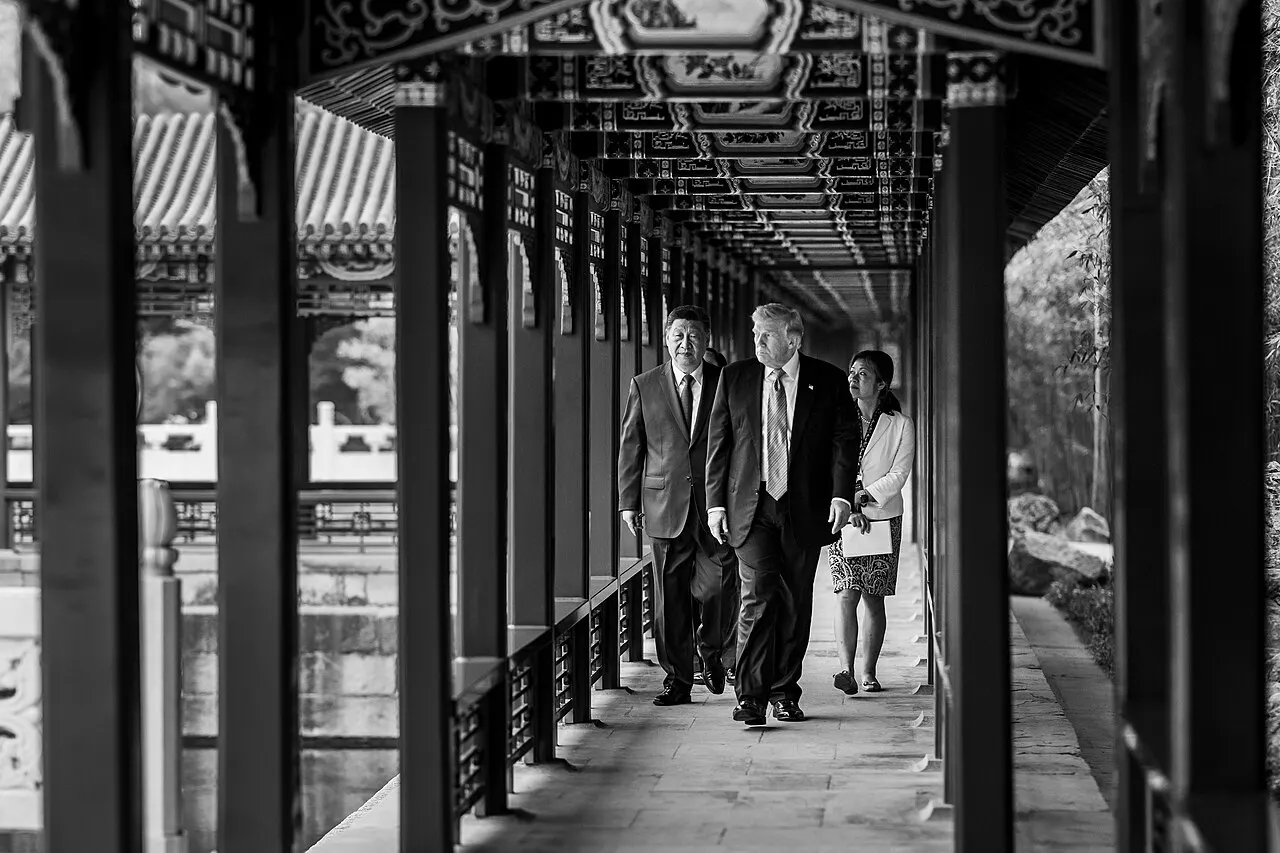
The background
Three of the most powerful men on earth are about to sit in the same room. On Thursday, November 19, Donald Trump, Vladimir Putin and Xi Jinping will hold the first-ever trilateral meeting between the leaders of the United States, Russia and China, on the sidelines of the Asia-Pacific Economic Cooperation summit in Shenzhen.
The White House [announced the meeting](/article/trump-putin-xi-joint-meeting-china) on Friday, November 13. The Kremlin confirmed it a day later. China, which is hosting the APEC summit, had not formally confirmed the three-way session when the news broke.
It is a first. The three leaders have met in pairs many times, but never all three together. Xi has met Putin dozens of times since becoming China's leader in 2013. Trump and Putin have met in person seven times, most recently in Alaska in 2025. Earlier this year, Xi hosted both men in Beijing just days apart, and Trump welcomed Xi to Washington in September.
The meeting lands at a moment when the old rules of nuclear arms control have run out. The last treaty capping the US and Russian arsenals, New START, expired in February 2026. For the first time in more than half a century, the world's two largest nuclear arsenals have no binding limits. The United Nations has urged both sides to agree a new framework without delay.
Trump has said he wants a better deal, one that includes China this time. That is the hard part. China has been rapidly building up its own arsenal, and Beijing has said it is "neither fair, reasonable nor realistic" to ask it to join nuclear negotiations built for two countries.
Where things stand
The agenda is narrow, and expectations are deliberately low. The White House says Trump will raise the reduction of nuclear weapons, a topic he has called very dangerous. The war in Iran is also expected to come up. Ukraine is not on the agenda, according to a senior US official.
"No agreement is expected to follow the talks," the official told reporters, describing the meeting instead as "the entry point, the first conversation, certainly at the leader level, between these countries." The hope, the official added, is that "this is the beginning of hopefully a conversation that can be productive going forward."
Trump arrives in Shenzhen late on Wednesday for the two-day APEC summit, which brings together 21 member economies. He will also hold bilateral talks with Xi on Thursday, their fourth meeting since Trump returned to office in 2025, and attend an ASEAN summit in the Philippines on Tuesday before heading to China.
The backdrop is a set of relationships that have shifted sharply this year. Beijing has become a crucial trading partner for Moscow since Russia launched its full-scale invasion of Ukraine in 2022, and NATO allies believe China has been instrumental in Russia's war effort, supplying equipment, technology and imagery. Last month, Trump suspended fuel export sanctions on Russia for at least six months, letting Russian diesel flow into the global energy market as US fuel prices climbed. A bipartisan group of lawmakers accused him of defying a federal law meant to squeeze Moscow's economy.
Ukraine's president, Volodymyr Zelenskyy, warned in October that a three-way meeting could lead to dealmaking over Ukraine's future without Kyiv in the room. "We really don't want this to turn into 'Yalta 2, 3, 4,' with a redistribution of influence," he said, recalling the 1945 conference where the Allied powers redrew the map of Europe.
The summit is also a showcase for China. Shenzhen, the southern tech hub hosting APEC, has transformed from a small fishing village into one of the world's most modern cities in just a few decades, and Beijing is using the week to show it off.
What it means for the US
For American readers, the stakes are practical, not abstract. With New START gone, the guardrails on the two biggest nuclear arsenals have vanished, and a three-way conversation is the only path to a new one. If Shenzhen produces even a shared commitment to keep talking, that is a result. If it produces nothing, the arms race runs without rules.
Energy prices are the other direct line to American wallets. The decision to let Russian diesel flow again came as US fuel prices were rising, and any signal from Shenzhen about energy, sanctions or trade will move the same markets. The meeting also sits on top of the unresolved US-China fights over trade, the race for AI dominance and Taiwan, where [our explainer on the US-China chip war](/article/us-china-chip-war-explained) lays out how the technology rivalry reached this point.
Ukraine's absence from the agenda matters too. Washington is handling that war on a separate track, and just this week the [US floated a plan under which Ukraine would cede the Donbas region in exchange for NATO membership](/article/us-floats-ukraine-ceding-donbas-for-nato-membership), a proposal Kyiv has publicly pushed back on. What the three leaders do not discuss in Shenzhen may matter as much as what they do.
What to watch next
Watch Thursday, November 19, first. The test is not whether a deal is signed, because officials have already said none is coming. The test is whether the three leaders agree to meet again, and whether China formally joins a nuclear conversation it has so far resisted.
Watch Beijing's confirmation, too. China has confirmed only bilateral talks on the APEC sidelines so far. A formal Chinese statement would tell the world how much Xi wants this meeting to be seen as his event.
And watch what follows in Washington. The White House will frame the trip as a win for American interests in the Indo-Pacific. Congress will judge it by what comes back: any movement on nuclear talks, any signal on Iran, and any effect on the fuel prices Americans are paying at the pump.