What happened
President Donald Trump said he will ban American companies from building AI data centres outside the United States, threatening a "tremendous tax" on any firm that does it anyway.
Trump made the remarks at a press briefing after returning from his trip to Asia. "We're going to keep it all in this country," he said, adding that his administration would not allow US firms to build data centres abroad because China would end up using them.
He offered almost no detail on how the idea would work. Trump said some members of his own cabinet were hearing the plan for the first time, and it remains unclear whether the proposal will become policy or how it could be enforced.
The threat came as Trump argued the US is leading the world in data centre construction and said he would not let China overtake America on AI, which he calls super intelligence, or SI.
Why it matters
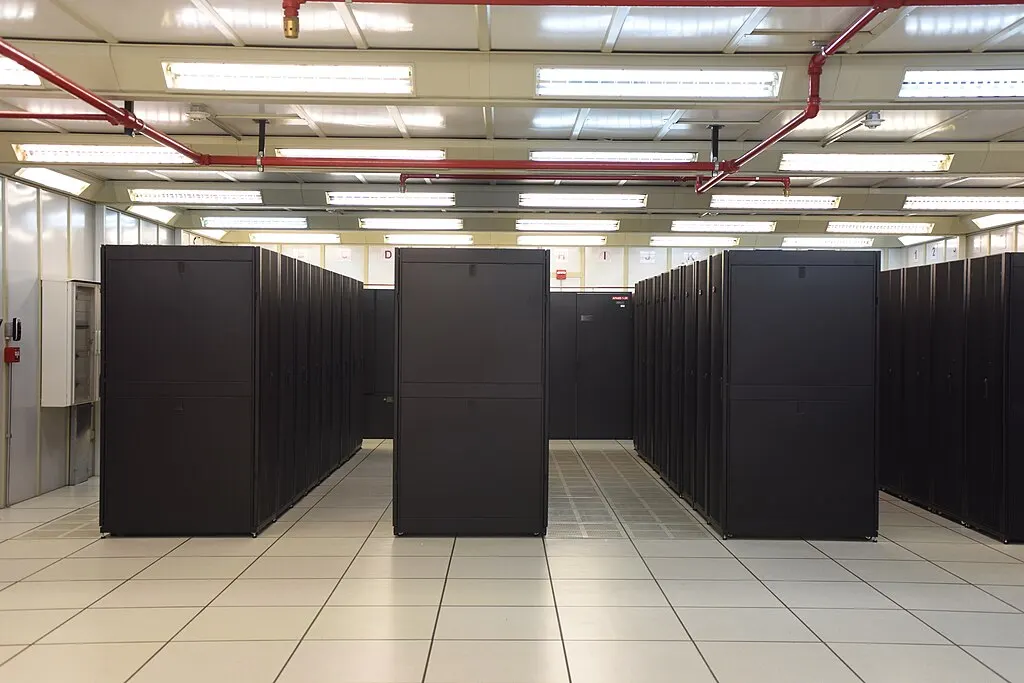
Data centres are the physical backbone of the AI boom: warehouse-sized buildings packed with the advanced chips and servers that run systems such as ChatGPT and Claude. Whoever controls that computing power controls the pace of AI development.
That is why the overseas question matters. Meta has already broken ground on a data centre in Alberta, Canada, and [Anthropic has signed a long-term deal to lease a proposed data centre in Nova Scotia](/article/anthropic-shares-jump-33-record-81bn-nasdaq-debut). In September, Google announced a €13 billion ($15 billion) investment in AI infrastructure in Finland, including three data centres — a project Trump called out by name. Building work on two of those centres was halted last month over the clearance of more than 300 hectares of forest.
Trump's move also follows a decision announced on Monday to tighten controls on advanced computer chips. Under that rule, firms need a licence to buy advanced chips so US officials can check whether they are being used to serve Chinese companies or smuggled into China. [California is separately probing Nvidia over advanced chips reaching China](/article/california-probes-nvidia-china-advanced-chips). The new threat extends the same logic from chips to the buildings that house them.
What it means for the US
There were about 3,000 data centres across the US as of April, with another 1,500 in various stages of approval and construction, according to the Pew Research Centre. Many sit in rural areas, and they became a central issue in the midterm elections earlier this month: Democratic candidates who promised tougher rules on construction won on 3 November, driven by local concerns over noise and energy use.
Trump's message to those communities was to take the deal, not block the projects: make the data centre operators pay the community, he said, calling the facilities tremendous assets for places with energy to spare.
A ban on overseas builds would push even more of that construction — and the jobs and tax revenue that come with it — onto US soil. But it would also test how far Washington can dictate where private companies put their facilities, and whether US firms will accept the limits or route projects through foreign subsidiaries and partners instead.
What happens next
Nothing is decided yet. Trump gave no timeline, no draft order and no legal mechanism, and it is not known whether the idea will become policy. The White House will have to answer the enforcement question first: a tax on overseas construction would need Congress, while an outright ban would face immediate legal challenges from the tech industry.
Watch for responses from the companies named in the debate. The BBC said it has reached out to Meta for comment and contacted Google. [Trump has already pushed a 4,000-acre AI chip hub in the Philippines](/article/trump-pushes-4000-acre-ai-chip-hub-philippines-pax-silica), a reminder that his AI strategy mixes restrictions at home with big bets abroad — a tension this new threat only sharpens.
Southeast Asia is watching closely too. Countries there have invested heavily in data centres as Chinese companies look to rent computing power overseas, and a US crackdown on both chips and facilities would hit that business directly.