What happened
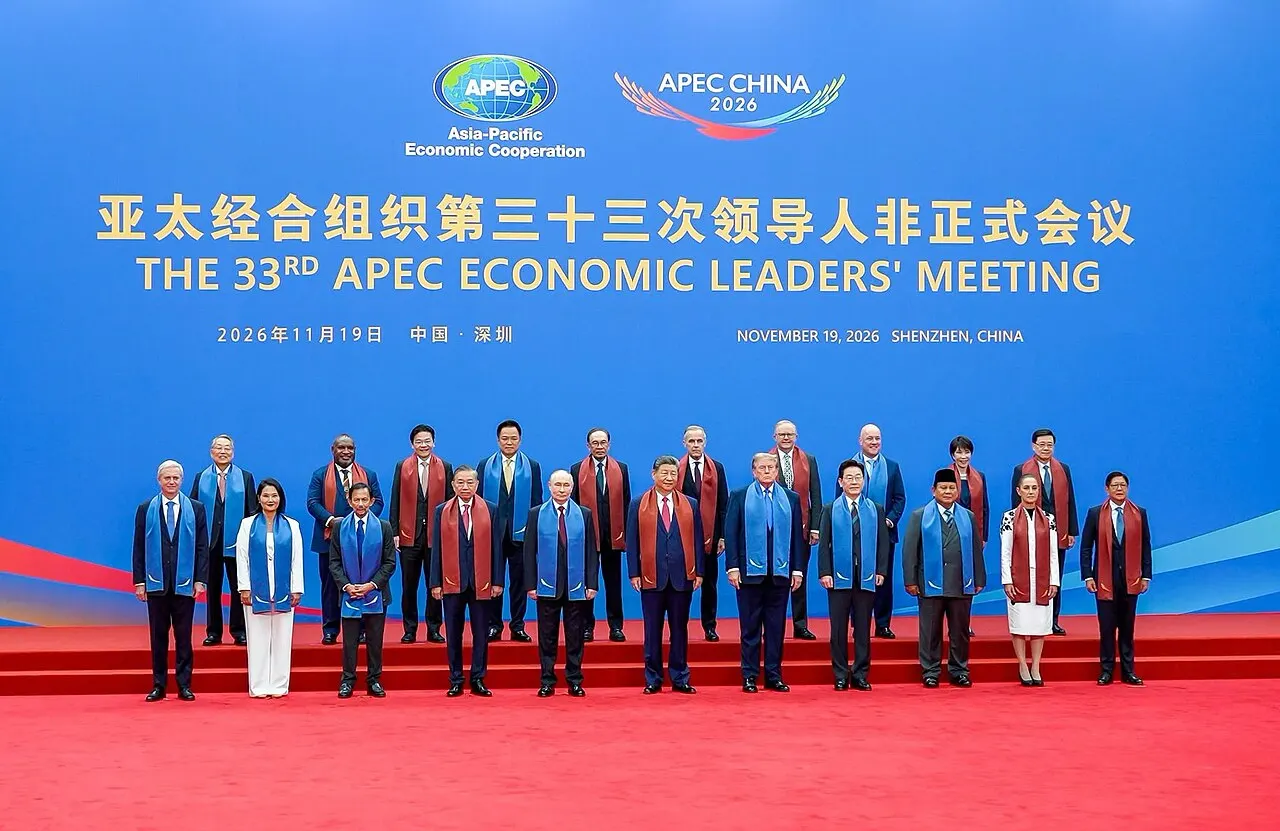
US President Donald Trump, Chinese President Xi Jinping and Russian President Vladimir Putin met in Shenzhen, China, on Thursday for the first trilateral summit of the three leaders, held on the sidelines of the APEC summit. The talks lasted more than an hour, and the three men issued a joint declaration afterward. Trump then left China, boarding Air Force One at Shenzhen Airport for Washington.
In the declaration, published by Chinese state media, the three leaders said "a nuclear war cannot be won and must not be fought" and agreed to "engage in dialogue on reducing nuclear risks and preventing nuclear proliferation." The talks also covered the war in Ukraine, the Middle East and the Korean Peninsula, along with UN reform and a plan to increase production and supply of refined petroleum products.
Putin called the meeting "open," "free" and "useful" at a briefing afterward, and said Trump seemed genuinely committed to ending the war in Ukraine. Xi described the talks as "positive, constructive, and fruitful," saying the three countries "share a common perspective on safeguarding world peace," according to state news agency Xinhua. [Trump landed in China for the summit](/article/trump-lands-in-china-trilateral-xi-putin) earlier in the week, and our explainer set out [what was at stake in Shenzhen](/article/trump-putin-xi-summit-explained).
Why it matters
The United States, China and Russia hold the world's largest nuclear arsenals, so a joint written pledge that nuclear war must never be fought carries weight even when the rest of the statement stays broad. It is the first time the three leaders have sat down together, a meeting that echoed the 1945 Yalta summit of the US, Britain and the Soviet Union.
Analysts had expected symbolism rather than breakthroughs, and much of the declaration fits that read: a promise of dialogue on nuclear risks, but no announced date, no arms-control numbers and no Ukraine deal. Even so, a public commitment from all three to talk about nuclear risks is a concrete step in a relationship that has run mostly on rivalry and sanctions.
The timing sharpened the stakes. On the same day, Ukrainian President Volodymyr Zelensky arrived in Berlin for a summit of Ukraine's allies, where he said his priorities were air defence, energy and financial support. Putin, meanwhile, accused Kyiv and Europe of not being ready to make compromises to end the war, while saying Russia's relations with the US could improve.
What it means for the US
For American readers, the nuclear pledge is the headline. A standing dialogue on nuclear risks between Washington, Beijing and Moscow would lower the odds of a miscalculation between the three powers that own nearly all of the world's nuclear weapons. That is a direct security interest for the US, whatever else divides the three capitals.
The Ukraine discussion matters too. If Putin is right that Trump is genuinely committed to ending the war, any settlement would shape US military aid, sanctions policy and defence spending in Europe. The declaration's line on refined petroleum products also touches American wallets: more supply of refined fuel can ease global prices at the pump.
One passage will draw close attention in Washington. The three leaders said state officials' immunity was of "vital importance" and that the International Criminal Court and similar bodies "must not abuse their jurisdiction." The US has long opposed ICC jurisdiction over American officials, so that language lines up with Washington's own position.
What happens next
No date was announced for the nuclear-risk dialogue, and Putin said he would like the trilateral meetings to continue. The test now is whether the follow-up talks happen at all, and whether they produce anything firmer than a statement.
Watch the Ukraine track first. Zelensky's Berlin summit and Putin's claim that Kyiv and Europe are not ready to compromise point in opposite directions, and the gap between them is where any peace effort will succeed or stall. Also watch for the full text of the joint declaration and for any US readout, which will show how Washington frames a meeting its European allies watched with unease.