What happened
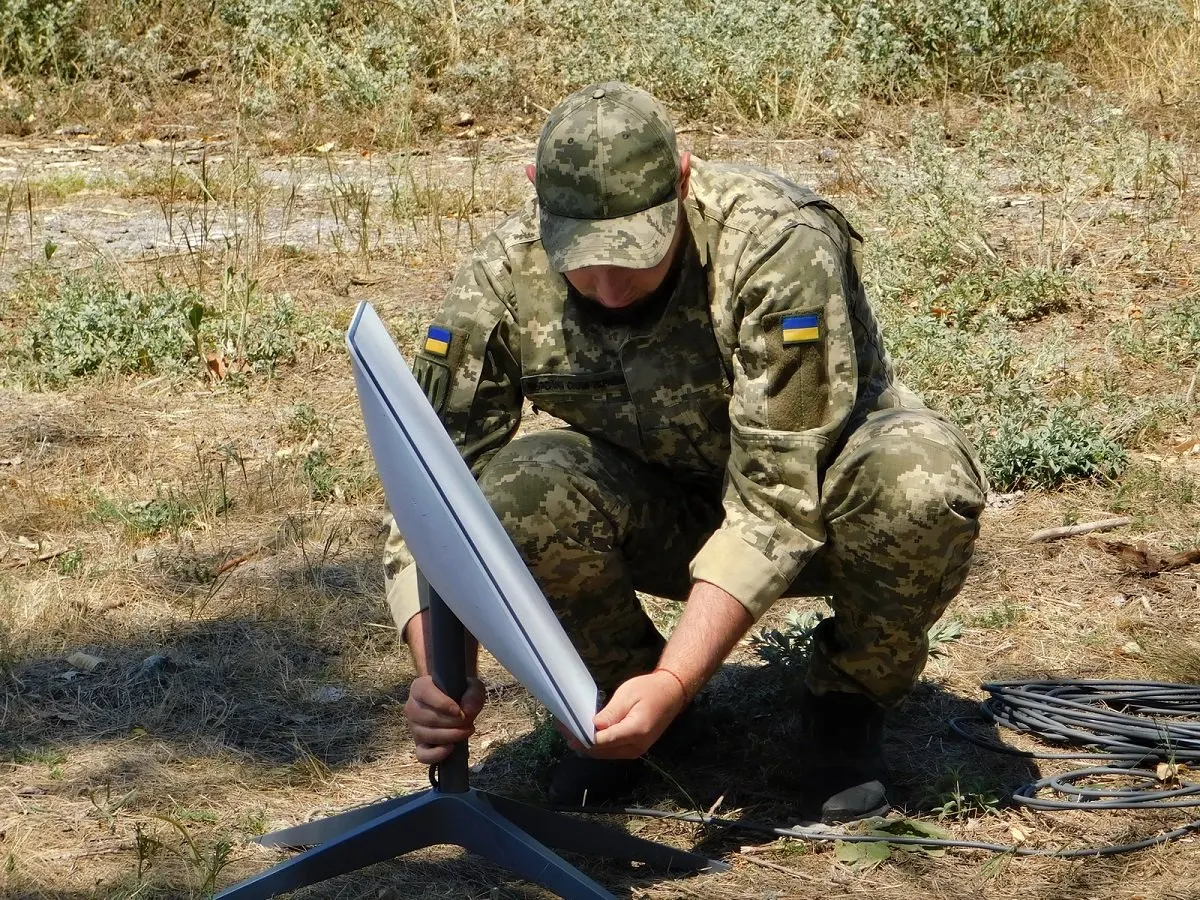
Ukraine's military is again losing reliable access to the satellite service it uses to fight the war. President Volodymyr Zelensky said on Thursday that Kyiv's forces were facing "systematic" restrictions to Starlink's military-grade service, known as Starshield, and that the disruption was making it harder to intercept Russian jet-powered drones.
Starshield is owned by Elon Musk's SpaceX and plays a vital role in Ukrainian military operations. Zelensky said the current disruption had been going on for several days and that Ukraine was "trying to clear up all circumstances with the American side."
The same problem hit the front line in late October. That outage lasted about a week before it was fixed. It remains unclear who ordered the temporary restrictions then, with US officials and SpaceX offering differing explanations.
Zelensky put the stakes bluntly. He said the disruption was "helping the Russians kill more Ukrainians and carry out more accurate strikes against Ukraine."
His warning landed on the same day US envoys Jared Kushner and Steve Witkoff sat down with Russian President Vladimir Putin in Moscow. Videos shared by Russian media on Thursday showed the two Americans stepping off a plane and being welcomed by Kremlin envoy Kirill Dmitriev with handshakes and hugs. After Moscow, Kushner and Witkoff are expected to travel to Dublin to meet Zelensky.
Why it matters
The timing is hard to ignore. The Moscow meeting came a day after the latest round of talks aimed at ending the war wrapped up in Abu Dhabi. Those talks, led by the Americans and limited to Russia and Ukraine, [ended without a breakthrough](/article/russia-ukraine-talks-end-without-breakthrough). The Starlink disruption gives Moscow a battlefield edge at the exact moment Washington is pressing both sides for progress.
It also exposes a weak point in Ukraine's war effort. Kyiv depends on a service run by a private American company, and when that service falters, Ukrainian air defences feel it within days. The late-October outage showed the problem can be fixed. It also showed nobody has explained publicly who can switch it off, or why.
The diplomacy is moving fast either way. The in-person meetings with Putin and Zelensky were only announced on Wednesday, after two days of talks framed around the postwar security architecture of Europe. On Tuesday, Kushner said the US had seen "some openings and some opportunities" and that the envoys would try to "make some progress" in Moscow.
What it means for the US
This story sits squarely on Washington. American envoys are running the talks, an American company's satellite network is the service in question, and the Ukrainian president is asking the American side for answers about the outage.
The outcome shapes two things US readers should watch. First, the credibility of the US-led peace push: if Ukraine's defences are degraded while its negotiators are being asked to make concessions, Kyiv's leverage shrinks and the talks get harder. Second, the future of American security commitments in Europe. Nearly five years into Russia's full-scale invasion, Moscow shows no sign of dropping its maximalist demands, including sovereign Ukrainian territory and an end to Western commitments to protect Kyiv if Russia attacks again.
Europe is watching closely too. In the first years of the war, European governments cut direct contact with the Kremlin. Now many are worried about the current US administration's commitment to European security and its softening toward Moscow, and they are pushing for a seat at the table. Kushner said he and Witkoff would ask Putin to "give his blessing" to invite European representatives into future discussions, and he urged Europe to "identify one person to speak on their behalf." Russia has opposed the idea, citing Europe's support for Kyiv.
Vladimir Medinsky, who headed the Russian delegation in Abu Dhabi, said all parties had "moved closer to achieving peace" but that now "a lot depends on Ukraine, on the position of the United States, and on whether Europe comes to its senses."
What happens next
Kushner and Witkoff head to Dublin next to meet Zelensky, carrying whatever came out of the Putin meeting. The question of European participation is still open, and so is the Starlink question: Ukraine is still waiting for an explanation from the American side about why its military service keeps getting restricted.
The [US, Ukraine and Russia resumed peace talks in Abu Dhabi](/article/us-ukraine-russia-resume-peace-talks-abu-dhabi) earlier this week, and [Europe is pushing to join the US-mediated talks](/article/europe-to-join-us-mediated-ukraine-talks-abu-dhabi). Whether the Moscow and Dublin meetings produce anything concrete will show in the coming days.