The background
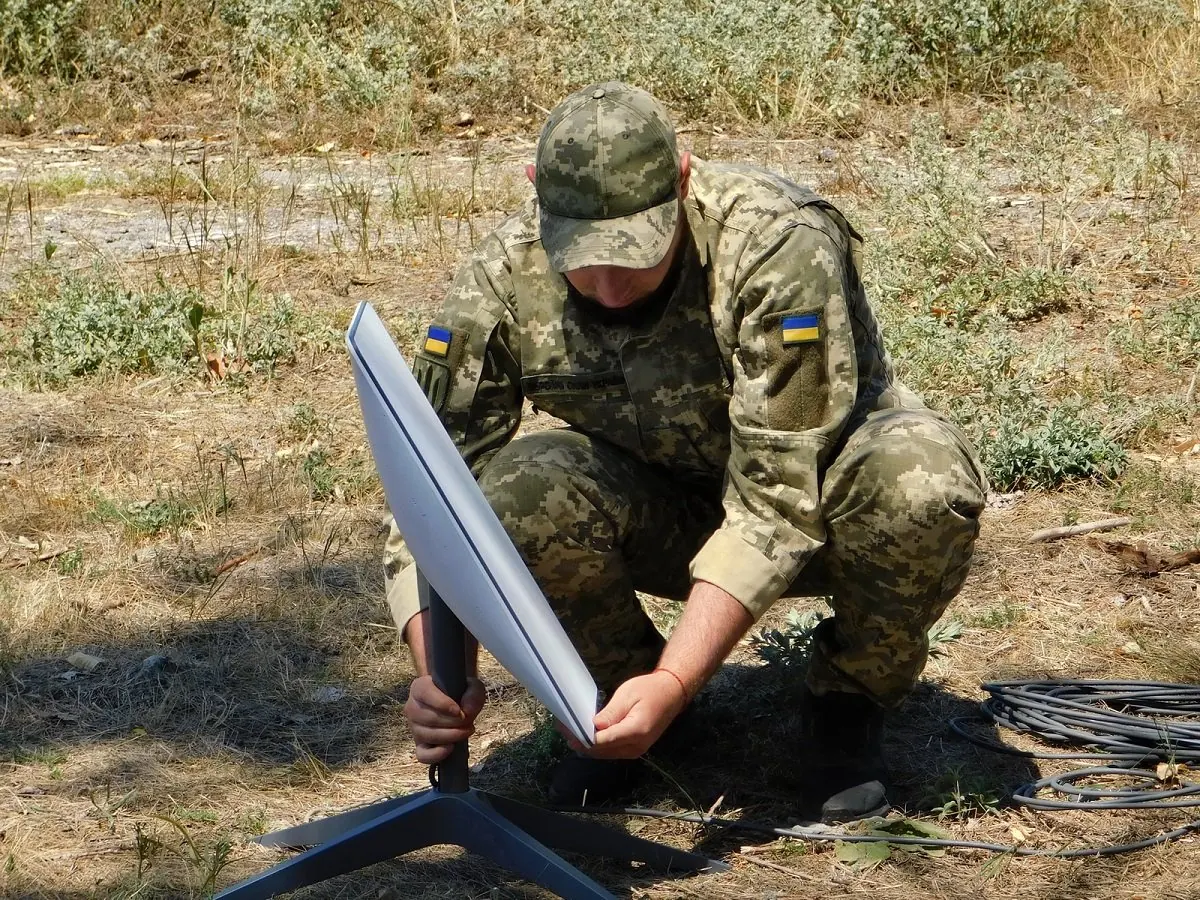
SpaceX switched Starlink on for Ukraine days after Russia launched its full-scale invasion in February 2022. The terminals quickly became the backbone of Ukrainian battlefield communications, linking front-line units, drone operators and command posts where mobile networks were down or destroyed.
Ukraine runs two versions of the system. Regular Starlink handles battlefield communications. Starshield is the military-grade version, owned by Elon Musk's SpaceX and provided to Ukraine by the US government. Ukraine uses Starshield to guide the interceptor drones that hunt Russian missiles and drones in its airspace.
That split matters now, because the two systems are controlled differently. Starlink is a commercial service. Starshield is a government-provided system, which means decisions about how it works run through Washington as well as through SpaceX.
Where things stand
The trouble started in October, when Ukraine first spotted speed limits on Starshield terminals. The limits cut the connection when a terminal moves faster than about 161 km/h (100 mph). That is a problem because Ukraine's interceptor drones ride on the same link, and they lose contact with their operators at that speed. Russian jet-powered Shahed drones fly faster, so the interceptors cannot catch them.
President Volodymyr Zelensky raised the issue again on Sunday, saying Ukraine was struggling to stop Russian drones targeting electricity substations. He said the restrictions were still in place along the front line and in Russian-occupied territory, and he appealed directly to the US government and to Musk to lift them. "We are counting on these restrictions being lifted. The protection of lives and Ukraine's energy infrastructure ahead of winter directly depends on this," he said.
The dispute has already produced a public blame game. Musk said the US government was responsible because it controls Starshield. President Donald Trump denied that and said he had told Musk to "put it back". The service appeared to return to normal after about a week, but Ukraine then said the restrictions were still being applied.
On Friday, Zelensky said the roughly 100 mph limits had been in force since Monday, but only in Russian-occupied areas and not across the whole of Ukraine. That detail carries a political charge. As Zelensky put it, "If you impose restrictions there, you are already partially recognising the temporary occupied territories as not ours."
The row comes at a bad moment for Ukraine's air defences. Kyiv is also short of US-made Patriot interceptors, and Russia has stepped up strikes on Ukrainian targets. Overnight into Sunday, Russia hit energy infrastructure in the Zaporizhzhia, Sumy, Odesa, Zhytomyr and Kirovohrad regions, and railway infrastructure in Dnipro, Kharkiv and Zaporizhzhia. Two people were killed in an attack on an infrastructure facility in the town of Mena, in the Chernihiv region.
Ukraine hit back at Russian energy targets too, saying it struck a petrochemical plant and an oil refinery in Nizhnekamsk, in the central Russian region of Tatarstan. The BBC said it had asked the White House for comment on the Starshield restrictions.
The dispute sits inside a wider diplomatic push. Washington has [floated Ukraine ceding Donbas in exchange for NATO membership](/article/us-floats-ukraine-ceding-donbas-for-nato-membership), and [Putin raised his demands for a Ukraine peace deal after talks with the US](/article/putin-raises-demands-for-ukraine-peace-after-us-talks). The three leaders are also due to meet in China, as covered in our [Trump, Putin and Xi summit explainer](/article/trump-putin-xi-summit-explained).
What it means for the US
The US government supplies Starshield to Ukraine, so this is not only a dispute between Kyiv and a private company. Whatever caused the speed limits, the fix runs through Washington. That puts the decision squarely with the Trump administration, which is also managing the peace talks and the flow of US weapons to Ukraine.
The disagreement is also tangled up in a second argument between Zelensky and Trump, over Ukrainian strikes on Russian oil refineries. Kyiv says those strikes cut off Moscow's main source of war revenue. Trump says they have pushed global oil prices higher, which lands directly on American drivers at the pump. The Starshield row and the refinery row are now part of the same negotiation, with each side using leverage the other needs.
The shortage of Patriot interceptors adds a third American thread. The interceptors are US-made, so US production and delivery schedules shape how well Ukraine can defend its cities. A satellite link that cuts out at 100 mph and a thin stock of interceptors both point the same way: Ukraine's air defence this winter depends heavily on decisions made in the US.
What to watch next
The first test is whether the White House responds and whether the restrictions actually lift. Ukraine says they were still in place on Sunday, weeks after the issue first surfaced.
The second is winter. Russia is hitting Ukraine's power grid as cold weather sets in, and the Starshield link matters most when interceptor drones are the line of defence for substations. If the limits stay, more Russian drones get through.
The third is the diplomatic track. The Starshield dispute, the Donbas-for-NATO idea and the planned summit in China are all moving at once. Watch whether the satellite issue gets settled quietly as part of a wider deal, or stays public and becomes another point of friction between Washington and Kyiv.
Estonia offered a reminder this week of how far the confrontation can spread. It will shut its border crossings with Russia from 1 December after a suspected sabotage attack on drone maker Threod Systems, which Estonian authorities say was ordered by Russia's GRU military intelligence service.