What happened
The US Justice Department has charged three Iran-backed suspects over a string of attacks and plots across the US and Europe, including a foiled plot at RAF Fairford, the US Air Force base in England.
Prosecutors unsealed an eight-count indictment on Tuesday against Mohsen Mohajeri, an Iranian; Mohammad Ali al-Hassani, an Iraqi national; and Mohammad Baqer Saad Dawood al-Saadi, a dual Iranian-Iraqi citizen. The department said the three acted in the name of a group called Harakat Ashab al-Yamin al-Islamiya, or HAYI, and linked them to Iran's Islamic Revolutionary Guard Corps and the Iran-backed Iraqi militia Kataib Hezbollah.
In all, the department accused the three of involvement in 18 attacks and attempted attacks in London, Amsterdam and Paris. FBI Director Kash Patel said the indictment "shows the determination of Iran to commit terrorist attacks in Europe and the US." He said the men were involved in nearly 20 attempted attacks in support of the Revolutionary Guard and Kataib Hezbollah, and that one of them sent coded messages from detention to assist future acts of violence.
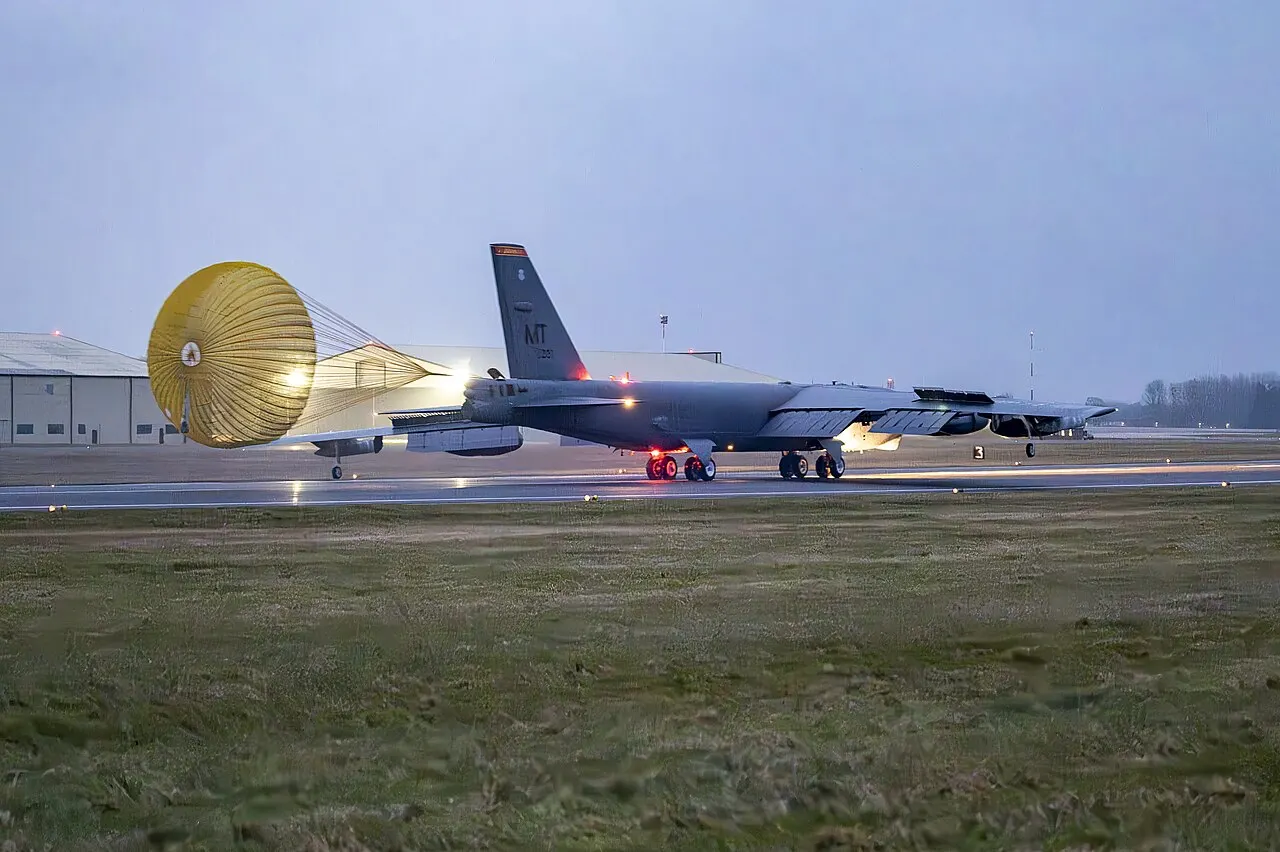
The most recent plot, prosecutors said, targeted RAF Fairford in Gloucestershire, where US forces are stationed. The base made headlines in September, when police declared a major incident after three suspicious vans were spotted near the airfield. No explosives were found, but officers seized a quantity of petrol. Seven men have been arrested in Britain over the incident, and two British nationals appeared in court last month.
According to the indictment, al-Hassani orchestrated the Fairford plot from abroad. In August, he directed and paid associates in Britain to prepare it, including paying one person on 22 August to carry out surveillance of the base's perimeter. In September, he paid others to procure vans and barrels of fuel, research chemical accelerants including large quantities of potassium chloride, and buy metallic objects that could be used as explosive shrapnel. The vans were made to look like vehicles from a fuel delivery business and a swimming pool supply firm.
On 26 September, al-Hassani tasked drivers with taking three vans, some carrying barrels of fuel, to RAF Fairford, staying in frequent contact as they drove. At least two of the vans were stopped at a security roadblock before they could reach the perimeter. In the early hours of 27 September, a local farmer heading home from a party spotted the vans and called police.
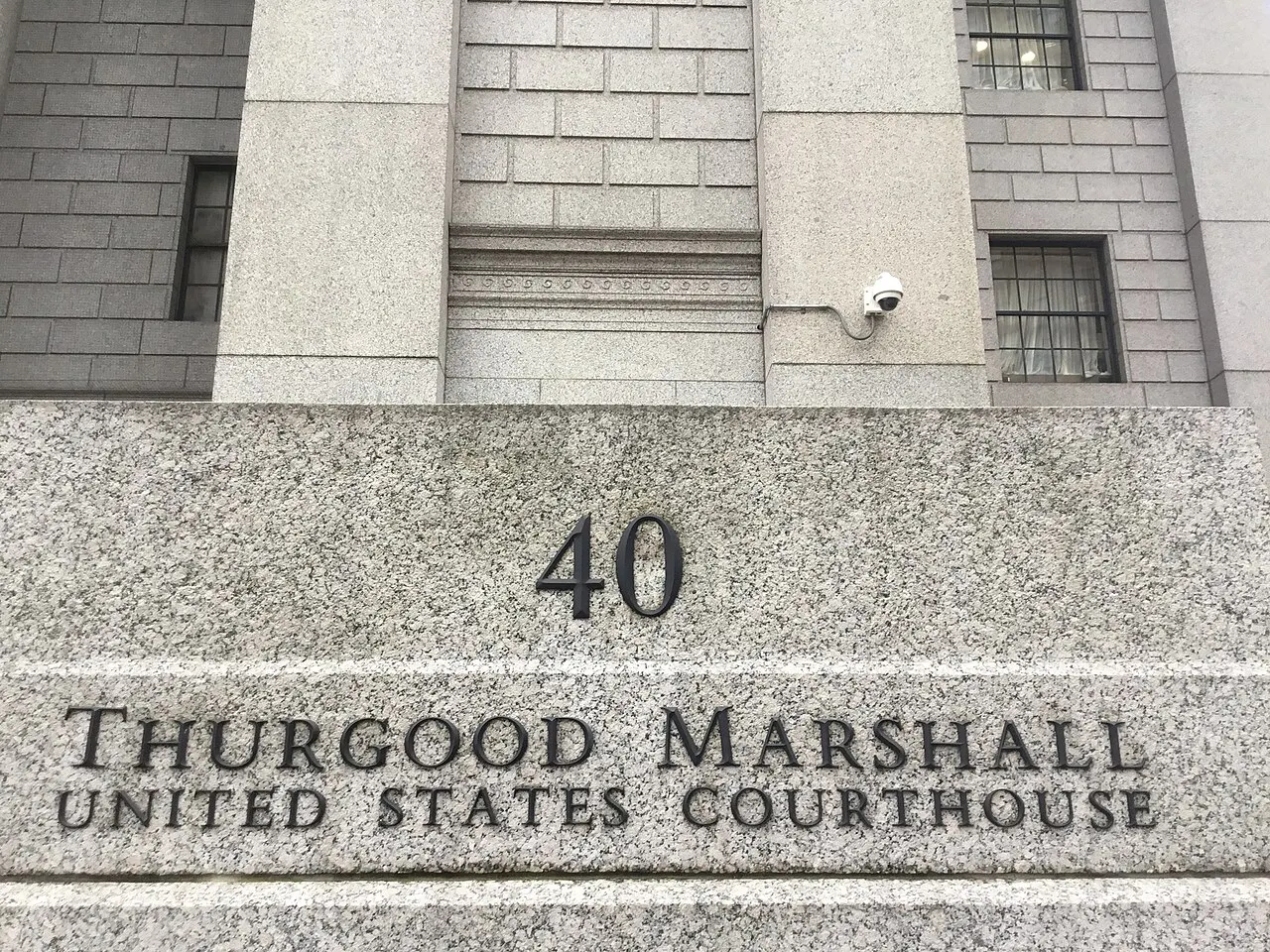
Al-Hassani and Mohajeri were allegedly in Iran at the time. Al-Saadi was coordinating with them through third parties from a prison in New York, where he is awaiting trial on earlier charges after his arrest in August. Mohajeri and al-Hassani are not in custody, two sources told the BBC's US partner CBS News.
The indictment also covers attacks in London this spring. Two Jewish men were stabbed in Golders Green in April, one of them a dual US-British citizen, in what prosecutors described as a near-fatal attack. A suspect is due to stand trial next year. On 17 April, a building previously used by the Jewish Futures educational charity was set on fire in Hendon, with al-Hassani allegedly directing the arsonist over FaceTime. A day later, Kenton United Synagogue in Harrow was targeted in an arson attack; a 17-year-old boy pleaded guilty to that incident earlier this year.
Elsewhere in Europe, the group is accused of attacking the Bank of New York Mellon building in Amsterdam on 15 March and the Bank of America building in Paris on 28 March. Prosecutors said the trio also tried to target Jewish institutions in the US, including a synagogue in Manhattan in March or April. Of the 18 attacks HAYI claimed in Europe in the spring of 2026, the department said, seven took place in Britain.
Iran has strongly denied any involvement. The Iranian embassy in London said it "categorically rejects and strongly condemns" what it called unfounded and malicious speculation linking Iran to the incident.
Why it matters
The case describes a campaign, not a single plot. Eighteen attacks and attempted attacks across three European capitals, directed in part by video call from abroad, point to a network that could plan, fund and steer violence at a distance. The use of ordinary-looking vans, front businesses and coded messages shows how hard such plots are to spot before they reach a target.
RAF Fairford sits at the center of it. The base has hosted US Air Force bombers for decades, and in recent months B-1 and B-52 bombers flew from there to the Middle East for defensive strikes on Iran. In July, Iran said any base used for aggression against Iranian territory counts as a legitimate target. The indictment turns that threat into a concrete allegation: a plan to hit the base itself.
The London attacks add a second thread. Synagogues, a Jewish charity building and two Jewish men were targeted in the space of days, and one of the victims holds US citizenship. That makes the case about more than a military base. It is also about the safety of Jewish communities in Britain and the US.
What it means for the US
The plot reached American soil, or nearly did. Prosecutors said the group tried to target a synagogue in Manhattan, and one of the London stabbing victims is a dual US-British citizen. The US response has already been visible: after the Fairford incident, the US removed all its bombers from the base last month, with President Donald Trump citing "some threats" to it. That move followed [the threats that forced Treasury Secretary Scott Bessent to relocate to a military base](/article/us-treasury-chief-bessent-moved-military-base-iran-threats), a sign of how seriously Washington is taking Iranian threats against US officials and assets.
For US readers, the stakes are practical. Fairford is a launchpad for US air power in the Middle East, and its security shapes how quickly the US can respond to a crisis there. A successful attack on the base would have put American airmen at risk and forced a rethink of where the US stations its bombers in Europe. The case also lands as Iran and the US trade warnings: Tehran has already [threatened to "rain down hell" if the US escalates](/article/iran-threatens-rain-down-hell-us-escalates-war), and Washington has [launched Task Force Iron Gate to cut Iran's weapons routes](/article/us-task-force-iron-gate-iran-weapons). The indictment gives prosecutors a tool to go after the network behind the threats, but two of the three men charged remain at large, apparently in Iran.
What happens next
Al-Saadi is already in US custody in New York, awaiting trial on earlier charges, and will now face the new indictment as well. Mohajeri and al-Hassani are not in custody, and the US is likely to seek their arrest and extradition, a long process when suspects are believed to be in Iran. In Britain, court cases linked to the Fairford incident and the Golders Green stabbing are still working through the system. The Justice Department has not said whether more charges will follow, but Patel's statement framed the indictment as a warning to Iran's networks in Europe and the US.