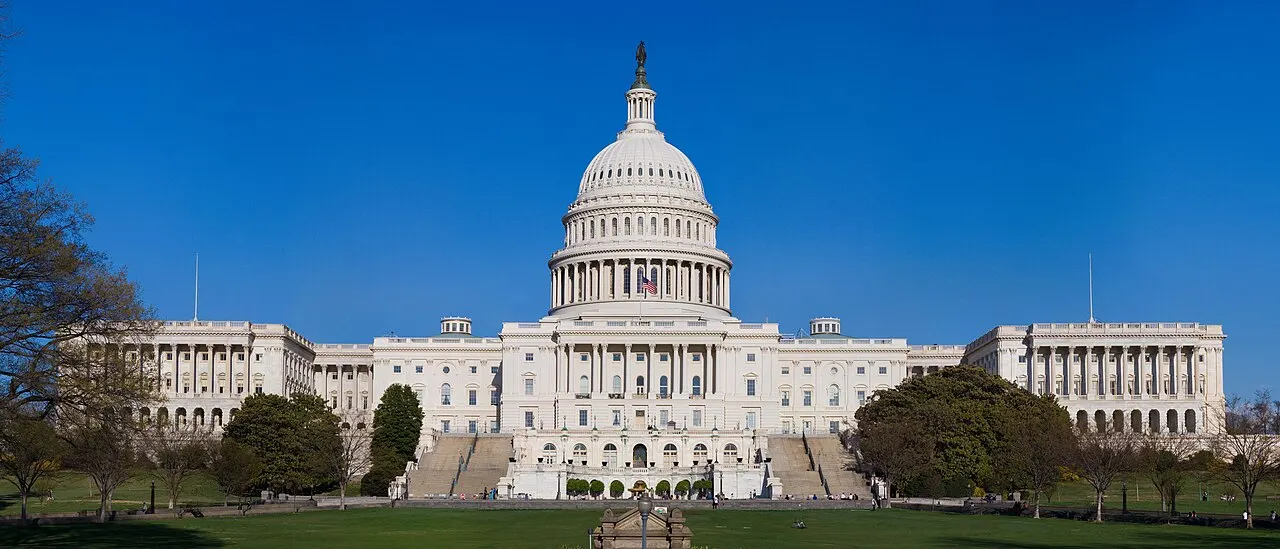
The background
Midterm elections are the verdict voters deliver halfway through a president's term. On November 3, 2026, Americans voted on all 435 seats in the House of Representatives, 35 of the Senate's 100 seats, and 39 governorships.
Going in, Republicans held a thin grip on Congress. The House stood at 218 Republicans and 214 Democrats, with one independent and two vacancies. The Senate was 53 Republicans to 47 Democrats. Democrats needed a net gain of just a few House seats to take the chamber, and four Senate seats to take that one. Forecasters expected the House to flip. The Senate looked much closer.
The campaign was fought on prices. Voters kept naming the cost of living as their top concern, and Democrats built their pitch around it. The war with Iran pushed inflation higher through the year, and President Donald Trump and Vice President JD Vance later suggested that inflation was a factor in the Republican losses. The midterms also became [the most expensive cycle on record](/article/us-midterms-cost-record-12-billion), costing a reported $12 billion.
Where things stand
Democrats won both chambers, and by more than the forecasts suggested.
In the House, Democrats hold at least 258 seats to at least 173 for Republicans, with four races still uncalled. It is the [largest House majority for either party since 1992](/article/democrats-largest-house-majority-since-1992), when Democrats won 258 seats as Bill Clinton won the presidency. The milestone came on November 23, when Democrat Chuck Hubbard beat Republican Rep. Virginia Foxx in North Carolina's 5th District by 330 votes, with 99 percent counted. Foxx had held the seat since 2005 and asked for a recount, which North Carolina law allows when the margin is under 1 percent. She conceded after the recount confirmed the result. Hubbard had lost to Foxx by nine points in 2024, then ran again on the cost of living. Democrats flipped more than 40 House seats in all, including districts Trump had carried by 20 points two years earlier.
In the Senate, Democrats finished with a 56-44 majority after the final race was called in Alaska, where Democrat Mary Peltola defeated two-term Republican Sen. Dan Sullivan. It was a nine-seat pickup. The flips stretched deep into Republican territory: Roy Cooper in North Carolina, Annie Andrews in South Carolina, Sherrod Brown in Ohio, James Talarico in Texas, Adam Hamilton in Kansas, Josh Turek in Iowa, Troy Jackson in Maine, Scott Colom in Mississippi, and Peltola in Alaska. Talarico's win over Texas Attorney General Ken Paxton was the first Democratic statewide victory in Texas since 1994. Colom, a district attorney, beat incumbent Sen. Cindy Hyde-Smith to become Mississippi's first Democratic senator since 1982 and its first Black senator since Reconstruction. Democrats also held their own seats, with Jon Ossoff winning reelection in Georgia and Abdul El-Sayed winning in Michigan.
Democrats also won governorships in Georgia, Iowa, Texas and Ohio, and now hold 28 governors' offices to 20 for Republicans, with one race still to be called. The party [flipped state legislatures](/article/democrats-flip-state-legislatures-midterm-sweep) too, extending the sweep below the federal level.
The new House majority has already picked its leader. On November 18, Democrats nominated Hakeem Jeffries of New York to be the next Speaker, with 251 of 262 ballots in a closed-door vote. He is on course to become the first Black lawmaker to hold the gavel when the full House votes on January 3.
What it means for the US
A 258-seat House majority and a 56-seat Senate majority give Democrats real room to govern, and real power to check the White House. With both chambers, the party can pass legislation through Congress, investigate conflicts of interest involving the president and people close to him, and use the Senate to confirm or block cabinet and judicial nominations.
There are still limits. President Trump can veto legislation, and overriding a veto takes a two-thirds vote in both chambers. So the next two years are likely to be a standoff: a Democratic Congress writing bills a Republican president may refuse to sign.
For households, the practical question is whether the new majority moves on the issues that won the election: prices, health care, and support for working families and small businesses. Hubbard, the candidate whose win sealed the record majority, has said he will prioritize exactly those issues. The result also reshapes the 2028 race. A party that just won the largest House majority in 34 years will claim a mandate. A president who just lost both chambers will have to govern without Congress.
The fight over the results themselves is not over either. A recent poll found [most Republicans doubt the midterms were fair](/article/most-republicans-doubt-midterms-were-fair-poll), a reminder that the legitimacy argument will run alongside the governing one.
What to watch next
Four House races are still uncalled. Two are razor thin: Democrat Victoria Broderick leads by fewer than 300 votes in Tennessee's 4th District, and Democrat Jake Johnson leads by fewer than 500 in Minnesota's 1st. Two Louisiana elections go to a December runoff.
Then the calendar turns to January. The new Congress convenes on January 3, when Jeffries is expected to be elected Speaker and Democrats formally take control of both chambers. The first bills, the first committee hearings and the first fights over the budget will show quickly whether this majority governs or gridlocks.
The 2026 midterms are already part of the record books. The next question is what the winners do with them.