What happened
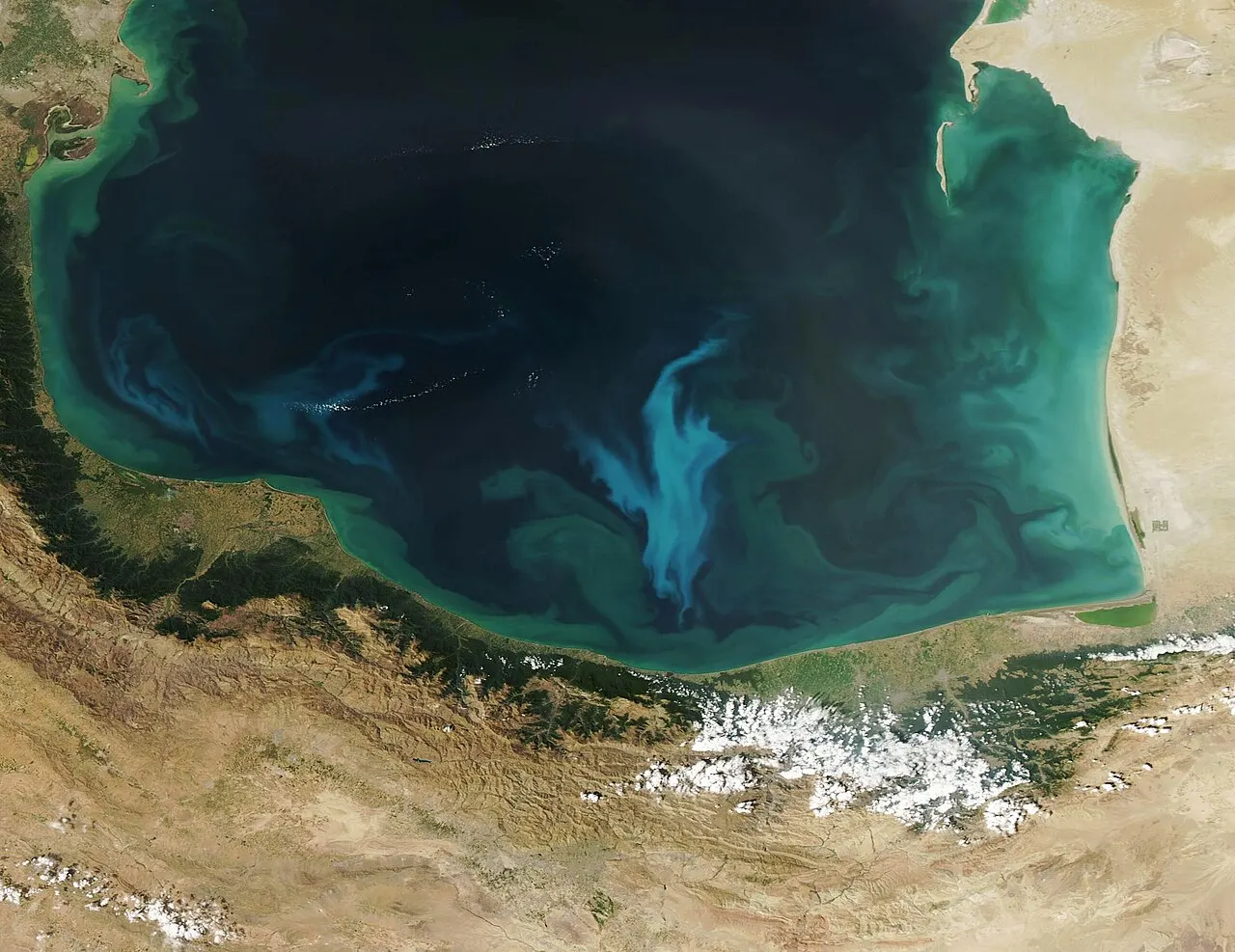
The US military has created a new unit to stop Iran from moving advanced weapons and military materials by land and across the Caspian Sea. US Central Command, known as CENTCOM, announced Task Force Iron Gate on Saturday.
The unit will be based in Tampa, Florida, and run by 20 civilian and military personnel. It expands a US blockade of Iranian ports to cover Iran's land borders and the Caspian Sea, CENTCOM said.
The task force will work with other US government agencies to track and block "advanced weapons systems, dual-use technologies, sanctioned materials and illegal revenue streams" moving across those routes. CENTCOM Commander Admiral Brad Cooper said it will reinforce "the success of our ironclad blockade against Iran at sea."
The announcement came the same day Iran's Revolutionary Guard Corps unveiled plans for [underground complexes](/article/iran-missile-production-underground-sites) built to keep missile and drone production running under bombardment. That followed reports of ongoing construction near Iranian missile bases, based on satellite imagery.
Why it matters
Iran shares borders with seven countries: Afghanistan, Armenia, Azerbaijan, Iraq, Pakistan, Turkiye and Turkmenistan. Until now, the US effort to cut off Tehran's military supplies focused mainly on the sea.
Michael Mulroy, a former US deputy assistant defense secretary for the Middle East, told Al Jazeera the task force will try to find out where "weapons systems are coming in, how they could potentially be cut off" and how "Iran is transporting its energy."
The move also points at Russia. CENTCOM did not name Moscow in its announcement, but US media have reported that Russia sent drone components and explosives to Iran via the Caspian Sea, and analysts say Russian technology could help Iran build advanced supersonic cruise missiles. Mahjoob Zweiri, a professor at Qatar University, called reports of military equipment imported via Russia a "real concern" for the United States, and warned the task force could "cause a confrontation with Russia."
Not everyone is convinced it will work. Rami Khouri, a public policy fellow at the American University of Beirut, said "the US really doesn't quite know what to do about Iran as we've seen, and it's doing things off the cuff," a strategy he said has led to little success. He pointed to Iran's history as a trading nation, saying it is "virtually impossible for the US to seal off every one" of its supply routes.
What it means for the US
For American readers, the task force is the latest sign that Washington is tightening the screws on Iran without, for now, launching new strikes. If it works, it could slow the flow of weapons parts into Iran and raise the cost of Tehran's missile and drone programs.
It also carries risk. The unit sits at the center of a split inside the Trump administration. Former Trump counterterrorism official Joe Kent, who resigned in March over the US war on Iran, said the task force is an attempt by CENTCOM to undercut diplomacy, writing that "this is CENTCOM inviting Iran to escalate while the vice president is attempting to negotiate with the Iranians." The Wall Street Journal reported that Cooper, along with Defense Secretary Pete Hegseth, has been pressing President Donald Trump to renew attacks on Iran.
There is also a practical limit: the US has no military presence on the Caspian Sea. Zweiri said Washington has "no access to the sea, unless some of the neighbouring countries like Azerbaijan or Armenia or others collaborate" and added that they are not collaborating "because they don't want to upset Russia." The Caspian accounts for only about 11 percent of Iran's economy, according to figures Al Jazeera could not independently verify.
What happens next
Mulroy said that if Trump decides to ramp up the war, the next attacks would likely hit a "series of targets" different from the military sites struck in Operation Epic Fury. The new targets, he said, would focus on economic and infrastructure sites as part of a plan to cut the regime's ability to fight and fund itself.
The IRGC dismissed the task force as "just a play on words." Spokesman Sardar Mohebi said Washington had previously "claimed that Iran will suffer an economic collapse within two weeks, but we witnessed that this did not happen."
Whether the unit changes anything on the ground will depend on cooperation from Iran's neighbors, and on whether the White House chooses escalation or negotiation next. Our earlier reporting on [Iran rebuilding its missile bases](/article/iran-rebuilding-missile-bases-satellite-images) and on [the political fallout from the Iran war](/article/vance-blames-iran-war-midterm-losses-trump-split) gives the wider picture.