What happened
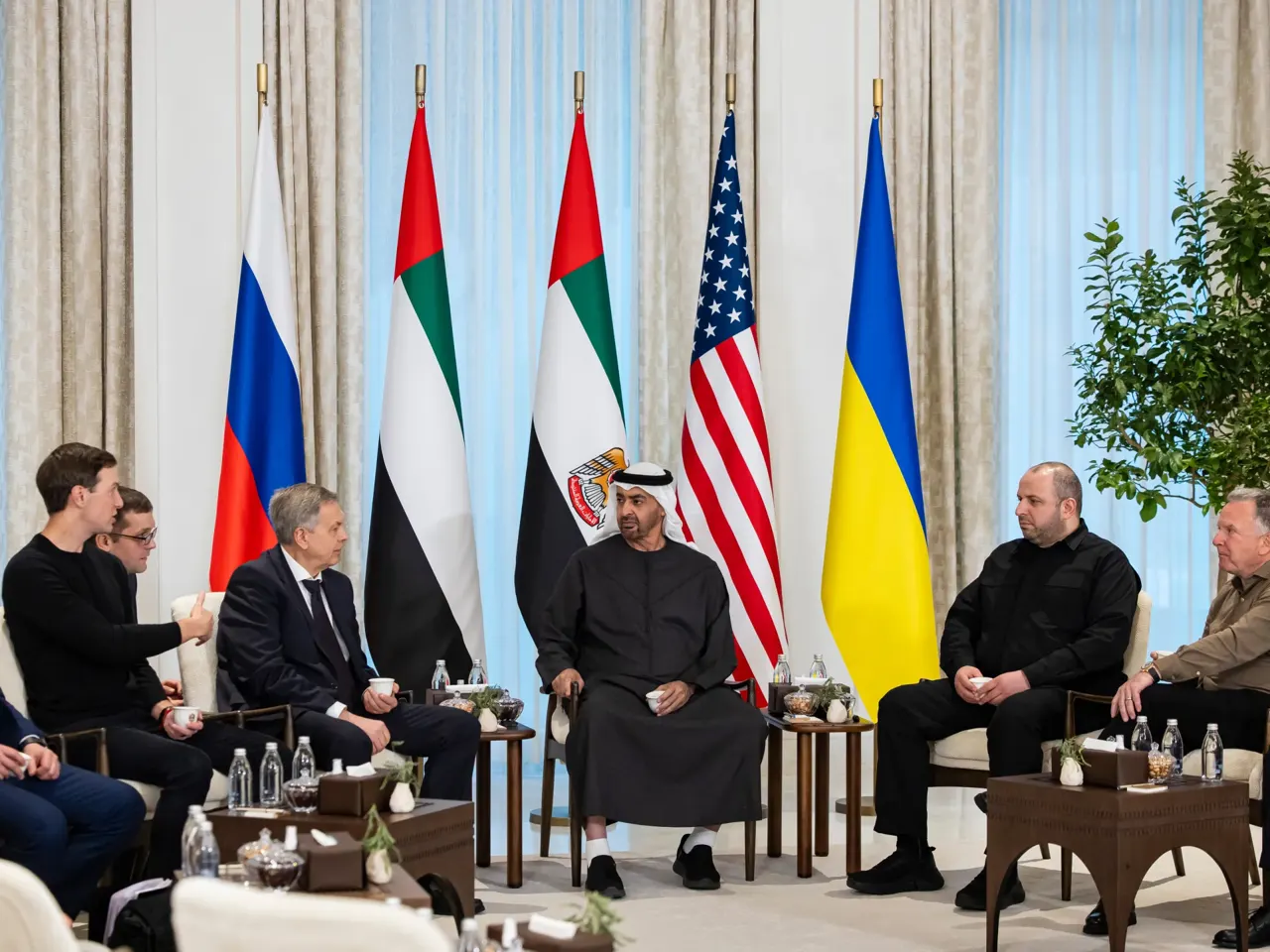
Peace talks between the United States, Ukraine and Russia resumed in Abu Dhabi on Tuesday, after a months-long pause. It is the first round of trilateral talks since a meeting in Geneva in February was cut short, with the three delegations now sitting down in the United Arab Emirates capital to work toward ending Russia's full-scale war in Ukraine.
Ukrainian President Volodymyr Zelensky said the talks had started and confirmed his delegation was in the UAE. "This week we have a real chance to move toward a dignified peace," he said, adding that a settlement was "possible in the near future."
The talks are scheduled to run Tuesday and Wednesday. A separate meeting of military representatives from all three countries also took place on Tuesday, according to Zelensky.
Who is at the table
Ukraine's delegation is led by Rustem Umerov, secretary of the National Security and Defence Council, and includes members of the Ukrainian armed forces. The US side is represented by special envoy Steve Witkoff and Jared Kushner, President Donald Trump's son-in-law, who arrived in the UAE on Monday.
Russia's delegation is led by Vladimir Medinsky, a presidential aide and former culture minister who also led Moscow's team at talks in Istanbul in May and June last year. Kremlin spokesman Dmitry Peskov said Russia was seeking a "political and diplomatic settlement" but warned Moscow would keep fighting if its interests were not taken into account.
European countries are also involved in the wider effort. [Europe is set to join the US-mediated talks in Abu Dhabi](/article/europe-to-join-us-mediated-ukraine-talks-abu-dhabi), widening a process that had until now run mainly through Washington.
What the talks are about
Territory sits at the center of the dispute. Washington expects both sides to show "some flexibility" on the question, including the future of Donbas, the eastern region where Russia has demanded Ukraine withdraw from the parts it still controls.
Ukraine has so far refused to cede any territory. Zelensky said giving up Donbas was impossible "under the current constitution" and called it a red line. Ukraine's constitution prohibits ceding territory, which means any deal involving land would face a steep hurdle at home.
US Secretary of State Marco Rubio said earlier that Washington had a "very clear" understanding of Russia's position on territory, and that Ukraine "now needs to make a decision" on whether it is prepared to give up some of it. A Ukrainian official told the BBC the delegation was not "going to agree on a bad deal."
Why it matters
The timing matters for both sides. Russia's war is consuming resources and lives, and Moscow has not achieved the quick victory it expected when it launched the full-scale invasion in February 2022. Russian forces now occupy about 20 percent of Ukraine and are still making slow advances in the east, but Ukraine has held on with help from Western allies.
Ukraine, meanwhile, is under growing pressure. Russian drone and missile attacks have hammered its energy infrastructure as winter approaches, and the country is dealing with domestic political turbulence. [Russia struck Ukraine's power grid just before the Abu Dhabi talks](/article/russia-hits-ukraine-power-grid-before-abu-dhabi-talks), a reminder that the fighting has not paused for the diplomacy.
The backdrop is a long string of failed efforts. Talks in Istanbul in May and June last year produced prisoner exchanges but no ceasefire. A 28-point plan put forward by the Trump administration in February drew sharp criticism in Ukraine and across Europe for favouring Russia, and was later narrowed to a 20-point plan that Moscow reportedly rejected.
A US official told the BBC the aim in Abu Dhabi is to narrow differences, not to reach a final agreement. Washington has been working to "create a path to peace" since the Geneva talks in February.
What it means for the US
The talks put the US squarely in the middle of the war's endgame. President Trump has made ending the war a foreign-policy priority, and his envoys are now carrying the mediation in person. How far Washington pushes Kyiv on territory will shape both the outcome and the US relationship with its European allies, who are watching closely and are nervous about a deal that leaves Russia emboldened.
For American readers, the stakes are practical as well as diplomatic. A settlement would ease pressure on US military aid budgets and energy markets, which have been rattled by the war and by Ukrainian drone attacks on Russian oil refineries that have caused fuel shortages inside Russia. A collapse of the talks, by contrast, would leave Washington facing the same choice it has faced for years: keep arming Ukraine while the war grinds on.
What happens next
The delegations meet again on Wednesday. Zelensky said he was "ready" to sign a deal that would prevent "a new round of war in the future," but even an agreement in Abu Dhabi would not be the end of it. Ukraine's parliament would have to ratify any deal, and the constitutional bar on ceding territory makes that far from certain.
For now, the measure of success is modest: narrowing the gap between the two sides enough to keep talking. If the delegations leave Abu Dhabi with a shared framework, the next round could come quickly. If they leave with the same positions they arrived with, the war enters another winter with no end in sight.