What happened
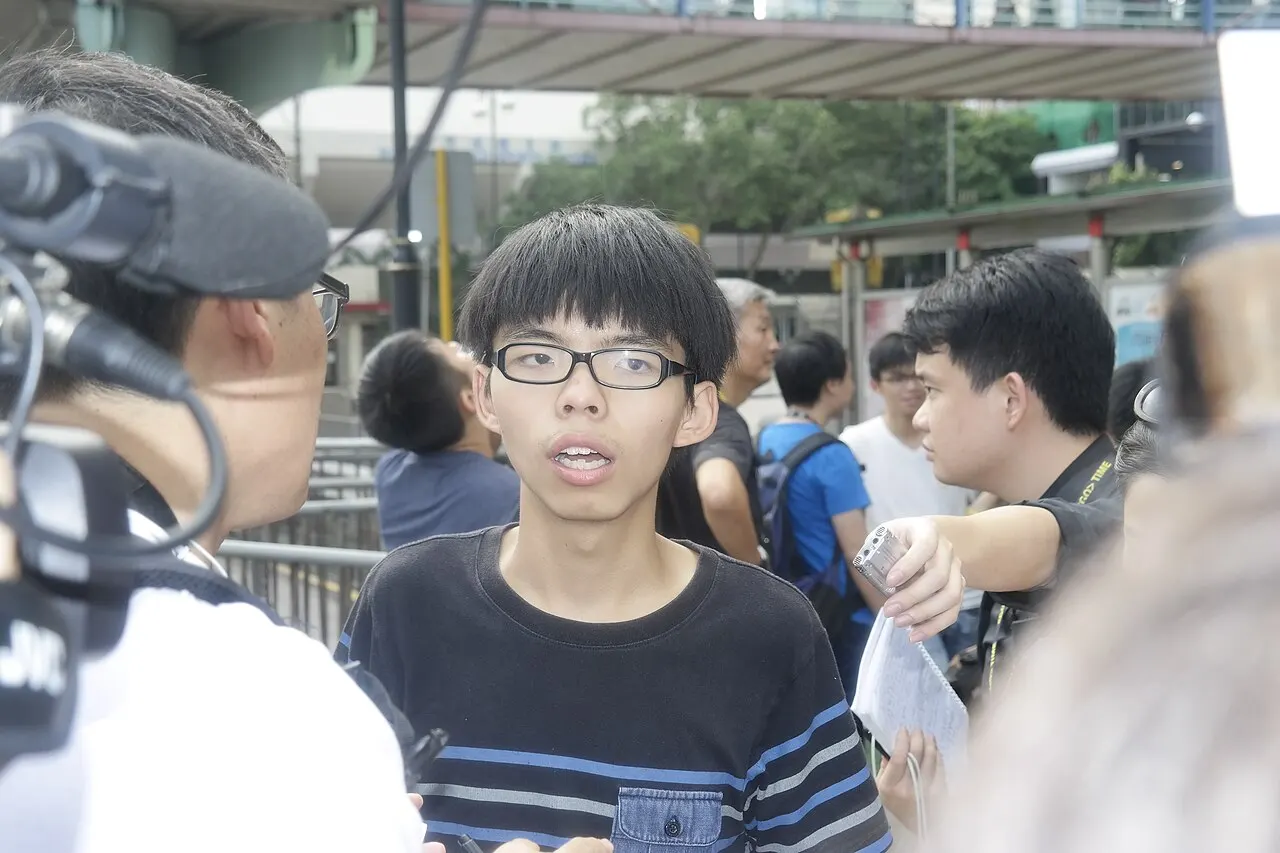
Hong Kong's High Court sentenced pro-democracy activist Joshua Wong to 10 years in prison on Thursday, one of the longest sentences handed down so far under the city's national security law.
Wong, 29, was convicted of conspiracy to collude with a foreign country or with external elements to endanger national security. He was one of nine people who pleaded guilty to the charge in February 2025. Prosecutors had asked for 13 years. Judge Alex Lee applied a 10 percent reduction for the guilty plea and settled on 10.
Wong has been in custody since November 2020. The court backdated the sentence to the start of his detention, which means he still faces more than five years behind bars. A crowd gathered outside the court and chanted "Stand with Joshua" and "We won't give up."
Before sentencing, Wong said: "Being young is not a crime, nor an excuse. I will not bow my head and I will not give up my beliefs." At sentencing, he said he could not agree his actions were illegal, but respected the decision. "In life, there are some prices we pay willingly," he said.
Why it matters
Wong is the best-known face of Hong Kong's pro-democracy movement. He rose to prominence as a teenager during the 2014 Umbrella Movement and later co-founded the political group Demosisto. He has served several jail terms, including for his role in the 2014 protests.
The case against him dates to July through late November 2020. Prosecutors said Wong conspired with fellow activists to ask foreign powers to impose sanctions on China and Hong Kong. The court heard he sent letters to the US government, joined an online meeting with US State Department, Italian and European Parliament officials, and used social media to urge foreign governments to act.
Wong was part of a wider case in which 47 pro-democracy activists were charged in 2021 over an unofficial primary election held in July 2020. More than 600,000 people voted in that primary, which aimed to field candidates who could win a majority in the Legislative Council, veto government budgets, and force the chief executive to dissolve the legislature or resign. Of the 47, 45 were convicted: 31 pleaded guilty, including Wong, 14 were found guilty after trial, and two were acquitted. The primary's organizer, Benny Tai, was sentenced to 10 years in November 2024, the only other person to receive that term.
Judge Lee said Wong played a crucial and leading role, had urged international intervention before 2020, and had planned to make Hong Kong and China suffer. The judge said Wong's remorse was of a low level and that he failed to fully confess.
The sentence lands as Hong Kong's pro-democracy movement has been all but dismantled since 2020, with many leading figures jailed or exiled. Critics say the national security law crushes dissent. Beijing and Hong Kong authorities say it restored order after the 2019 protests and protects residents' freedoms.
What it means for the US
The US State Department condemned the sentence the same day. Spokeswoman Tammy Bruce said: "We call for his immediate release and release of all political prisoners detained under Hong Kong's national security law." The US had previously imposed sanctions on some Hong Kong officials over the erosion of rights in the city, and this case puts fresh pressure on Washington to decide whether more measures follow.
The ruling also sharpens a fault line in US-China relations. Beijing's Hong Kong and Macau Affairs Office said people and governments expressing solidarity with Wong are "foreign forces who want to meddle" in Hong Kong's internal affairs, and said the conviction "should not be slandered." That framing sets up a direct clash with Washington, which treats the case as a test of whether Hong Kong's courts still operate independently.
For American readers, the case is a marker of how far Hong Kong has moved from the city that hosted open protests a decade ago. It also matters for US policy: Hong Kong's special trade treatment, sanctions decisions, and the treatment of exiled activists in the US all run through the same debate this sentence has reignited. The reaction abroad has been swift, with [world leaders responding to the new balance of power in Washington](/article/world-reacts-democrats-win-control-congress) after the midterms and US foreign policy under fresh scrutiny.
What happens next
Wong will serve the remainder of his sentence, more than five years after time already spent in custody is counted. Amnesty International called for his immediate release and the release of others detained solely for peacefully exercising their human rights. Its China director, Sarah Brooks, called his continued detention "a devastating example of Hong Kong's justice system being weaponised to target peaceful, lawful activism and silence political opposition."
Watch for the US response in the coming days. The State Department's condemnation was swift, but the question now is whether Washington pairs words with new sanctions or other action, and how Beijing responds. The case is also likely to feature in the broader debate over US policy toward China, where diplomacy and confrontation have run side by side, as in the recent [US-Iran talks](/article/us-iran-talks-explained) that mixed negotiation with the threat of force.