The background
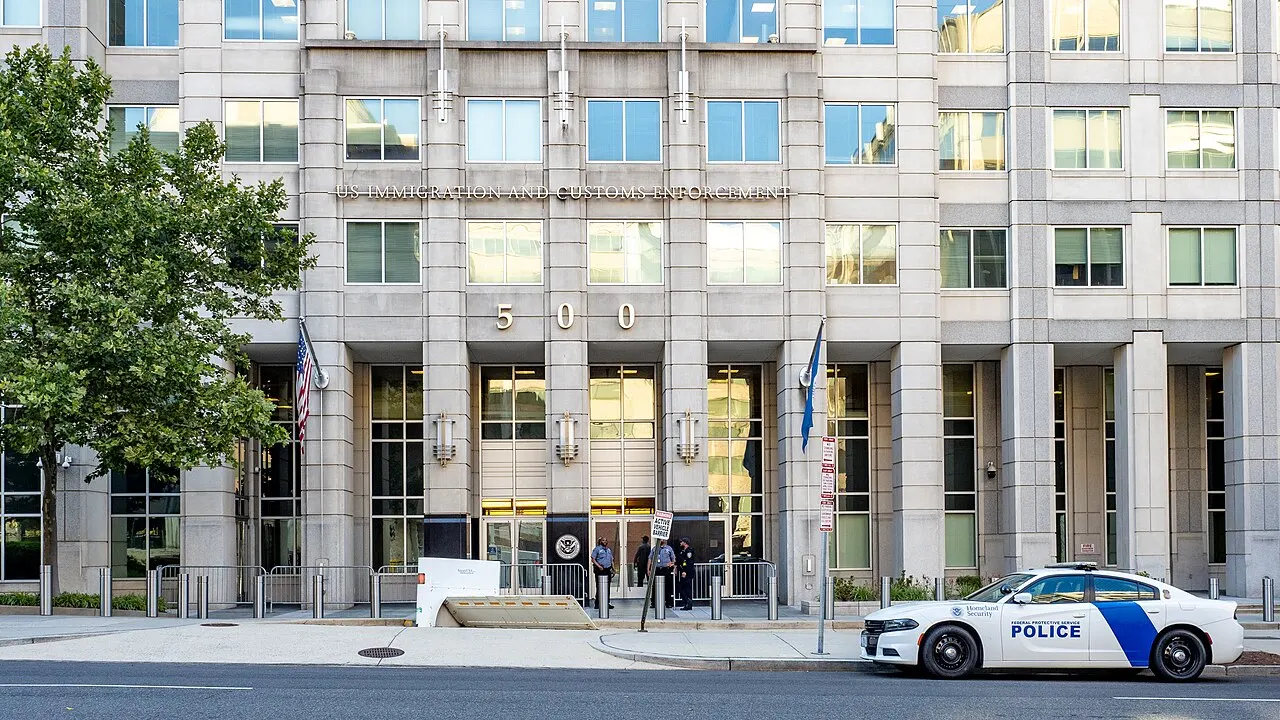
Immigration and Customs Enforcement, known as ICE, is the federal agency that enforces US immigration laws. It operates under the Department of Homeland Security, and its officers work in communities across the country year-round.
That routine work is now under a sharper spotlight because of when it is happening. Americans vote in the midterm elections on November 3, and the [midterm elections explained](/article/us-midterm-elections-2026-explained) in our earlier guide will decide control of Congress and a long list of state offices. Any enforcement activity close to an election raises an obvious question: will voters feel safe going to cast a ballot?
In the weeks before the vote, NPR and its member stations gathered reports of a notable rise in ICE activity in several states. The reports are anecdotal rather than drawn from a single official dataset, in part because the Department of Homeland Security no longer publicly shares timely information on its operations. That gap is why the story is built from local tips, reporters on the ground, and people who watched operations unfold in their own neighborhoods.
Where things stand
The reporting starts in Dover, New Jersey. Very early on Wednesday morning, Councilwoman Sandra Wittner began receiving messages about immigration agents. A dozen or more were gathering outside a Walgreens, according to the messages she received, and neighbors across north New Jersey saw a spike in activity through the day.
Wittner said residents felt real fear. "There was definitely a lot of apprehension and fear," she said. She added that people were not feeling comfortable or safe, and she was not sure who was detained or where.
New Jersey is not the only place reporting a rise. NPR and its member stations received tips about surges in enforcement throughout October from rural Illinois, Oregon, Detroit, and California. An official in New York Mayor Zohran Mamdani's office, who was not authorized to speak publicly, confirmed that the city has noted a surge in activity.
In New York, a member of a volunteer group of neighbors said the uptick has been visible since the summer. The group goes to the scene of an operation, documents it, reminds people being detained of their rights, and alerts neighbors. NPR did not use her name because she worried about retaliation. She said the past few weeks have brought numerous large operations, which she called cluster raids, with multiple agents moving from one spot to the next.
Portland tells a similar story. Oregon Public Broadcasting reporter Troy Brynelson said activity there picked up in early October and kept going through the month, concentrated in commercial areas. He called it a noticeable uptick compared with the summer.
ICE did not confirm a surge when NPR asked. The agency responded: "ICE agents uphold our nation's immigration laws in all 50 states, seven days a week, 24 hours a day."
What it means for the US
For American voters, the stakes are practical. If people believe enforcement officers could be waiting near a polling place, some may decide the trip is not worth the risk. That risk matters most for immigrant families and new citizens, for whom voting is often a hard-won right rather than a routine errand.
Juan Proano of the League of United Latin American Citizens, a civil rights organization, put the concern plainly. He said it is not about ICE at the actual polling station, but about ICE at the perimeter. Mass enforcement actions could be away from the polls, he said, but with social media and the news, they could still be enough to dissuade somebody from going out to vote.
Wendy Weiser of the Brennan Center for Justice at NYU Law School said the administration's tactics in communities appear designed to try to intimidate voters. She also offered the other side of the picture: there is no indication the raids are affecting turnout. She said early voting is surging in minority communities across the country, including huge surges in participation in communities of color, in Latino communities, and in all the communities targeted by ICE and the Department of Homeland Security. That surge is consistent with the [more than 43 million ballots already cast](/article/more-than-43-million-ballots-cast-midterm-early-voting-surge) in early voting nationwide.
Weiser added a point every voter should know: intimidation at the polls is illegal, and it should be reported.
What to watch next
Election Day on November 3 is the first test. Watch whether reports of enforcement near polling places emerge, whether local officials and volunteer observers document them, and whether the agencies release any data that confirms or contradicts the local reports.
The second test is turnout itself. If early voting stays strong through the final days, the story of this election may be that voters showed up anyway. If reports of intimidation grow, expect voting-rights groups to press officials for answers, and expect the debate over enforcement and elections to continue well past November 3.