What happened
A Russian cargo ship bound for Kaliningrad caught fire in the Gulf of Finland on Saturday morning after two drones struck it in international waters, Russian officials said.
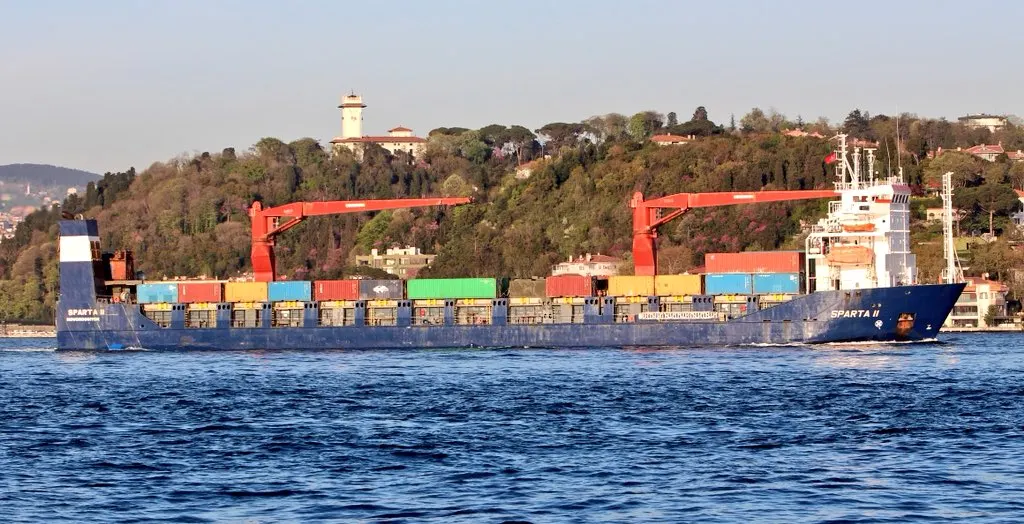
The dry cargo ship Sparta II was "attacked by two unmanned aerial vehicles" in neutral waters, Leningrad Oblast Governor Alexander Drozdenko wrote on Telegram. He said the strike happened three nautical miles from Russia's border. "The crew is currently being evacuated," he added. "The consequences of the incident are being clarified."
Finland said the damaged vessel was on fire and had drifted from international waters into its territorial waters. The Finnish Border Guard said the situation posed no danger to other maritime traffic and that preparations for potential rescue operations were being made in cooperation with Finnish and international authorities.
Estonian officials placed the ship in an international shipping lane 11 nautical miles north of Estonia's Vaindloo Island, inside the St. Petersburg rescue zone. Their rescue center first learned of the fire, with preliminary reports of explosions on board, at 9:35 a.m. The ship had left St. Petersburg and drifted out of Estonia's exclusive economic zone at around 10 a.m.
Finland's Defence Forces detected the drone attack on Saturday morning west of Suursaari, in the eastern Gulf of Finland. Finland closed parts of the gulf's airspace and sea lanes twice on Saturday as a precaution against drones straying into NATO airspace, and Estonia issued a drone threat warning for its northeast early in the day.
Why it matters
The Sparta II is under U.S. sanctions and belongs to Oboronlogistics, a shipping company linked to Russia's Defense Ministry. Early last year it sailed from Baltiysk to Syria to help evacuate military equipment from Russia's naval base at Tartus. This is not an ordinary freighter. It is part of Russia's military supply chain, and it was hit in waters used by NATO members Finland and Estonia.
The strike fits a wider pattern. Ukraine's drone war at sea has been spreading beyond the Black Sea, with Russian sources describing strikes on Russian-linked shipping in the Caspian, the Baltic and the Mediterranean. Russia has started escorting cargo ships through the Baltic with an aging landing ship draped in anti-drone netting.
It also lands in a tense week for the region. On Friday, [Russian missiles struck Poland](/article/russian-missiles-drone-crash-poland-nato-response), and [Denmark accused Russia of plotting to assassinate a US-Ukrainian rapper](/article/denmark-accuses-russia-plot-assassinate-us-ukrainian-rapper) in Copenhagen. [Estonia moved to close its border with Russia](/article/estonia-to-close-russia-border-after-drone-factory-arson-bid) after a drone factory arson attempt. No one has claimed responsibility for the Sparta II attack, and Ukraine has not commented.
What it means for the US
The ship itself is on the U.S. sanctions list, so the attack touches a vessel Washington already treats as a tool of Russia's military logistics. Any disruption to that fleet is a direct hit on the sanctions target, not just on a commercial shipper.
For the United States, the location matters as much as the ship. Finland and Estonia are NATO allies, and the Gulf of Finland is a narrow waterway where a miscalculation can pull in the alliance fast. Finland's decision to close airspace and sea lanes as a precaution shows how quickly a drone strike in international waters becomes a NATO airspace problem.
Kaliningrad governor Alexei Besprozvannykh said the incident posed no threat to supplies to the region. Kaliningrad is a Russian exclave on the Baltic Sea that borders Poland and Lithuania, and it has been a flashpoint between Russia and NATO before.
What happens next
The crew evacuation is under way and the damage is still being assessed. Russian authorities had released no damage assessment or casualty figures by Saturday afternoon.
Estonian rescue officials said they were monitoring the situation with their Finnish counterparts and would respond if Russia requests international assistance. Drozdenko said 80 drones had been shot down over the Leningrad region overnight and lifted a drone threat warning.
The open questions are who launched the drones, whether Ukraine will comment, and whether Russia treats a strike in international waters near NATO members as grounds for a wider response.