What happened
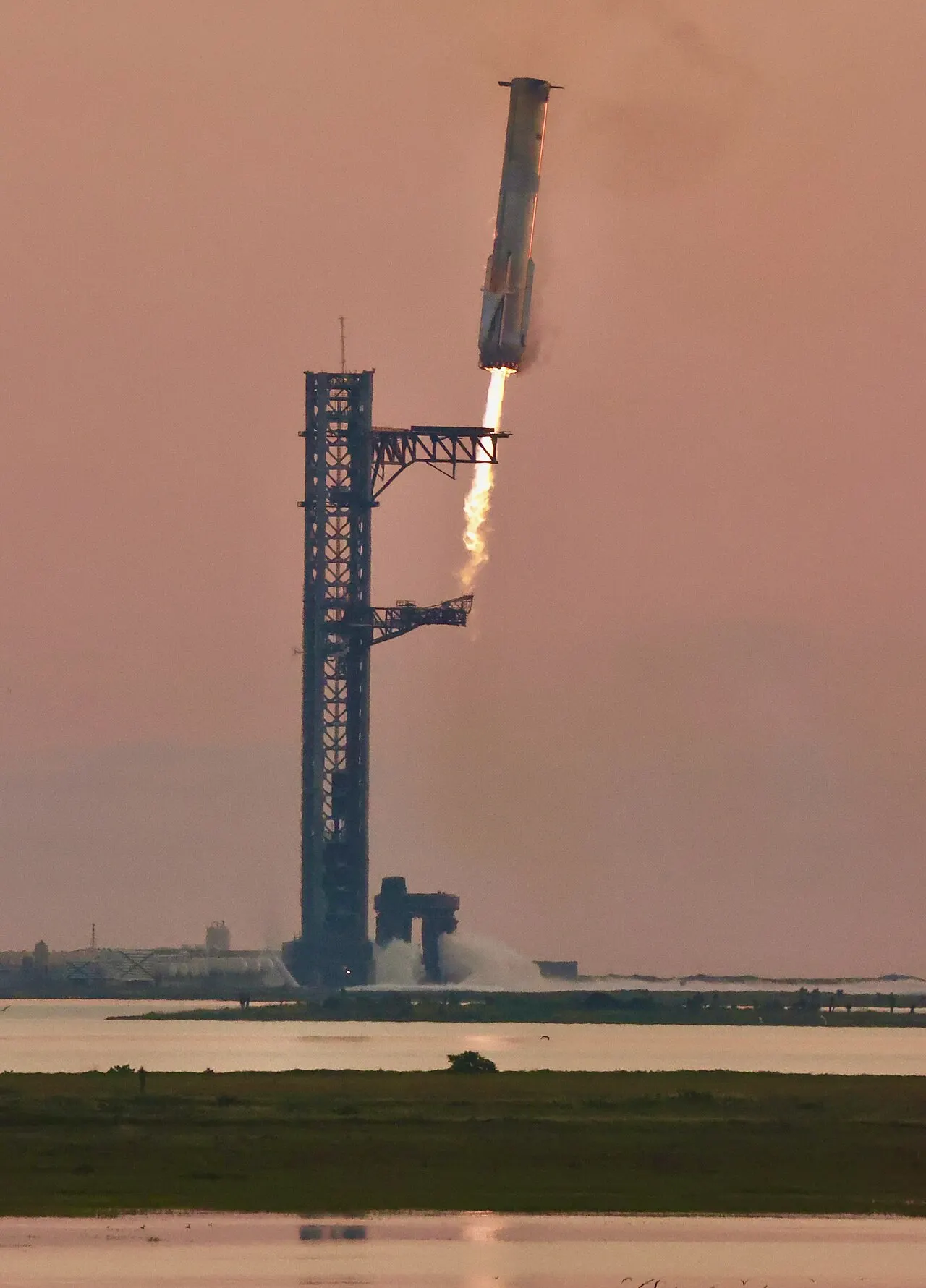
SpaceX caught a Starship upper stage out of the sky on Saturday. The black-and-silver ship came back from orbit to Starbase, Texas, and the launch tower's two mechanical arms grabbed it in mid-air.
The ship dropped through the cloud deck flying flat, almost horizontal. Then three Raptor engines lit and swung it upright. It drifted slowly toward the tower, arms spread wide, and settled onto two small nubs sticking out about a foot from either side of the hull. Less than a minute after it appeared, the tower had it.
The flight, Starship's 15th test, had sent the ship around Earth several times before it powered home. A handful of practice runs had ended with splashdowns in the Indian Ocean. This time the ship came all the way back to the tower.
Why it matters
SpaceX has now brought back both halves of its giant rocket to the launch tower: the Super Heavy booster, caught before, and now the ship itself. That is the whole point of Starship. A rocket that lands back where it launched can fly again fast, instead of being rebuilt or fished out of the sea.
No one has done this at this scale before. The ship is far bigger than anything SpaceX has landed on a barge, and it comes home carrying the energy of orbital flight. The catch itself took seconds. Getting there took nearly a quarter-century of work since SpaceX was founded.
The comparison with the Space Shuttle shows how far the idea has come. NASA's shuttle, built in the 1970s, recovered its solid boosters from the ocean and threw away the big orange fuel tank each time. Its orbiters glided back to a runway, but their heat shields needed painstaking work after every flight. The shuttle was meant to carry dozens of people at about $25 a pound. In the end it carried seven at a time, at closer to $25,000 a pound, and flew 135 times in 30 years.
SpaceX wants to beat those numbers by a wide margin. It already has five Starships in advanced stages of construction at Starbase, with parts for a dozen more in the factory. The Starfactory can turn out an upper stage every three weeks today, though it was built to manage one every three days. Within a few years, the company aims to fly 135 times a year, then thousands. The pace reflects how much is riding on Starship across Elon Musk's companies: SpaceX's board is also [reviewing a possible merger with Tesla](/article/spacex-tesla-boards-open-merger-review), Musk said.
What happens next
The heat shield is the hardest part still to solve. A ship that comes back from orbit has to survive re-entry heat again and again, and rapid reuse only works if that shield holds up flight after flight.
Landings and launches will get more frequent from here, but a high success rate will take time. The catch will feel routine eventually. Not today.