What happened
President Donald Trump's plan for a 250-foot triumphal arch in Washington is reaching its decisive moment. The National Capital Planning Commission meets Thursday to vote on final approval, the last step before the administration says construction could begin. A federal judge is weighing whether to stop it first.
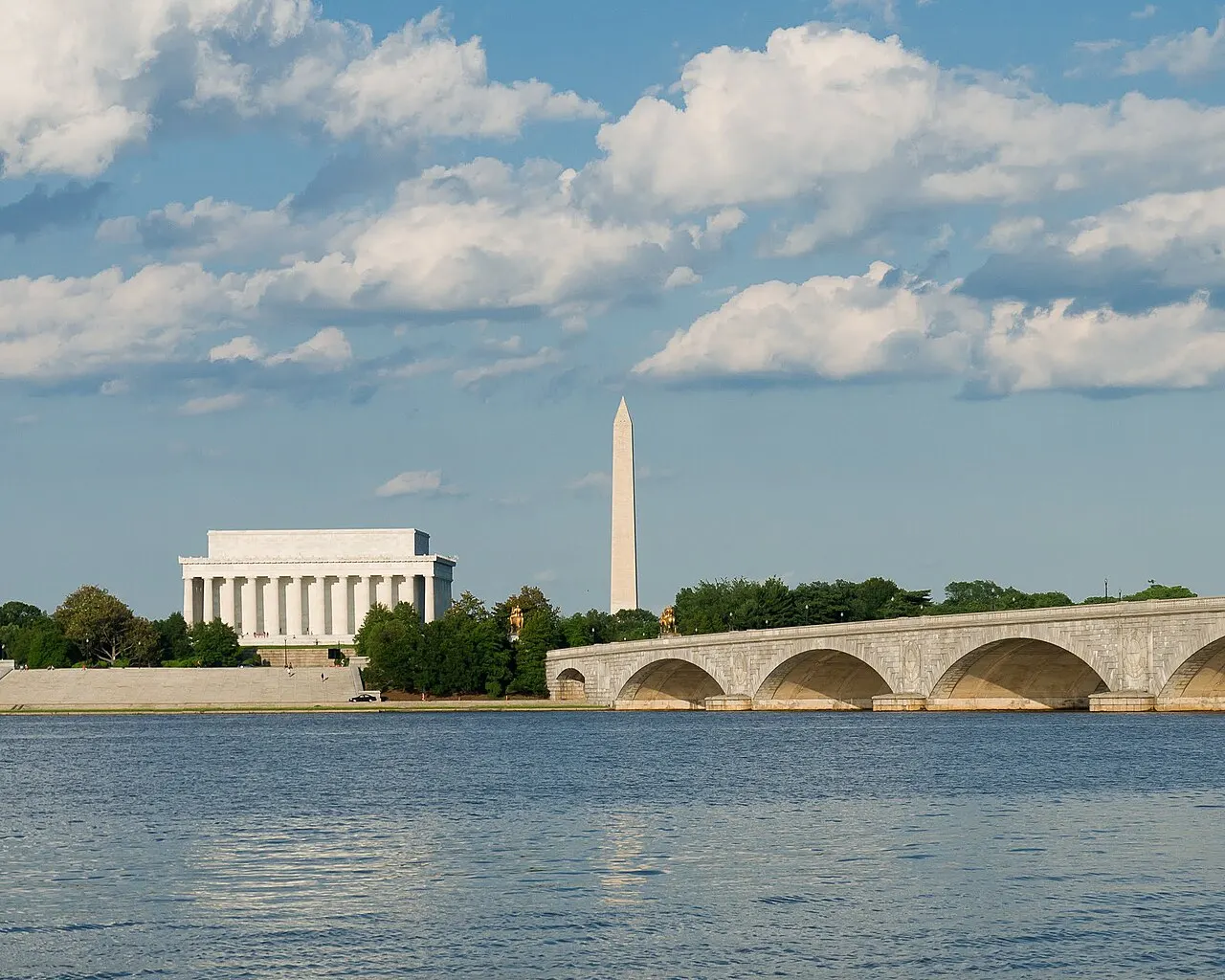
The arch would rise in Memorial Circle, the grassy roundabout on the Arlington Memorial Bridge between the Lincoln Memorial and Arlington National Cemetery. Renderings submitted to the planning commission show a white concrete structure topped with three gold statues and an eternal flame, including a winged woman holding a torch. At 250 feet, it would stand more than twice as tall as the Lincoln Memorial. The National Park Service has said it would disrupt the historical significance of dozens of nearby monuments.
The vote comes after months in which the administration pushed the project forward while sidestepping several federal reviews. The Commission of Fine Arts, whose members are all Trump appointees, approved the design in May, when it was still incomplete. In September, a federal council packed with Trump allies ended a historic preservation review that participants had already called rushed.
The commission's meeting is online only and is expected to run about five hours, adjourning at 6 p.m. ET. Nearly 120 people signed up to speak, an unusually high number, and more than 100,000 people have objected in written comments, protests, and earlier meetings.
Why it matters
The fight over the arch is about more than a monument. Critics say it would block a historic view, disrespect the service members buried at nearby Arlington National Cemetery, and add risk to some of the most complicated airspace in the country. They see it as Trump's attempt to put his own mark on the capital without asking Congress.
The legal fight turns on a single question: does the president need Congress to build it? Vietnam War veterans and an architectural historian sued, arguing the arch is unlawful without congressional approval. The administration has not sought that approval. Instead, it points to a century-old law that authorized a pair of columns on the same traffic circle, columns that were never built.
The case took a sharp turn when Trump said on social media that the arch would double as a military complex holding snipers and ammunition. Defense Secretary Pete Hegseth called it a "generational national defense opportunity" in a court filing last week. The final renderings sent to the planning commission mention no snipers or drones. At a hearing last Friday, Judge Tanya Chutkan pressed the government on how a military installation would square with as many as 22,000 civilian visitors a day. "The arch is somehow supposed to deter assassination attempts on the president?" she asked. "It's going to be completed three years from now."
The Federal Aviation Administration said in September that the arch would not endanger airspace if it is lit in a specific way at all times. Aviation safety experts told NPR that those unusual lighting rules would add new risks, including glare and fire hazards.
What it means for the US
The arch would sit at one of the most symbolic spots in the country, on the main corridor between Washington and Virginia, next to the nation's most hallowed military cemetery. If it goes up, it will shape how millions of visitors see the capital for generations. If a judge blocks it, the case could set a limit on how far a president can go in reshaping federal land without Congress.
The timing matters too. [Democrats won control of both houses of Congress in Tuesday's midterms](/article/world-reacts-democrats-win-control-congress), and Democratic lawmakers have vowed to stop the arch or remove it if it is built. [Democrats are already planning investigations of the Trump administration in the new Congress](/article/democrats-plan-trump-investigations-new-congress), and the arch is likely to be part of that fight. The new Congress also controls the purse strings, which could matter for a project the administration says will take two to three years, with crews working 20 hours a day, year-round.
For people in the Washington area, the stakes are immediate. D.C. and Virginia, which filed their own lawsuit over the weekend calling the arch "flagrantly illegal," say construction would disrupt traffic, strain emergency response along a main corridor, complicate flights into Ronald Reagan Washington National Airport, and send sediment into the Potomac River. Their 55-page complaint says those harms "cannot be remedied if construction of the Arch proceeds."
What happens next
The planning commission votes Thursday. If it approves, the administration says only a sign-off from its own Department of the Interior stands between the project and groundbreaking. The government told the judge late last month that construction could start as early as Thursday, with the first six months spent on underground excavation and foundation work.
Judge Chutkan has not yet ruled on the veterans' request for a preliminary injunction. On Monday, she ordered the government to notify the court within one hour of any arch decision and within 30 minutes of any construction-related activity. The administration asked Tuesday to stretch that to 24 hours; the judge clarified her order but kept the timeline. On Wednesday night, the government told the court that Grunley Construction Company, a Maryland firm, may be arranging off-site preparations for construction in anticipation of approval.
The judge is expected to rule after the commission meeting. Whatever she decides, the case is likely to keep moving through the courts — and through the new Congress.