What happened
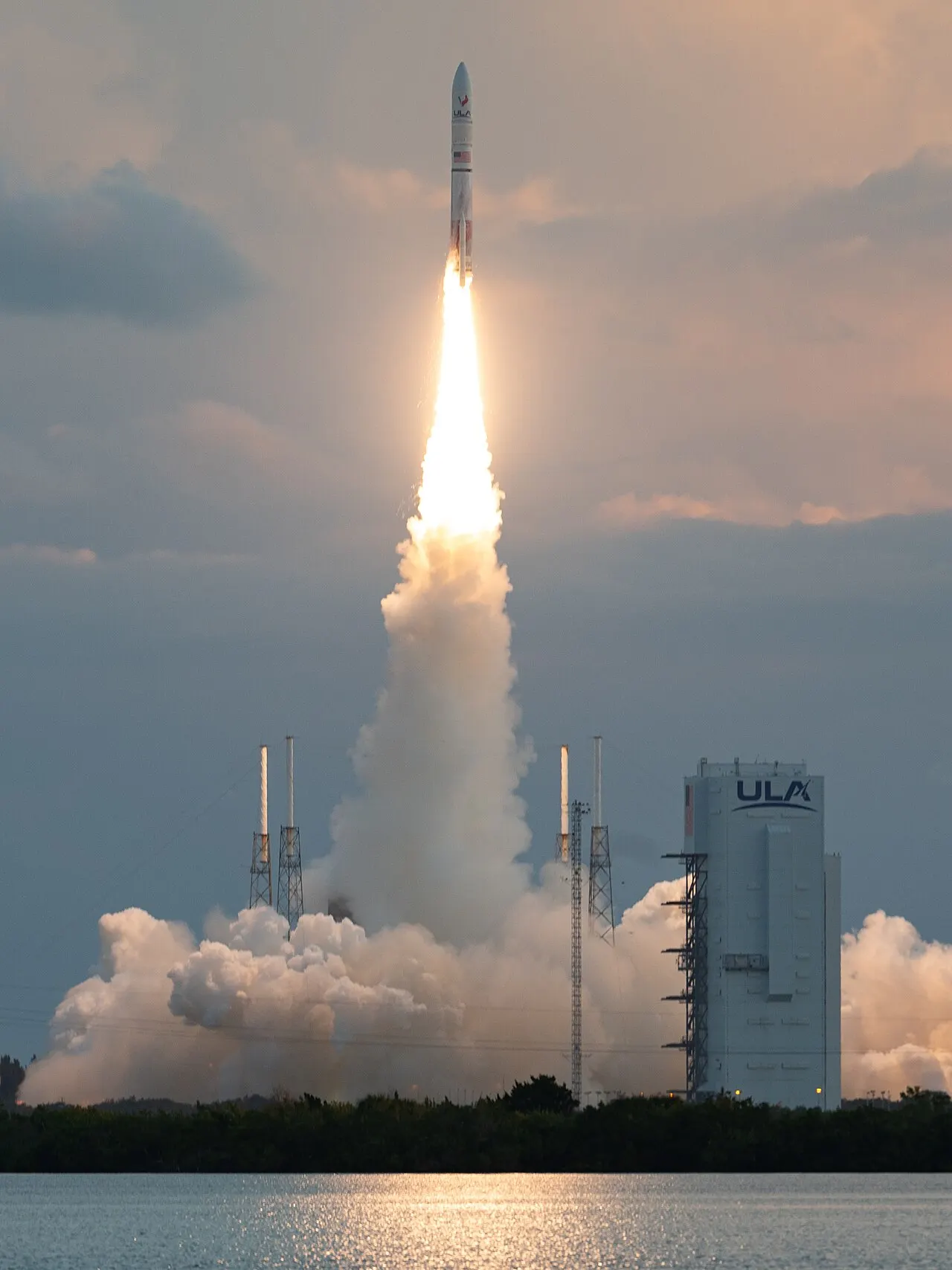
A United Launch Alliance Vulcan rocket carrying 40 Amazon Leo broadband satellites fell back to Earth minutes after liftoff from Cape Canaveral Space Force Station in Florida on Sunday. Liftoff came at 12:40 p.m. EDT, and the rocket was headed northeast when the flight went wrong. It is the first total mission failure in ULA's 20-year history.
The launch started clean. The rocket's six solid rocket boosters fired well for the first two minutes and separated on time, leaving the flight to Vulcan's twin BE-4 main engines, built by Blue Origin. Those engines were supposed to shut down just before the five-minute mark. Instead, they kept firing for at least 30 extra seconds, a sign the booster may have been underperforming and trying to make up the difference.
Trouble showed up before the 10-minute mark, the point ULA first named as the moment of the anomaly. Telemetry on ULA's broadcast showed the rocket start to spin moments after the booster engines shut down. The spin continued through separation of the Centaur V upper stage, and the Centaur's two RL10 engines lit and pushed thrust in an apparent attempt to steer the rocket back on course. ULA ended its live broadcast a few minutes later without discussing what happened, then declared the launch a failure on social media.
ULA said the rocket "suffered an anomaly 10 minutes into the flight and failed to deliver the Amazon mission to orbit," and that it did not immediately have "any specific data to understand what occurred." Sources told Ars Technica the problem was in the booster stage, not the Centaur V upper stage or the solid rocket boosters. Whether the fault sits with the methane-burning BE-4 engines, the hardware that feeds propellant to them, or something else in the booster is not yet known.
Why it matters
This was the first of 38 Vulcan launches Amazon booked to build its Leo broadband network, the company's bid to compete head to head with SpaceX's Starlink. Amazon still has 37 Vulcan flights reserved, each meant to carry 40 or more satellites. The constellation now holds 396 satellites out of a planned 3,292 first-generation spacecraft, and Amazon recently built its 1,000th satellite, which means more than half of its network nodes are sitting in storage. Amazon said in October it has enough satellites in orbit to start initial commercial service by the end of the year, but full capacity needs many more launches.
Losing 40 satellites is a setback. The bigger problem is the grounding that follows. Vulcan is expected to sit on the ground for an indefinite period while ULA investigates, and the rocket's track record says that pause could be long. Vulcan overcame solid rocket booster failures on two of its four earlier flights and still reached orbit each time, but each incident triggered months of reviews before it could fly again. Sunday's failure was a different kind.
The stakes reach beyond Amazon. Vulcan is contracted to fly roughly half of the US military's national security space missions in the coming years. Earlier Vulcan delays already forced the Space Force to move six national security launches to SpaceX, and more swaps are expected now. For the foreseeable future, the Pentagon will lean even harder on SpaceX to loft its most sensitive satellites as it races to keep pace with China's growing presence in orbit. That dependence is awkward timing: SpaceX is winding down Falcon 9 and Falcon Heavy in favor of Starship, which is not yet certified for national security missions, a process that takes years. SpaceX did show what its new rocket can do when it [caught a returning Starship in the tower's mechanical arms](/article/spacex-catches-starship-upper-stage-tower-arms), but certification is a different test.
NASA has skin in the game too. Blue Origin's New Glenn, which uses a version of the same BE-4 engine, has a series of backlogged test flights for NASA's Artemis Moon program next year, including key tests of Blue's lunar lander. If investigators blame the BE-4, those Moon tests slip further. NASA also recently picked a version of ULA's Centaur upper stage for future flights of its Space Launch System rocket, aiming to fly it on crewed lunar missions as soon as 2028, and the agency will want Centaur ruled out as a cause.
Amazon is not out of rides. It has 10 launches booked on SpaceX's Falcon 9 and a contract with Europe's Arianespace for 24 launches, three of which have flown, with a fourth set for later this month on an Ariane 6 from French Guiana. Those are the rockets Amazon will likely lean on in the coming months. But Falcon 9 is headed for retirement, and the company bought those flights only after its earlier rocket troubles forced it to turn to its biggest rival.
What happens next
ULA engineers will investigate to find the cause, decide on the fix, and return Vulcan to flight as quickly as possible, the company said. Customers will get visibility into the investigation, and ULA promised further updates when new information becomes available. Amazon struck a patient note, saying "there is risk with any launch, and that's especially true for inaugural missions like LV-01," and that it believes ULA will "learn from this mission and deliver on their long-term plans for Vulcan."
The NASA Administrator offered help in a reply to ULA's statement: "Artemis, Moon Base, and the nation need ULA. We are in your corner and here to help." The open question is the engine. Blue Origin's New Glenn exploded during a ground test in Florida in May, an accident investigators traced to a faulty valve on one of its BE-4 engines, and that rocket is not expected back until early next year. If the same engine family is at fault on Sunday, two of the rockets Amazon needs most will be grounded at once, and the race to build a rival to [Starlink](/article/ukraine-starlink-restrictions-explained) slows down again.